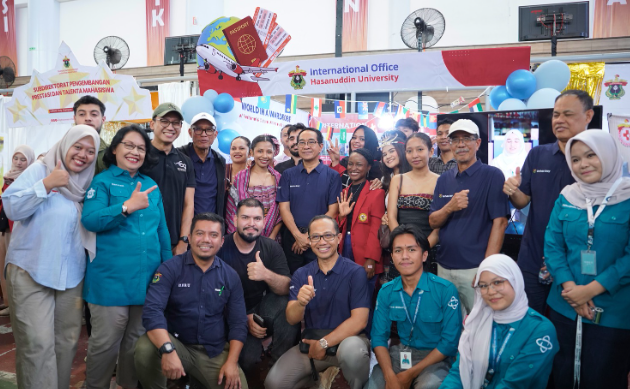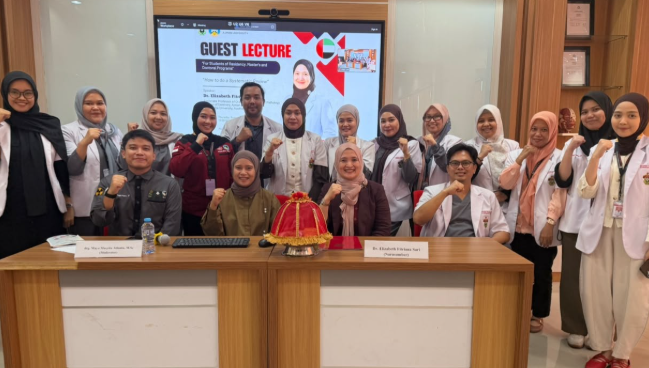
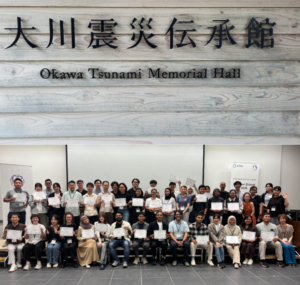
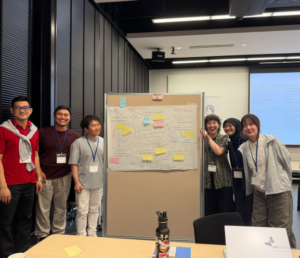
Saaduddin, Ph.D., a lecturer at the Department of Geophysics, Faculty of Mathematics and Natural Sciences (FMIPA), Hasanuddin University (UNHAS), participated in the APRU Multi-Hazards Summer School 2026, organized by the International Research Institute of Disaster Science (IRIDeS), Tohoku University, Japan, from 29 July to 1 August 2026. The four-day program brought together approximately 50 participants from more than 20 countries, with the majority being early-career researchers working across various disciplines related to disaster science and disaster risk reduction (DRR). The summer school provided an interdisciplinary platform for participants to exchange knowledge, examine lessons from past disasters, and explore emerging approaches to strengthening disaster resilience.
The program began on July 29 with the first seminar, “Lessons Learned from the 2011 Great East Japan Earthquake and Tsunami.” The session highlighted key lessons from one of the most devastating disasters in Japan’s recent history and examined how those experiences have contributed to advances in disaster preparedness, mitigation, recovery, and risk reduction. On the second day, participants explored the roles of different stakeholders in disaster risk reduction, particularly local governments, non-governmental organizations (NGOs), and academia. Through seminars and group discussions, participants examined how collaboration among these stakeholders can contribute to more effective and sustainable disaster risk management. On the third day, discussions focused on Artificial Intelligence (AI) and Big Data in Disaster Risk Reduction, highlighting the growing potential of emerging technologies and data-driven approaches to support disaster risk assessment, preparedness, early warning, and decision-making.
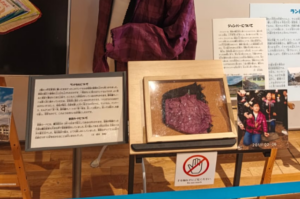
The summer school concluded on August 1 with a field trip to Onagawa, one of the coastal communities severely affected by the 2011 Great East Japan Earthquake and Tsunami. The visit provided participants with an opportunity to observe post-disaster recovery and reconstruction efforts and to learn how disaster experience has been incorporated into community resilience and future risk reduction strategies. Saaduddin emphasized that the program provided valuable perspectives on comprehensive disaster management, covering the phases before, during and after a disaster.
“Through this summer school, I gained valuable insights into disaster management across the pre-disaster, emergency response, and post-disaster phases. One important lesson that can be further implemented at Hasanuddin University is strengthening the role of universities in disseminating disaster knowledge and improving disaster literacy among communities,” said Saaduddin.
He added that universities have a strategic role in bridging scientific research, government policies, and community needs. This role is particularly relevant for UNHAS, which has a disaster study center and has established collaboration with Regional Disaster Management Agencies (BPBD) in several cities and regencies. According to Saaduddin, lessons from Japan demonstrate the importance of sustained collaboration among academia, government, NGOs, and local communities in building disaster preparedness and resilience. Participation in the APRU Multi-Hazards Summer School 2026 also provided an opportunity to strengthen international academic networks and engage with early-career researchers from diverse countries and disciplines to support future collaboration in disaster science, multi-hazard research, disaster education, and disaster risk reduction.
This initiative aligns with several United Nations Sustainable Development Goals (SDGs). By focusing on disaster risk reduction, climate hazard resilience, and urban recovery strategies, the program supports SDG 11: Sustainable Cities and Communities and SDG 13: Climate Action. The emphasis on interdisciplinary academic training advances SDG 4: Quality Education, while the collaborative framework among UNHAS, Tohoku University, APRU member institutions, and local governance bodies embodies SDG 17: Partnerships for the Goals.