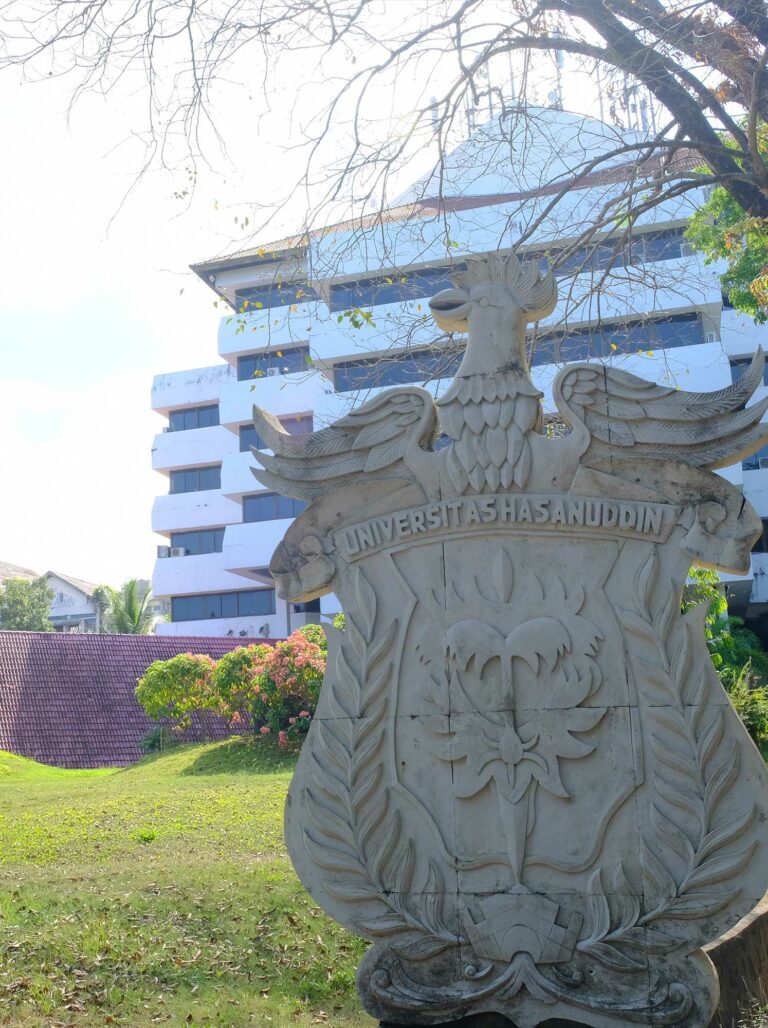
Those accepted as new students of Unhas must be grateful. As the competition in entering Unhas this year is known to be of immense difficulties. The figures reflect it all, as out of the 73.331 registrants of the Joint Selection of Higher Level Public Educational Enrollment (SBMPTN) nationally that was announced on 28 June 2016, only 1.667 among them were accepted. That concludes to only approximately 2% of total registrants that passed. Similar conditions were faced by those of the National Selection of Higher Level Public Educational Enrollment (SNMPTN) pathway, as out of 34.842 registrants, only 2061 among them were accepted (6%).
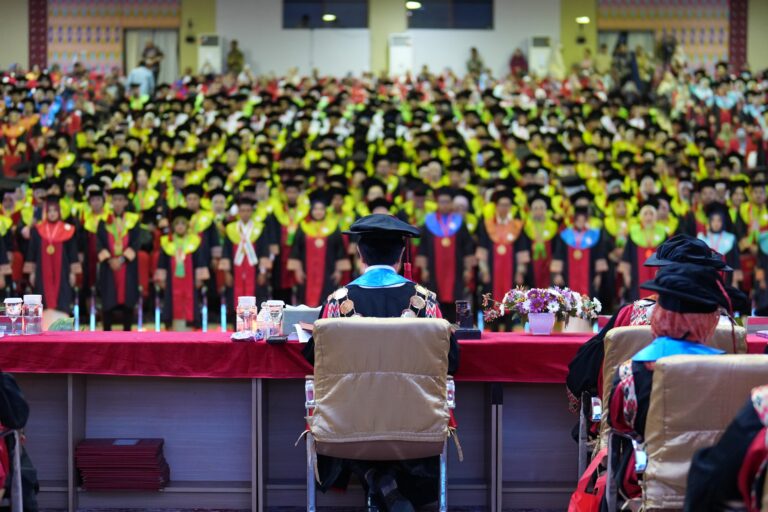
“The figures reflects the high competitive level to being enrolled in Unhas, to eventually be admitted as a student,” stated the Unhas Rector Prof. Dr. Dwia Aries Tina Pulubuhu, M.A. while graduating the 2013 Bachelor degree graduates of Unhas in the Baruga Andi Pangerang Petta Rani Tamalanrea Campus, on 29 June 2016.
Dwia also explained, the Grade Point Average (IPK) of the graduates are of satisfactory, as 44,5% passed with an IPK above 3.40, 50,7% above 3.00-3.50. Only 4,7% of the graduates had an IPK below 3.00. Therefore a testament to quality, with 95,2% among the graduates passed with an IPK above 3.00.
Based on the studying period, Dwia stated that 63,4% of the graduates completed their studies in the time span of four years, while 20,6% between 4-5 years. Only 10,6% completed their studies by five years. But what is of delight news was that the majority of graduates completed their studies in four years or less.
The achieved IPK and short studying period that have become better by the year reflects successful studying processes of Unhas.
“This is in aligning with the aims of the institution to increase the quality of teaching processes from time to time, as we all expected,” stated Dwia.
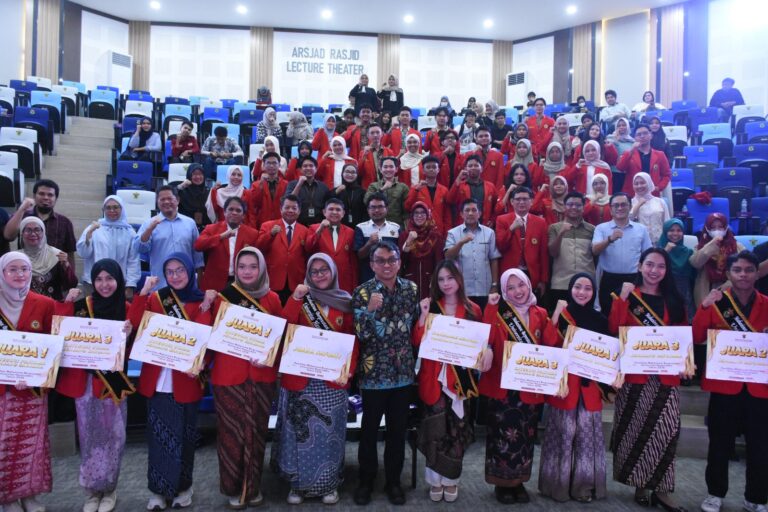
Unhas Rector also explained that the developments of student activity achievements are also to be hugely proud of. An Unhas student attained the first winner position in a scientific paper competition “The 8th European Exhibition of Creativity and Innovation 2016” in Romania on the 19th until 21st of May 2016. Many other achievements have been attained by the students of Unhas.
The combination of high-Grade Point Average, relatively short studying period, and glorious student achievements, have all added up to make Unhas provide the most optimized learning processes and capacity-building for students as a University.
“If such a capacity is equipped with the appropriate attitude that upholds honesty, hard work, and politeness, then such students will be hoped to be of bright young generations for the country,” hoped Dwia.
Parents to Observe Developments Online
These last couple of years, Unhas has developed its management systems based on Information technologies. Study plan managements (KRS), examination grades, lecture attendance, scholarships, event monitoring, and student achievements, all go through the technological information systems. Starting from next semester, Unhas has provided the systems that will assist the parents/ guardians in observing the academic developments of their son/ daughter through the online system.
The advancements in the management system, the grade transcripts can be submitted to the graduates during their graduation day. The graduates further will be able to take home their certificate of completion and transcripts at the same time.
On the matter of research performances, development of human resources, and the establishment of partnerships, the University has also shown firm commitments, stated Dwia. Unhas is home to three innovative centers, including the Center for Seaweed, Center of Animal Husbandry Maiwa Cows (Maiwa Breeding Center), and Center for Green Institutional Development (PETUAH) with the Smart Land Used Technology (SALUT), with the assistances of Millennium Challenge Account-Indonesia (MCA-I).
“Development of a partnership with local governments is also a form of Unhas social responsibility,” stated Dwia. In 2016, there was an initiation of the development for the local salts to become a salt industry in the Jeneponto Regency, development of superior crops in Bone Regency and Sinjai Regency, and for the construction of a Welfare and Independent Village in the Bantaeng Regency.
“I will not stop in asking all the staff lecturers, educators, and students to work hand in hand in contributing to the Unhas development as an institution of superiority,” strengthened Dwia Aries Tina Pulubuhu while stating “Happy Eid Al-Fitr 1437 H, please forgive all the mistakes made.”