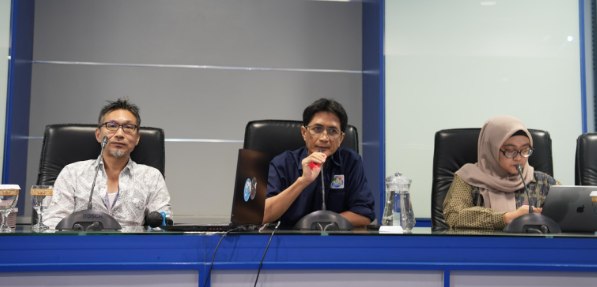
A marine science lecturer from Hasanuddin University (UNHAS) has been selected to represent Indonesia in a regional leadership programme focused on sustainable agriculture, climate resilience and food systems transformation. Jamaluddin Fitrah Alam, Ph.D, a lecturer at the Department of Marine Science, Faculty of Marine Science and Fisheries (FIKP) UNHAS, has been selected to participate in the ASEAN–Australia Centre Leadership Program on Agricultural Sustainability and Food Systems, a regional short course involving emerging and mid-career leaders from Southeast Asia and Australia hosted by ASEAN–Australia Centre and University of Queensland (UQ).
The programme brings together participants from 12 countries, with two representatives from each country, including Indonesia and Australia. Designed as a regional leadership platform, the course focuses on climate-smart agriculture, sustainable food systems, biosecurity, digital innovation, value chains and cross-border collaboration.
Running from March to May 2026, the programme is structured in three stages. It begins with a preliminary online component from 5 March to 16 April, followed by an in-Australia component from 20 to 26 April, and continues with an applied online component from 7 to 28 May. The structure reflects the programme’s broader aim of combining conceptual learning, field immersion and applied project development. The course aims to strengthen the capacity of emerging and mid-career leaders across ASEAN and Australia to design, implement and promote climate-smart, bio-secure and technologically enabled agricultural systems. Its updated focus also places strong emphasis on systems thinking, collaborative problem-solving and the application of practical tools to real food system challenges.
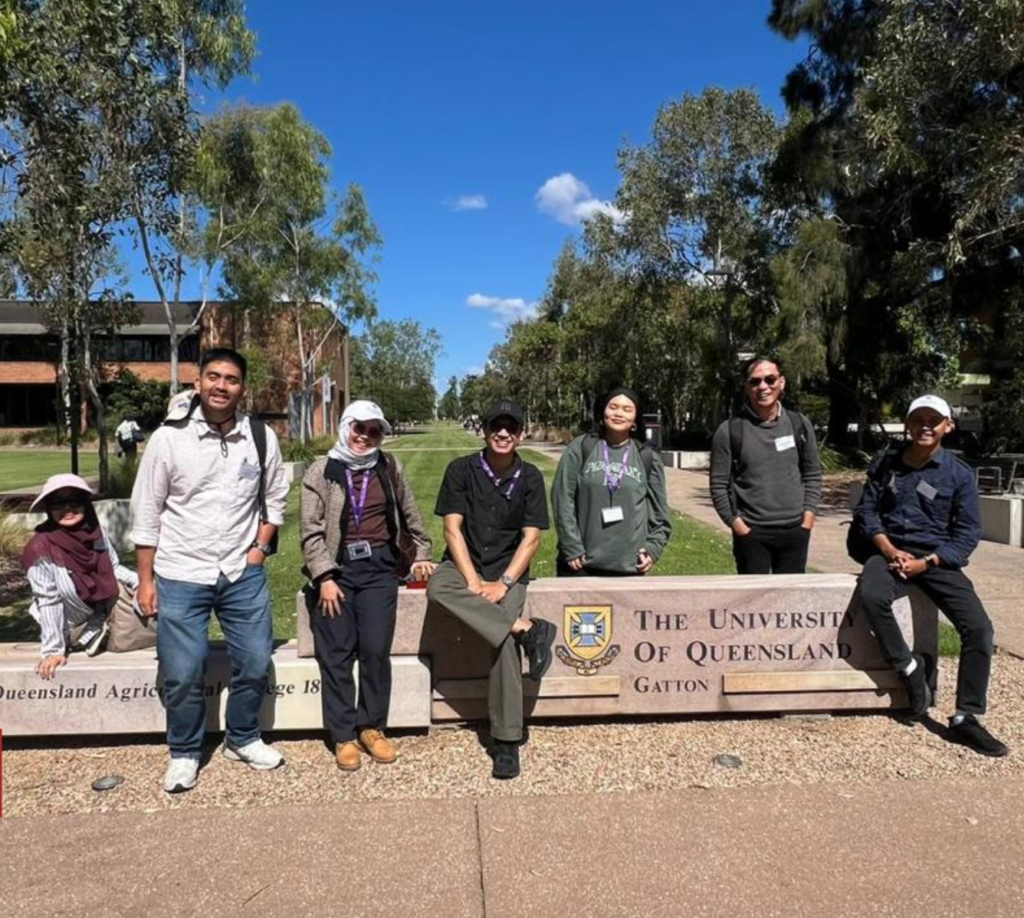
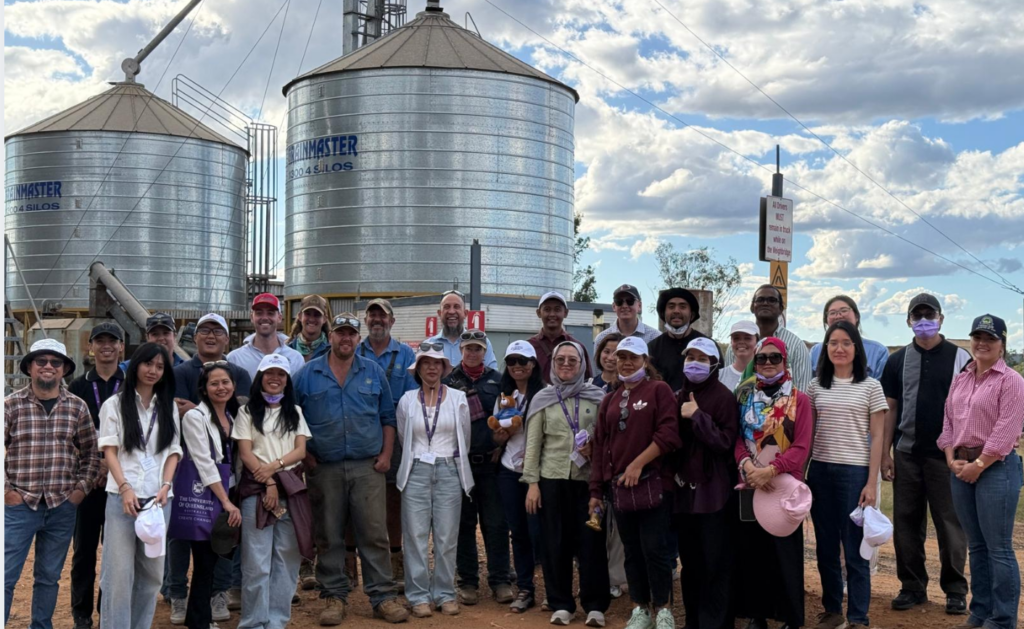
During the Australia component, participants joined a series of academic sessions, institutional visits and field-based learning activities hosted through The University of Queensland and partner institutions. The programme included sessions on climate-smart agriculture for smallholder systems, postharvest loss reduction, value chain solutions, crop resilience, digital agriculture, livestock innovation, agricultural policy, traceability and regional partnership pathways. Field visits formed a central part of the learning experience. Participants observed sustainability practices at Mulgowie Farming Company, explored research and innovation for resilient grain systems at the Grains Research and Development Corporation in Toowoomba, visited the Queensland Animal Science Precinct, and learned about drone technology for crop monitoring, water management and early pest detection at UQ Gatton.
For Jamaluddin, the programme provides an opportunity to connect marine science with broader food systems thinking. His capstone project focuses on system mapping for sustainable seaweed farming, using Indonesia’s seaweed sector as a case to understand how environmental pressures, farmer livelihoods, market dynamics, institutional coordination and climate risks interact within coastal production systems. “Seaweed farming is often discussed as a production issue, but it is also a livelihood, environmental and governance issue,” Jamaluddin said. “Through this programme, I want to strengthen how systems thinking can help identify leverage points for more sustainable and climate-resilient seaweed farming in Indonesia.” The project is closely aligned with Indonesia’s position as a major seaweed-producing country and with South Sulawesi’s strategic role in the national seaweed industry. By applying system mapping, the project seeks to clarify recurring challenges such as unstable yield, disease risk, inconsistent product quality, market pressure and limited coordination among farmers, buyers, extension actors and policymakers.
The programme also exposed participants to policy and market perspectives. Sessions at UQ St Lucia examined how agricultural policy, market incentives and institutional frameworks shape sustainability outcomes across food systems, while visits to livestock and processing facilities highlighted biosecurity, traceability, animal health monitoring and supply chain integrity. The final stages of the Australia component included panel discussions on climate resilience, climate-smart agriculture policy, regional collaboration, digital agrifood transformation and ASEAN–Australia strategic partnership pathways. Participants also presented their capstone projects and received feedback from panel members and UQ academics.
Jamaluddin’s participation reflects UNHAS’s growing engagement in international academic collaboration, particularly in marine science, blue economy, sustainable aquaculture and climate-resilient coastal livelihoods. It also strengthens the university’s contribution to ASEAN–Australia knowledge exchange on sustainability challenges that cut across agriculture, fisheries, food security and coastal development. For UNHAS, the selection marks another step in expanding international leadership and research networks. For Indonesia, it brings seaweed and coastal farming systems into a wider regional conversation on climate-smart food systems and sustainable development.