
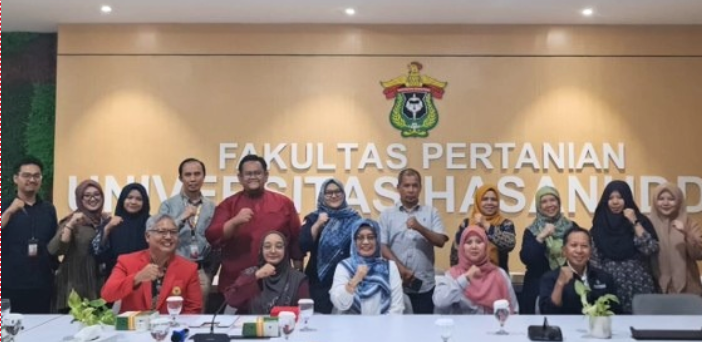
Hasanuddin University (UNHAS), in collaboration with Universiti Teknologi Malaysia (UTM) and the Local Government of Sidenreng Rappang (Sidrap) Regency has strengthened international cooperation to support the sustainable development of porang (Amorphophallus muelleri) as a high-value agricultural commodity in South Sulawesi.
The collaboration brought together academics, local government officials, industry representatives, and farmers to explore opportunities for developing an integrated porang value chain—spanning cultivation and post-harvest management to processing and access to international markets. The initiative highlights the importance of connecting university research with the needs of farmers, industry, and regional development.
As part of the activities, representatives from UNHAS and UTM held discussions with the Sidrap Government to identify opportunities for research collaboration and technology-based development in the porang sector. The meeting emphasized the potential of Sidrap to strengthen their position as a primary production hub while increasing the added value of porang through improved cultivation practices, product development, and downstream processing. The delegation also conducted field.
activities to gain a better understanding of the existing porang ecosystem. Visits to cultivation areas provided opportunities to interact directly with farmers and observe production conditions, while engagement with processing facilities offered insights into post-harvest handling and the challenges of developing market-ready products.
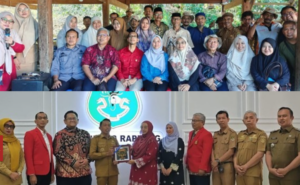
The international dimension of the collaboration is expected to contribute to broader opportunities for knowledge exchange, joint research, innovation, and market development. Cooperation with UTM may also strengthen connections between Indonesia and Malaysia in developing porang-based products and exploring their potential within Southeast Asian and global markets. Beyond commodity development, the initiative demonstrates how international university partnerships can generate tangible impacts at the regional level. By bringing together scientific expertise, government support, industry participation, and local farming knowledge, the collaboration seeks to establish a more sustainable and competitive porang value chain that can contribute to local economic development and farmers’ welfare.
This initiative supports several United Nations Sustainable Development Goals (SDGs), notably SDG 1: No Poverty and SDG 8: Decent Work and Economic Growth by enhancing smallholder farmers’ livelihoods and driving sustainable regional economic development. Additionally, it aligns with SDG 2: Zero Hunger and SDG 12: Responsible Consumption and Production through value-added agricultural practices and sustainable food innovation, as well as SDG 17: Partnerships for the Goals by fostering cross-border academic and public-private sector collaboration. The initiative reflects the commitment of UNHAS to expanding meaningful international partnerships and translating academic collaboration into practical solutions for regional and global challenges, particularly in sustainable agriculture, food innovation, and community empowerment.