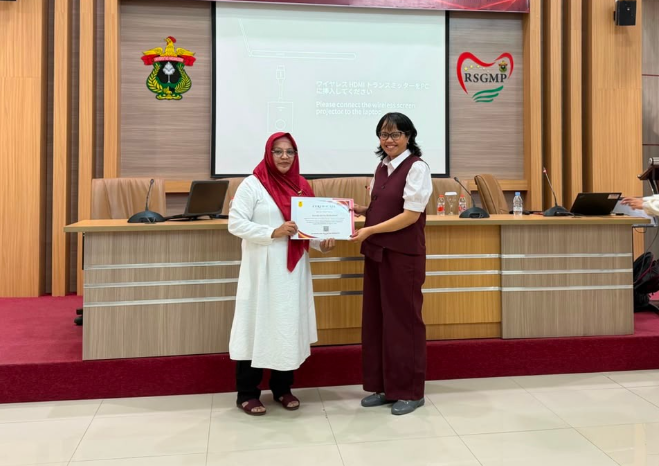
From 12 – 27 July 2026, two students from the Faculty of Nursing, Hasanuddin University (UNHAS)—Dedi Mizwar and Rezky Salsabila from the Professional Nursing Program—participated in the Global Basic and Clinical Practice Exchange Program 2026 at Kanazawa University, Japan, alongside two students from Taipei Medical University, Taiwan. Throughout the two-week program, participants explored Japan’s healthcare system through clinical observations, discussions with faculty members and healthcare professionals, and cultural exchange activities.
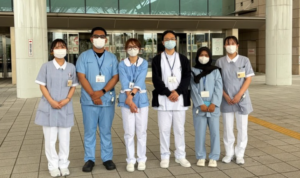
The Global Basic and Clinical Practice Exchange Program is an annual academic exchange program organized by Kanazawa University. The participation of UNHAS students is part of the longstanding collaboration between the Faculty of Nursing, UNHAS, and Kanazawa University, Japan. The program aims to strengthen international collaboration in nursing education while enhancing students’ clinical competencies and global perspectives.
During the program, participants visited various healthcare facilities, including Saiseikai Hospital, Kanazawa University Hospital, Hanaume Cancer Support Center, Share Kanazawa, and other community healthcare settings. They gained firsthand experience in gerontological, pediatric, maternity, critical care, mental health, hospice, dialysis, and outpatient chemotherapy nursing while observing Japan’s evidence-based, patient-centered, and multidisciplinary approach to healthcare.
In addition to clinical learning, the program introduced participants to Japan’s nursing education system, rehabilitation technologies, integrated community care, and patient safety practices. Cultural and historical visits further enriched their understanding of Japanese values, including discipline, respect, responsibility, and the spirit of Omotenashi—the Japanese philosophy of wholehearted hospitality, providing sincere and thoughtful service by anticipating and caring for the needs of others.
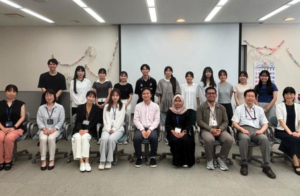
This initiative is in line with SDG 3: Good Health and Well-Being by enhancing nursing competencies to advance patient care standards, as well as SDG 4: Quality Education by providing transformative, cross-border clinical training. Furthermore, it supports SDG 17: Partnerships for the Goals by bolstering institutional ties and knowledge exchange between higher education institutions in Indonesia, Japan, and Taiwan. Additionally, the Global Basic and Clinical Practice Exchange Program 2026 provided valuable academic, professional, and intercultural experiences that broadened the participants’ global perspectives and strengthened international collaboration. The knowledge, skills, and best practices gained from the program are expected to contribute to the advancement of nursing education and the improvement of healthcare services in Indonesia.