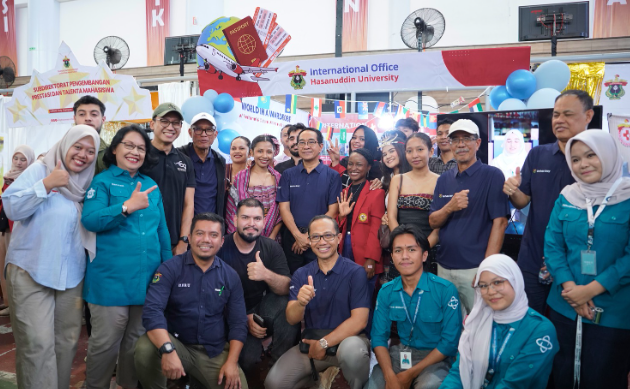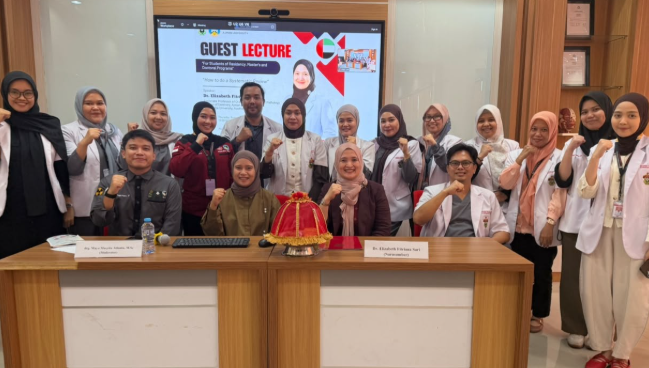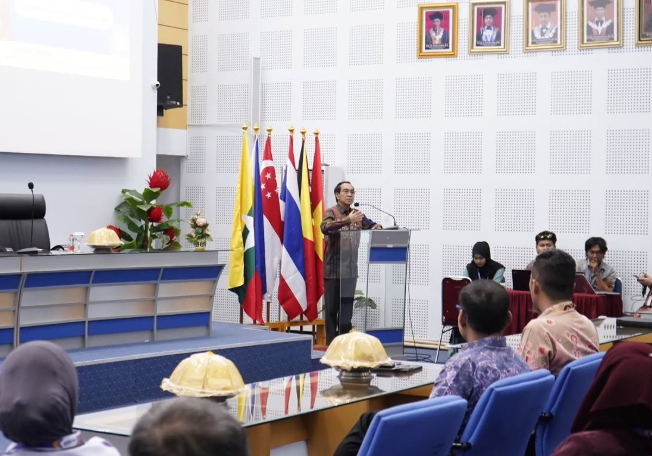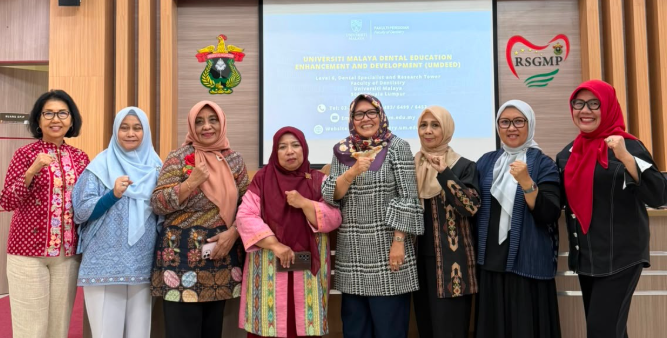
As part of its commitment to educational innovation and digital transformation, the Faculty of Dentistry, Hasanuddin University (FDHU), hosted an international guest lecture entitled “Ethical Uses of Generative Artificial Intelligence in Higher Education” during the Intercontinental Partnership Summit in Dentistry 2026, held in conjunction with the Asia-Pacific Regional Summit and the 3rd International Dental Summer Course (IDSC) 2026. The lecture featured Ananda Astrini Senel (née Muhammad), Senior Assessment Research and Analysis Manager at Oxford University Press and Ph.D. Candidate in Applied Linguistics and Technology at Iowa State University, USA. Recognized for her expertise in language assessment, educational technology, and artificial intelligence in higher education, she shared valuable perspectives on the opportunities and challenges of integrating generative AI into teaching, learning, and academic assessment.
The session attracted undergraduate and postgraduate students, residents, lecturers, researchers, and academic staff from the Faculty of Dentistry, reflecting the growing interest in the role of artificial intelligence in modern higher education. As generative AI technologies continue to reshape educational practices worldwide, the lecture provided timely insights into how universities can embrace these innovations while maintaining academic quality and ethical standards. During her presentation, she discussed the evolving role of generative artificial intelligence in supporting learning, research, and assessment. She emphasized that AI should be viewed not merely as a technological tool but as a resource that, when used responsibly, can enhance critical thinking, creativity, and lifelong learning. Participants were introduced to practical examples of how generative AI can assist educators and students with academic writing, lesson preparation, feedback generation, research support, and personalized learning, while also recognizing its limitations.
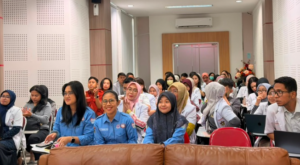
A major focus of the lecture was the importance of AI literacy in higher education. Participants explored the knowledge and competencies required to use AI effectively, critically evaluate AI-generated content, and make informed decisions when integrating AI into academic activities. The discussion highlighted that developing AI literacy has become an essential skill for both educators and students in preparing for the future of education and professional practice. The lecture also addressed the ethical dimensions of generative AI, particularly the importance of responsible AI use and academic integrity. Ananda Astrini encouraged participants to adopt transparent, ethical, and accountable approaches to AI use, emphasizing that these technologies should complement, rather than replace, human expertise, professional judgment, and scholarly inquiry. She discussed issues related to authorship, originality, bias, data privacy, and the responsible disclosure of AI-assisted work, underscoring the need for universities to establish clear institutional guidelines for AI use. The interactive session concluded with an engaging discussion between participants and the speaker on the future of artificial intelligence in dental education. Students and faculty members shared their experiences using AI-powered tools in learning, research, and clinical education while exploring strategies to integrate these technologies into curricula without compromising educational quality or professional ethics.
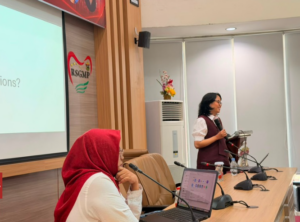
According to the organizing committee, the guest lecture reflects the Faculty of Dentistry’s commitment to preparing graduates and academics for an increasingly digital and technology-driven educational environment. By inviting international experts with multidisciplinary expertise, the Faculty continues to broaden perspectives on emerging global issues while fostering innovation in teaching, research, and academic development. The event also demonstrated the Faculty’s commitment to international collaboration by connecting its academic community with globally recognized experts from leading institutions such as Oxford University Press and Iowa State University. Through activities like this, the Faculty aims to cultivate a culture of innovation, critical thinking, and responsible technology adoption that supports excellence in dental education and research.
As higher education continues to evolve alongside rapid technological advancements, initiatives such as this international guest lecture reaffirm the Faculty of Dentistry’s vision of becoming a globally connected institution that embraces innovation while upholding the highest standards of academic integrity, ethics, and educational excellence. This initiative primarily supports Sustainable Development Goal 4 (SDG 4): Quality Education, particularly Target 4.4, which promotes the development of relevant skills for employment, decent work, and entrepreneurship. By increasing AI literacy among students, lecturers, researchers, and academic staff, the program contributes to developing the digital competencies needed for responsible participation in an increasingly technology-driven educational and professional environment. The emphasis on ethical AI, academic integrity, critical evaluation, and responsible technology use also supports efforts to ensure that technological innovation contributes to inclusive, high-quality, and lifelong learning opportunities.