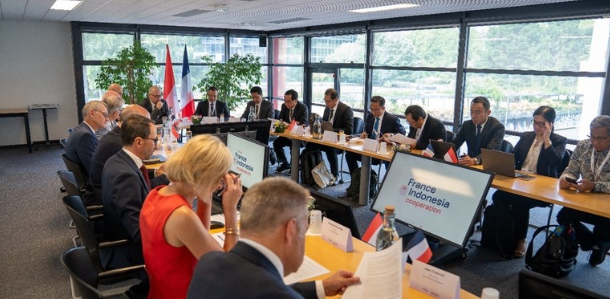
MAKASSAR — Hasanuddin University (Unhas) continues to translate its commitment to sustainable development into concrete action through a range of environmental programs. In supporting the achievement of the Sustainable Development Goals (SDGs), particularly SDG 14: Life Below Water, Unhas has implemented a number of initiatives aimed at improving water management, reducing environmental pollution, and promoting the sustainable use of water resources.
These efforts are also part of Unhas’ broader commitment to strengthening its sustainable campus ecosystem and supporting environmental indicators assessed through the UI GreenMetric World University Rankings.
Rector of Hasanuddin University, Prof. Dr. Ir. Jamaluddin Jompa, M.Sc., emphasized that sustainability should not remain merely a concept, but must be reflected through concrete programs and infrastructure across the university.
“For Unhas, sustainability must be translated into real action. Through the integration of education, research, infrastructure, and environmental management, we are working to ensure that our campus contributes to the Sustainable Development Goals and creates a positive impact beyond the university environment,” said Prof. Jamaluddin Jompa.
Among Unhas’ initiatives in sustainable water management are four major programs under the Water Recycling Program Implementation.
Sewage Treatment Plant: Treating Wastewater Through Biological Technology
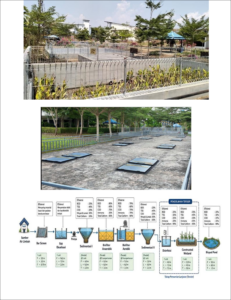
Unhas has implemented Sewage Treatment Plants (STP) since 2012 at several locations, including the Faculty of Engineering at Gowa Campus, the Faculty of Medicine, and Unhas Hotel and Convention Centre at Tamalanrea Campus. The facilities apply anaerobic-aerobic biofilter technology to treat organic compounds and pollutants through biological processes.
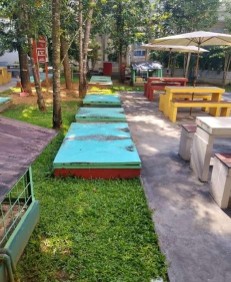
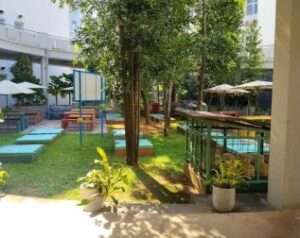
Rather than being discharged directly into surface water, the treated water is channeled through eco-drainage systems, allowing water to infiltrate the soil and supporting artificial water bodies on campus. Recycled water is also utilized for research activities, including experiments at the hydraulic laboratory.
Wastewater Treatment Plant: From Domestic Wastewater to Reusable Water
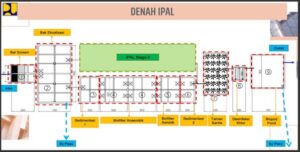
Another key initiative is the Wastewater Treatment Plant (WWTP) at the Faculty of Engineering, Gowa Campus, which has been operating since early 2022. The facility uses anaerobic-aerobic biofilter technology to process wastewater generated from various domestic activities within the campus environment.
With a treatment capacity of 300 cubic meters per day, the WWTP serves several campus facilities, including student dormitories, the Student Center, Science Techno Park, Sports Hall, canteen, mosque, and auditorium.
The treated water is subsequently connected to eco-drainage and artificial lakes, where it can support research and laboratory activities as well as plant irrigation.
Underground Rainwater Harvesting: Building Alternative Water Reserves
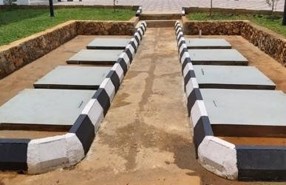
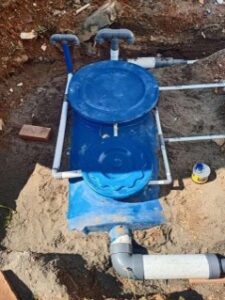
Unhas has also developed an Underground Rainwater Harvesting Treatment system to collect and store rainwater as an alternative water reserve. The system was designed to help address limited clean water supplies, particularly during longer dry seasons, while also supporting emergency needs such as firefighting on campus.
The underground reservoir collects rainwater from building rooftops and is equipped with manual and electric pumps. The collected water can be recycled and utilized as a water service supply, including as an intake source for water treatment processes.
Rainwater Harvesting with Activated Carbon and Electrolysis
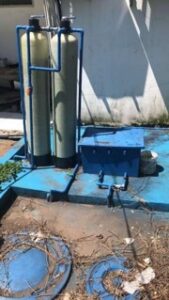
The fourth program is the Upper-Ground Rainwater Harvesting Treatment using Activated Carbon and Electrolysis, implemented through the HYDROIN innovation at the Faculty of Public Health.
The system utilizes rainwater through several stages of filtration, including coarse filtration, activated carbon to absorb organic contaminants and odors, and microfiltration to remove fine particles. The filtered water is then processed using an electrolysis-based method.
Through these four programs, Unhas is developing an integrated approach to water management that emphasizes treatment, recycling, harvesting, and reuse.
Prof. Jamaluddin Jompa added that universities have an important role in ensuring that knowledge and innovation are translated into practical solutions for environmental challenges.
“Universities must become living laboratories for sustainability. What we develop through science, innovation, and campus management should provide solutions to real challenges, including water conservation, pollution prevention, and the protection of our ecosystems,” he said.