
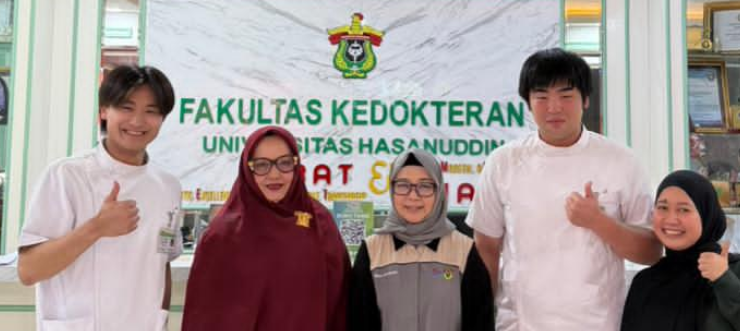
The Faculty of Medicine (FK) at Hasanuddin University (UNHAS) continues to demonstrate their commitment to strengthening international networks through the sustained implementation of a student exchange program with Kanazawa University, Japan. This program serves as a concrete example of cross-border academic collaboration, focusing not only on knowledge exchange but also on clinical experience and intercultural understanding.
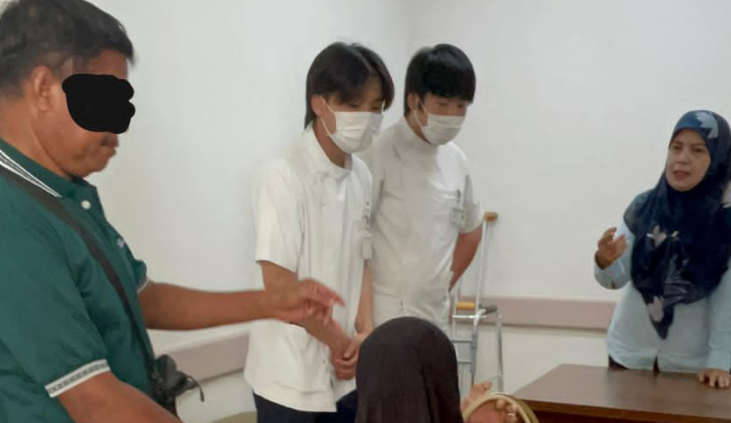
As part of the ongoing program, FK UNHAS is hosting two students from Kanazawa University, Taiki Kawabata and Kosuke Mitsui. Both students began their academic activities at FK UNHAS on 13 April and will continue until 1 May 2026. During their stay, they have actively participated in various academic and clinical activities within the faculty, as well as in affiliated teaching hospitals and several community health centers (Puskesmas) in Makassar.
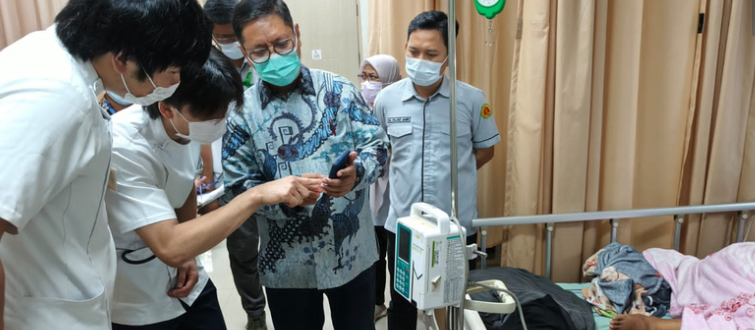
The exchange program is designed to provide a more comprehensive understanding of infectious and tropical diseases commonly found in Indonesia. In practice, the two students have undertaken clinical rotations across several major departments, including Internal Medicine, Pediatrics, Pulmonology and Respiratory Medicine, and Obstetrics and Gynecology. Through these rotations, they have gained hands-on experience in diagnosing and managing cases that are relatively rare in Japan.
In addition to academic and clinical activities, Taiki Kawabata and Kosuke Mitsui also participated in a community service program organized by the Doctoral (PhD) Program of the Faculty of Medicine, UNHAS, in Sidenreng Rappang (Sidrap) Regency. Their involvement in this initiative provided them with direct experience in community healthcare services, while also enriching their understanding of public health conditions in regional areas.’
The Vice Dean for Publication, Community Service, and International Affairs of the Faculty of Medicine UNHAS, Prof. Dr. dr. Rina Masadah, Sp.PA(K)., M.Phil., DFM, stated that this inbound student exchange program has been consistently implemented over the past several years. She emphasized that the program not only offers academic benefits to participating students but also contributes to strengthening institutional partnerships and supports UNHAS’s broader internationalization efforts.