
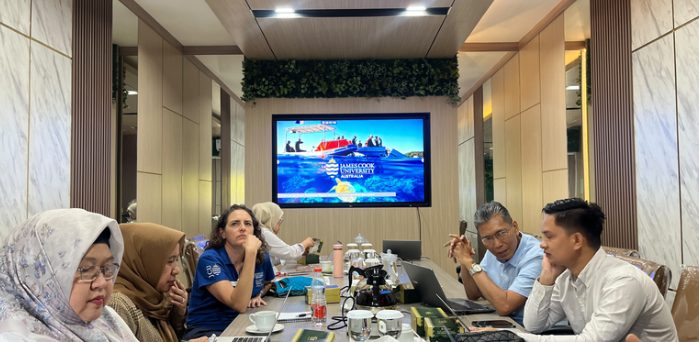
The Faculty of Marine Science and Fisheries (FIKP), Hasanuddin University (UNHAS), hosted Associate Professor Naomi Gardiner from James Cook University (JCU), Australia, an expert in Marine Biology, Fisheries Science, and Ecosystem Restoration, during a meeting held on Thursday, 16 July 2026, in the FIKP UNHAS Deanery Meeting Room. The meeting marked an important milestone in exploring opportunities for international collaboration, particularly in research and human resource development through overseas postgraduate study Programs.
During the session, Associate Professor Gardiner presented various collaborative opportunities that could be developed between FIKP UNHAS and James Cook University, including joint research projects, academic exchanges, and study pathways for both students and academic staff at master’s and doctoral levels. The discussion focused primarily on marine science and fisheries, which represent core strengths for both institutions.
She highlighted that James Cook University excels in marine sciences, coastal resource conservation, coral reef ecology, fisheries, and tropical environmental management. Located in Queensland, Australia, JCU benefits from direct access to the Great Barrier Reef, positioning the university as one of the world’s leading hubs for tropical marine research.
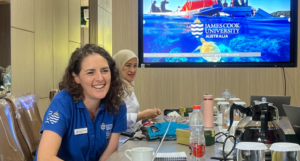
Globally, James Cook University is ranked 440th in the QS World University Rankings 2026 and sits within the top 100 worldwide for Earth and Marine Sciences according to the QS World University Rankings by Subject 2026. These achievements further reinforce JCU’s reputation as a premier institution for education and research in marine and fisheries science.
The meeting is expected to serve as a foundational step towards establishing concrete partnerships between FIKP UNHAS and James Cook University. Proposed outcomes include joint research initiatives, student and staff exchanges, capacity building, and an increase in collaborative international publications. This synergy aligns with the ongoing commitment of FIKP UNHAS to expanding its global network and enhancing its contribution to the advancement of marine and fisheries science on an international scale.