
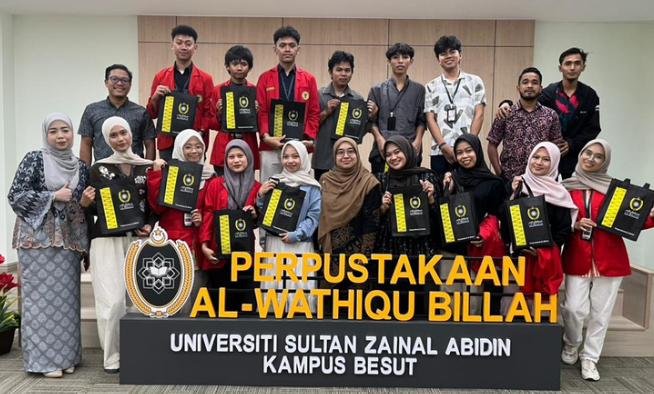
Hasanuddin University (UNHAS) has once again demonstrated their commitment to expanding their global network and enhancing student capacity through international exchange programs. A total of 14 students from the UNHAS Faculty of Animal Science (Fapet) have been dispatched to Universiti Sultan Zainal Abidin (UniSZA) in Malaysia to participate in the FPV Inbound Mobility Program 2026, themed “Advancing Veterinary Entomology Through Global Mobility.” Running from 16 to 30 June 2026, the program includes students from three academic levels: doctoral, master’s, and undergraduate.
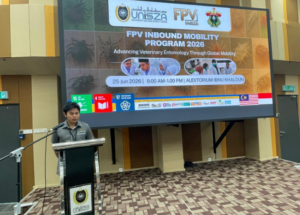
The Dean of the Fapet UNHAS stated that this program is part of the university’s strategic efforts to encourage outbound student academic mobility while addressing global challenges in animal feed security and organic waste management. “We fully support this initiative by the Faculty of Animal Science. This program not only enriches the students’ academic insights but also serves as tangible proof that UNHAS remains actively engaged in building impactful international collaborations,” they remarked.
The two-week program is designed using a blended learning method that combines online lectures with hands-on field practice. During 16 – 23 June 2026, students attended online lectures from the UNHAS campus in Makassar via the Google Meet/UniSZA platform. The material covered included the basics of entomology, insect structure and function, the role of insects as disease vectors, and their utilization in animal feed and biotechnology.
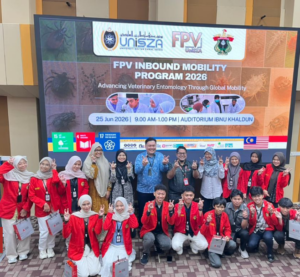
Entering the second week (24–30 June 2026), all participants traveled to the Besut Campus in Terengganu, Malaysia, to attend face-to-face sessions and field practicums at UniSZA’s Faculty of Veterinary Medicine. Activities in Malaysia include identifying vector insects in the laboratory, case discussions on the role of insects in animal feed, and industrial visits to Black Soldier Fly (BSF) production facilities as an innovative solution for organic waste management and alternative feed supply.
This program delivers a number of strategic benefits. For students, the cross-border learning experience adds value to their academic competence while honing intercultural communication, international teamwork, and independence. Additionally, each participant has the opportunity to earn 1 course credit that can be transferred into the UNHAS curriculum. For the Fapet UNHAS, this collaboration opens up opportunities for joint research, international publications, and the potential development of future double degree or sandwich programs. Meanwhile, for UNHAS, this activity supports the achievement of Key Performance Indicators (IKU) regarding students participating in activities abroad and strengthens UNHAS’s position as a higher education institution active in international mobility.
UniSZA itself is a leading public university in Malaysia that has established strategic partnerships with more than 100 higher education institutions across Asia and Europe. As the host, UniSZA’s Faculty of Veterinary Medicine holds an excellent reputation in the development of tropical veterinary medicine, including veterinary entomology, which serves as the main theme of this program.
The University Leadership, through the UNHAS International Office under the coordination of the UNHAS University Secretary, continues to encourage and facilitate various student mobility programs through both scholarship pathways and institutional partnerships. Through this program, UNHAS hopes to continue expanding its global network and producing graduates who are not only competent in their fields but also competitive on the international stage. With the program concluding on June 30, 2026, all participants are scheduled to return to Indonesia on 1 July 2026. UNHAS remains optimistic that this valuable experience will equip students to face future global challenges.