
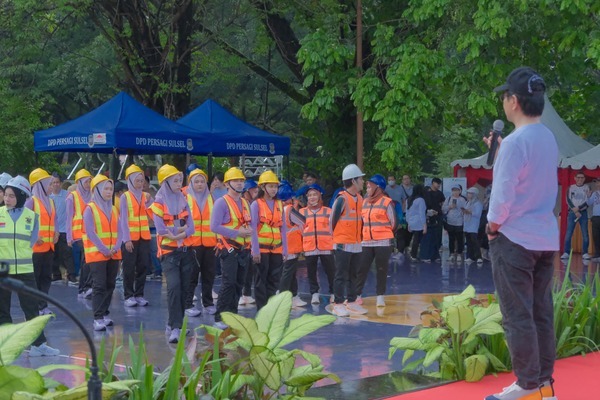
Hasanuddin University (Unhas), through the Directorate of Human Resources, particularly its Subdirectorate of Occupational Safety and Health (K3), launched the “Mission Possible: Zero Obesity, Total Safety” movement as part of National K3 Month. The program is designed as an integrated movement to strengthen a healthy, safe, and productive work culture on campus.
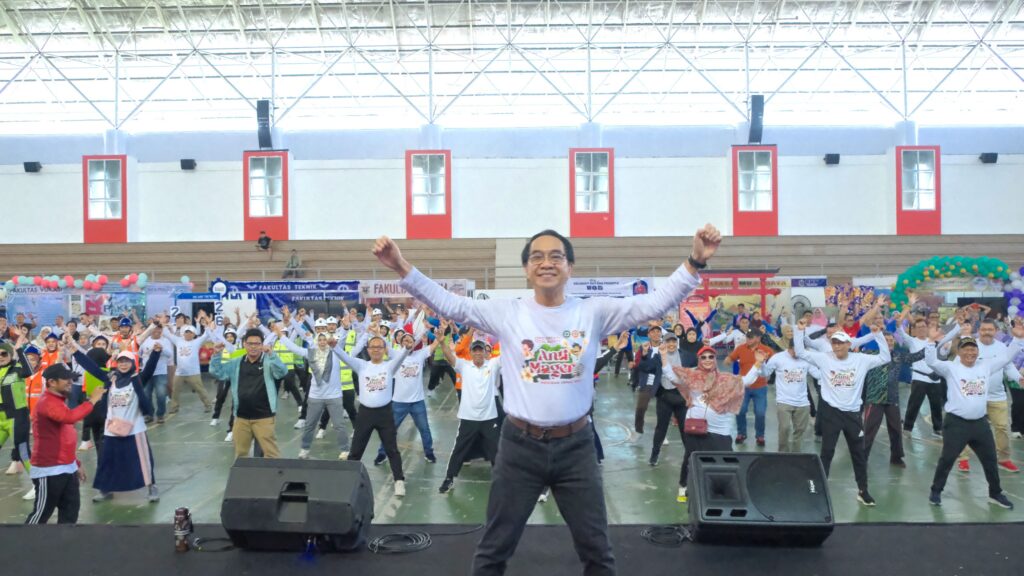
The event, combined with an exercise session by the Unhas K3 Ambassadors under the “Healthy Unhas, Anti Mager (Anti-Sedentary)” campaign, took place at the UKM Field, Unhas Tamalanrea Campus, Makassar, on Sunday (8 February), starting at 07:00 WITA (Central Indonesia Time). The event symbolizes the integration of more physical activity with a stronger occupational safety culture.
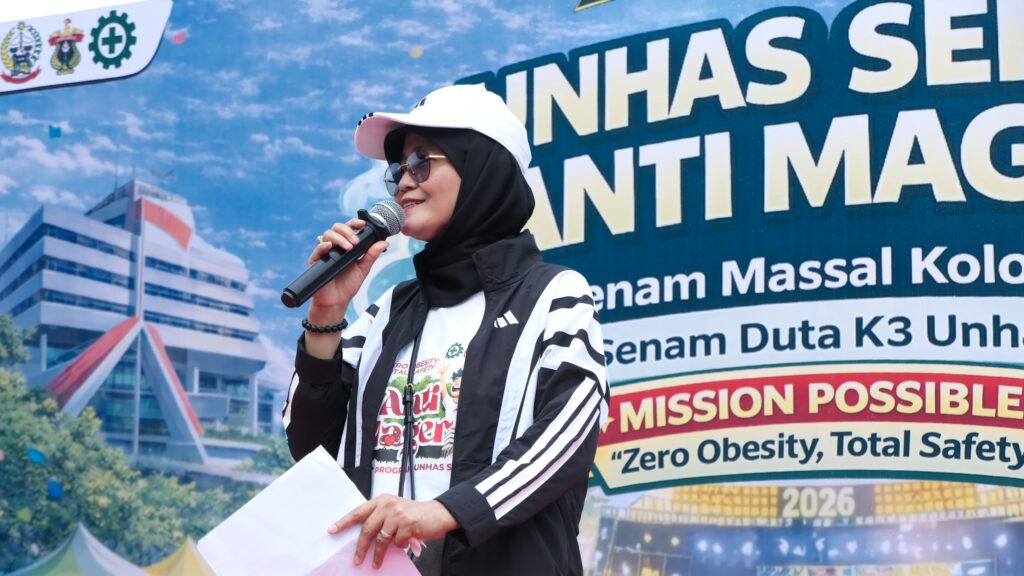
Vice Rector for Human Resources, Alumni, and Information Systems Prof. Dr. Farida Patittingi, S.H., M.Hum., explained in remarks that since the Unhas K3 team was formed, work environment inspections have been carried out routinely and systematically. K3 Ambassadors are tasked with ensuring that the cleanliness, safety, and comfort of the academic community’s workspaces meet standards.
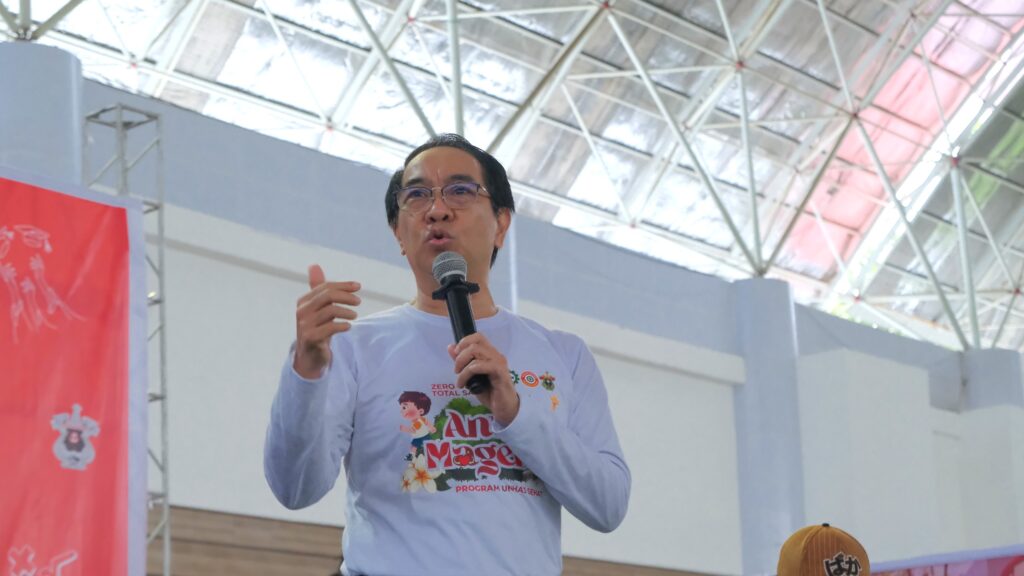
Unhas Rector Prof. Dr. Ir. Jamaluddin Jompa, M.Sc. stressed that K3 must be an integrated part of university governance. K3 is a fundamental aspect in supporting the productivity and sustainability of the institution, as practiced strictly for a long time in many developed countries.
“We are proud that Unhas K3 has been transformed thoroughly and in detail. K3 is not only an internal need but also part of supporting strategic government programs. Through K3 Ambassadors in every work unit, we are building drivers of a safe, healthy, and sustainable work culture on campus,” explained Prof. JJ.
Furthermore, Prof. JJ urged heads of work units at Unhas to set an example in building healthy and active habits. The anti-sedentary principle is considered important to keep promoting by reminding one another, and by broadening the dimension of work comfort supported by excellent physical condition.
The event was officially opened by the Governor of South Sulawesi, represented by Head of the South Sulawesi Provincial Youth and Sports Office H. Suherman, S.E., M.M. In remarks, H. Suherman stressed the importance of collective commitment in building a healthy and safe work culture integrated with the movement to increase public physical activity.
The South Sulawesi Provincial Government aims for a society that is physically active, healthy, and highly aware of safety. This support is reflected in cross-sector collaboration, including through mass exercise sessions as a symbol of strengthening an active lifestyle.
Suherman explained that nationally, the event responds to three main issues: low levels of public physical activity, the rising prevalence of non-communicable diseases such as obesity, hypertension, and diabetes, and the need to strengthen K3 awareness in various institutions. These three issues are the basis for developing campus-based intervention strategies.
“Unhas has succeeded in integrating these three challenges into one big movement: healthy, productive, safe, and competitive. The university serves not only as a center of education but also as a social laboratory for building a modern work culture model that can be replicated nationally,” explained Suherman.
Suherman also urged the entire Unhas academic community to be active every day, with a target of at least 10,000 steps, exercise sessions, jogging, or other physical activity as a long-term health investment with a direct impact on work productivity. In addition, safety principles must be a priority in all academic activities, driving, and administrative work.
“Unhas K3 Ambassadors are the face of change and a symbol of real commitment. K3 is not just a slogan but a work culture that must be lived and applied consistently. Make Unhas a national benchmark for a healthy campus and a safe campus,” Suherman concluded.
Through the Mission Possible movement, Unhas affirms its role as an institution that is adaptive to modern health challenges. The integration of safety, health, and productivity is expected to create a stronger, more resilient, and future-oriented campus work ecosystem. The event then continued with the official launch of Healthy Unhas, Anti Mager, as a form of real collaboration with the South Sulawesi Provincial Government. (*/mir)
Editor : Ishaq Rahman
This article is an English translation of the original Indonesian report.