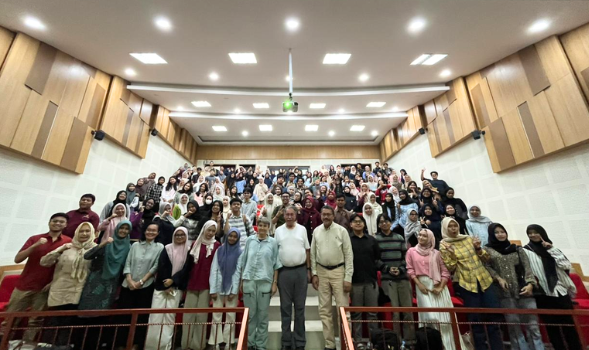
The Faculty of Public Health (FKM), Hasanuddin University (UNHAS), successfully hosted an international guest lecture featuring Assoc. Prof. Andrew Holmes from the School of Life and Environmental Sciences, The University of Sydney, on Tuesday, 7 April 2026. The session took place at the Aula Prof. Dr. Ir. Fachruddin, Sekolah Pascasarjana UNHAS, and attended more than 150 participants, ranging from undergraduate to doctoral students, as well as researchers and academics in nutrition and public health.
Organised in conjunction with the 3rd International Conference on Nutrition and Public Health (ICNPH 2026), the lecture highlighted the growing importance of integrating microbiome science into nutrition research and public health strategies.
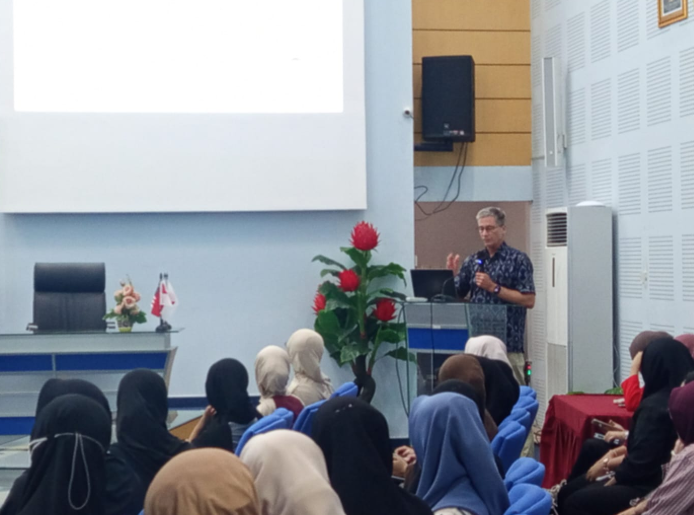
The session began with a brief welcome by Dr. Andi Imam Arundhana Thahir, Head of the Department of Nutritional Science, FKM UNHAS, who greeted the speaker and participants while highlighting the increasing relevance of microbiome research in shaping the future direction of nutrition science.
During the session, Assoc. Prof. Holmes discussed how dietary patterns interact with the gut microbiome to influence health outcomes, emphasising that humans function as symbiotic systems in which microbial communities play a crucial role in metabolic regulation, immune function, and disease risk. He further framed this field as not merely the study of microbes, but as an effort to understand how diet shapes biological processes and long-term health outcomes.
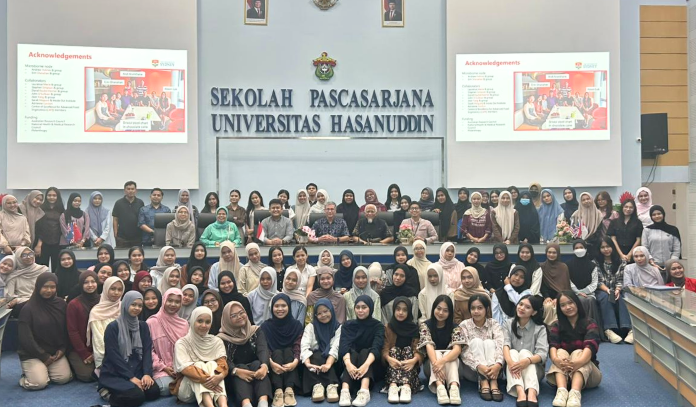
Building on this perspective, Dr. Andi Imam Arundhana Thahir emphasised that such discussions reflect a critical shift towards integrating microbiome science into precision nutrition, where future public health strategies will increasingly depend on understanding diet–microbiome interactions to design more personalised and effective nutrition interventions.
The lecture also highlighted key challenges in microbiome research, including the fact that people can respond differently to the same diet and that it remains difficult to clearly define what a “healthy” microbiome looks like. It further pointed to the limitations of current approaches in capturing the full complexity of microbial communities. To address these challenges, more comprehensive approaches that integrate diet, microbiome, and human health data are needed to better predict outcomes and inform effective interventions. Importantly, the session underscored the relevance of microbiome-informed approaches for addressing major public health challenges, including obesity, metabolic disorders, and the ongoing nutrition transition.
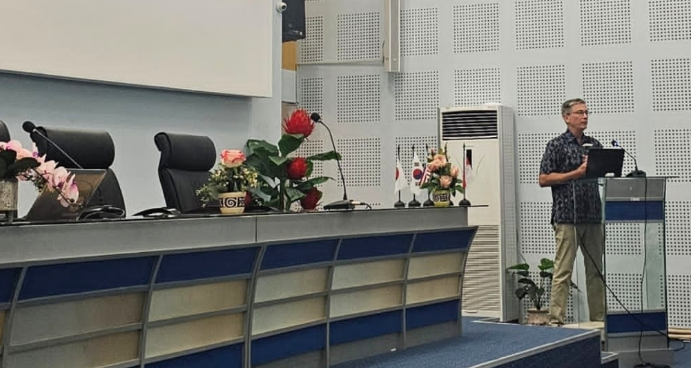
The discussion also opened opportunities for future collaboration between UNHAS and international partners in advancing diet–microbiome research, particularly in the Indonesian context, where expanding studies in diverse settings such as Sulawesi can contribute to the development of more representative microbiome datasets from underexplored populations and strengthen the global evidence base.
This activity forms part of FKM UNHAS’s broader efforts to engage in international collaboration and advance research in public health nutrition.