
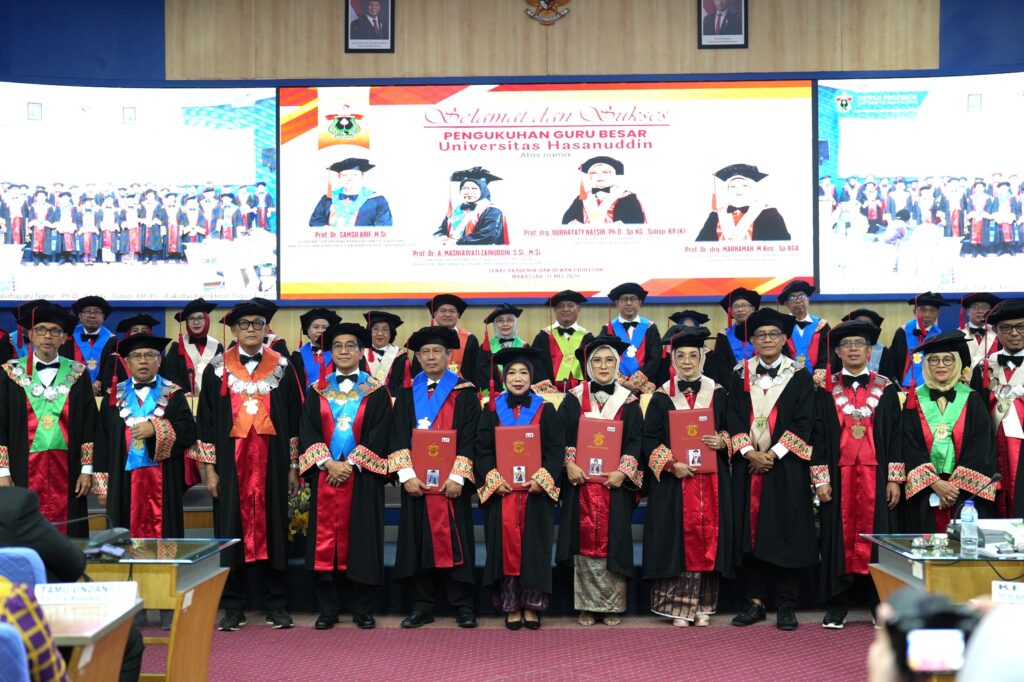
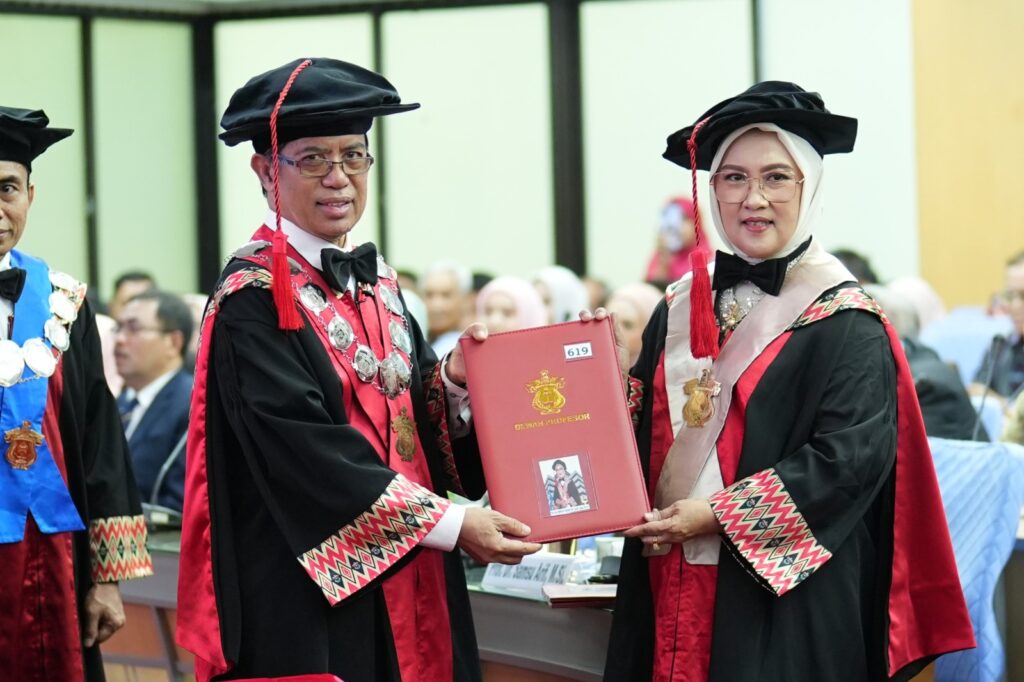
Before being officially inaugurated as new members of the Council of Professors, four Hasanuddin University (Unhas) professors delivered their inaugural addresses before a closed plenary session of the Academic Senate on Monday (11 May). Each professor presented an inaugural address in their own field of expertise.
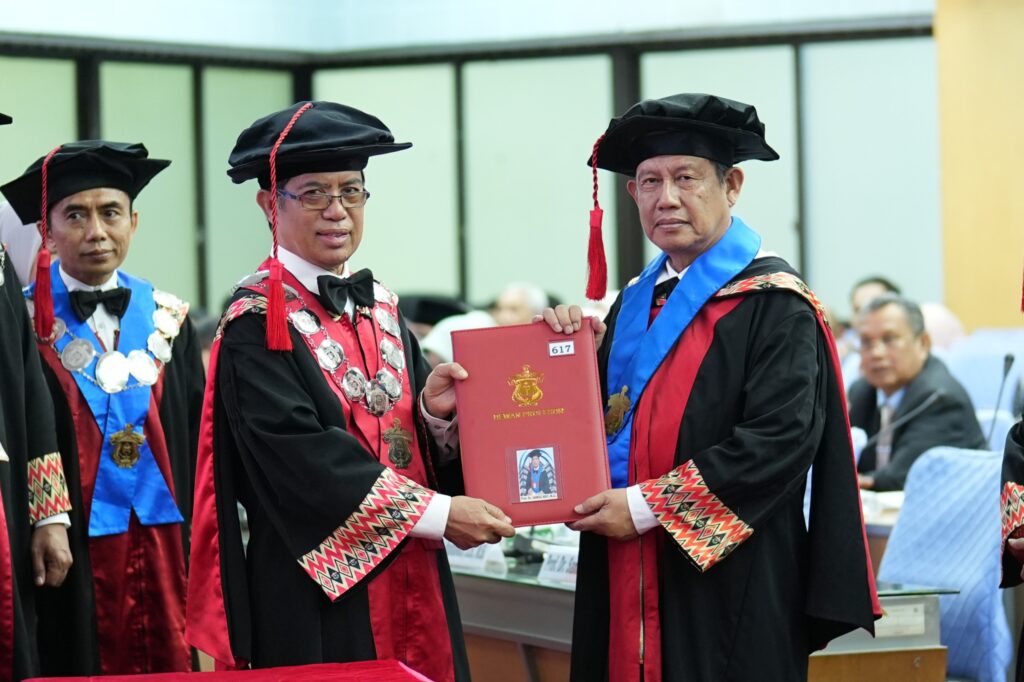
Prof. Dr. Samsu Arif, M.Si
Opening the inaugural addresses, Prof. Samsu Arif delivered an address titled “From the Philosophy of Space to Geo-AI: The Evolution of Spatial Thinking in Sustainable Development.” Prof. Samsu explained that sustainable development cannot be separated from the spatial dimension. Policies without a spatial basis tend to overlook geo-cultural expression and equitable distribution. GIS is therefore a tool of justice, and the spatial model is the spokesperson for the truth of data.
GIS (Geographic Information System) is the modern language of space. In the hands of scientists, GIS does not merely visualize; it builds critical and prognostic spatial narratives, presenting alternative possibilities in planning and decision-making.
We have now entered the era of spatial intelligence, more popularly known as Geo-AI, with Stan Openshaw as its leading pioneer. GIS converges with machine learning, cloud computing, real-time modeling, and WebGIS to democratize visualization and public participation.
“The ethical challenges of Geo-AI carry risks of algorithmic bias, risks to spatial data privacy, and the potential marginalization of local communities if they are not managed wisely. Therefore, every innovation must be accompanied by the principles of justice, transparency, and public participation,” said Prof. Samsu.
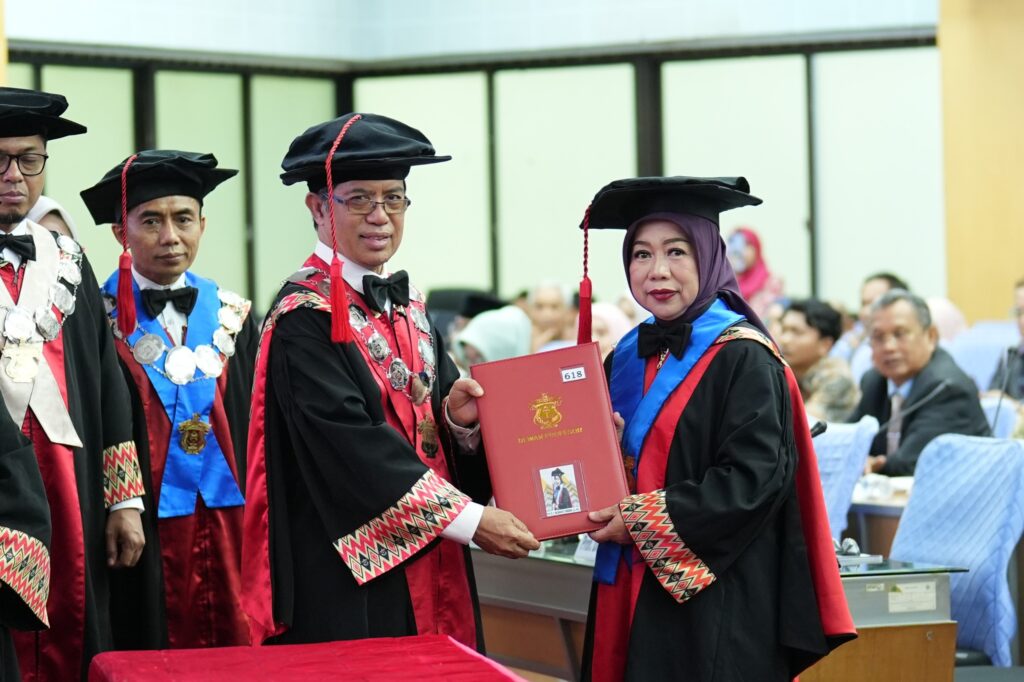
Prof. Dr. A. Masniawati, S.Si., M.Si
Prof. Masniawati delivered an address titled “Biotechnology of South Sulawesi Local Rice in Achieving National Food Security: From Germplasm to Biofactory.”
Local rice is germplasm with potential as a source of genes that control important traits in rice plants. The high genetic diversity of local rice can be utilized in rice breeding programs. To reduce the risk of losing the genetic resources of local aromatic rice, Prof. Masniawati said an inventory needs to be carried out.
The development of aromatic rice in Indonesia has become market-oriented, having initially been limited to trial-scale breeding. The potential of local aromatic rice matters as part of the community’s cultural wealth and agricultural heritage; each variety has its own local story and history. Aromatic rice is generally classified as specialty rice according to geographical indication, because its quality characteristics and aroma depend on the region where it is grown.
“Through the various studies we have conducted, South Sulawesi’s organic local rice has shown morphological diversity, physicochemical properties, and genetic stability that reflect strong adaptive potential. In an intact biological system, plants, including rice, always interact with their environment, especially with the microorganisms living around them,” said Prof. Masniawati.
The strength of local rice lies not only in the genetics of the plant but also in the biological network that sustains it. Soil, microorganisms, and plants form a single integrated system that works dynamically. When this system is understood and managed with the right biotechnological approach, local germplasm can be optimized without sacrificing environmental sustainability.
“It is from this need that the idea of the biofactory emerged, which I define as an integrated bioconversion approach that brings together local rice germplasm, functional microorganisms, and plant physiological processes in a single biological system. With this approach, food is no longer understood as an end product, but as a long process involving biological bioconversion,” added Prof. Masniawati.
From the biofactory perspective, local wisdom is not positioned as knowledge that runs counter to science, but as part of a biological system that needs to be read and understood scientifically.
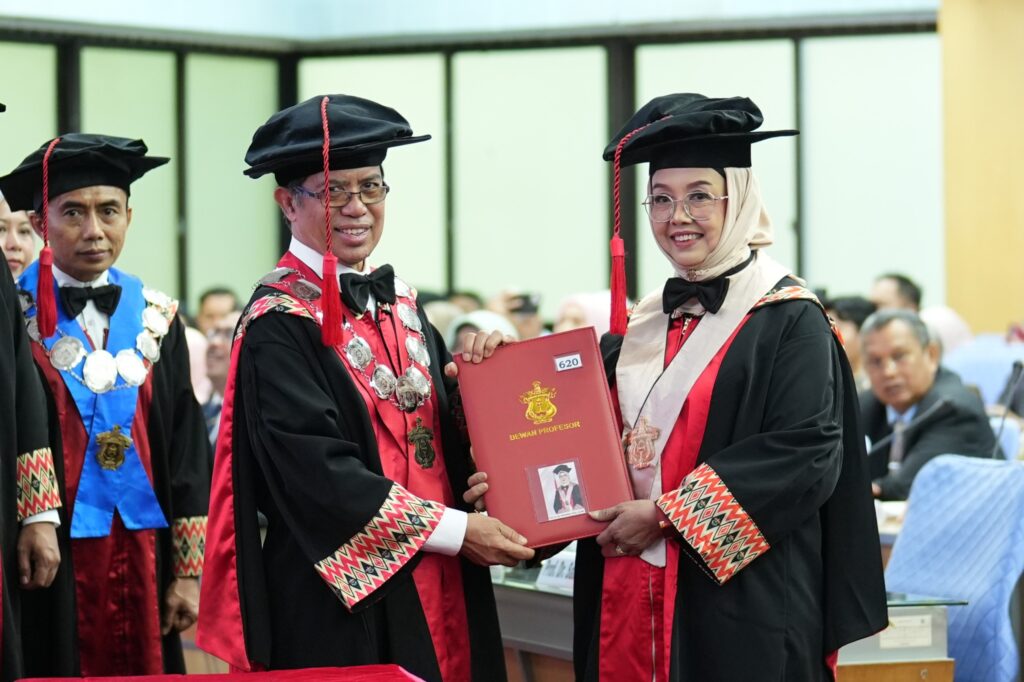
Prof. drg. Nurhayaty Natsir, Ph.D., Sp.KG-KR
Prof. Nurhayaty delivered an address on “KG-Paradigm of Aesthetic Dentistry in Modern Dental Care.”
Developments in digital technology have transformed the practice of aesthetic dentistry, particularly in treatment planning, through standardized clinical photography, software-based smile analysis, and more accurate and communicative simulations of results. Prof. Nurhayaty said this improves diagnostic precision and communication among dentists, technicians, and patients. However, excessive reliance on it without considering biological and functional conditions can pose risks if it is not balanced by a comprehensive clinical evaluation.
Aesthetic trends can give rise to the phenomenon of overtreatment: invasive procedures on teeth that are actually healthy, particularly in young patients. From a health perspective, overtreatment is not only a matter of individual ethics but also an issue of long-term health burden. One example of the risk is aggressive preparation for veneers/crowns in cases of discoloration that could actually be treated with bleaching.
In modern dental practice, aesthetics is closely linked to health and quality of life, as it affects self-confidence, social interaction, and psychological well-being. Aesthetic treatment should therefore be seen as part of overall health, as long as it is carried out rationally without sacrificing the biological integration of the teeth and supporting tissues.
“Amid rapid technological progress and aesthetic demands, professional ethics is the foundation for upholding dignity and public trust. The best aesthetics are those that sacrifice the least tooth tissue and do the most to preserve long-term health,” said Prof. Nurhayaty.
Dental curricula need to integrate basic sciences, clinical skills, ethics, and research to produce dentists who are competent, critical, and oriented toward patient safety. In service delivery, the aesthetic-biological approach must be patient-centered and sustainable in order to support quality of life and holistic dental health.
Prof. Dr. drg. Marhamah, M.Kes., Sp.KGA
Prof. Marhamah presented an address titled “Oral Cavity Abnormalities in Children Associated with Systemic Diseases.”
The oral cavity is the first part of the digestive system and has a complex structure. To function normally, the oral cavity is supported by three organ systems: the circulatory system, the nervous system, and the immune system. These three systems connect the mouth with the rest of the body, so a disorder in any one of them can affect the health of the oral cavity.
“Some oral diseases are not caused by microorganisms alone, but can be triggered and aggravated by disorders of these three organ systems. For example, a disorder of the nervous system can alter how organs function and even cause cell death because the supply of nutrients and oxygen is disrupted,” said Prof. Marhamah.
Several systemic diseases in children that cause abnormalities in the oral organs include lupus and inflammatory bowel disease, type 1 diabetes, AIDS, and leukemia, as well as epilepsy and cystic fibrosis. (*/mir)
Editor: Ishaq Rahman
This article is an English translation of the original Indonesian report.