
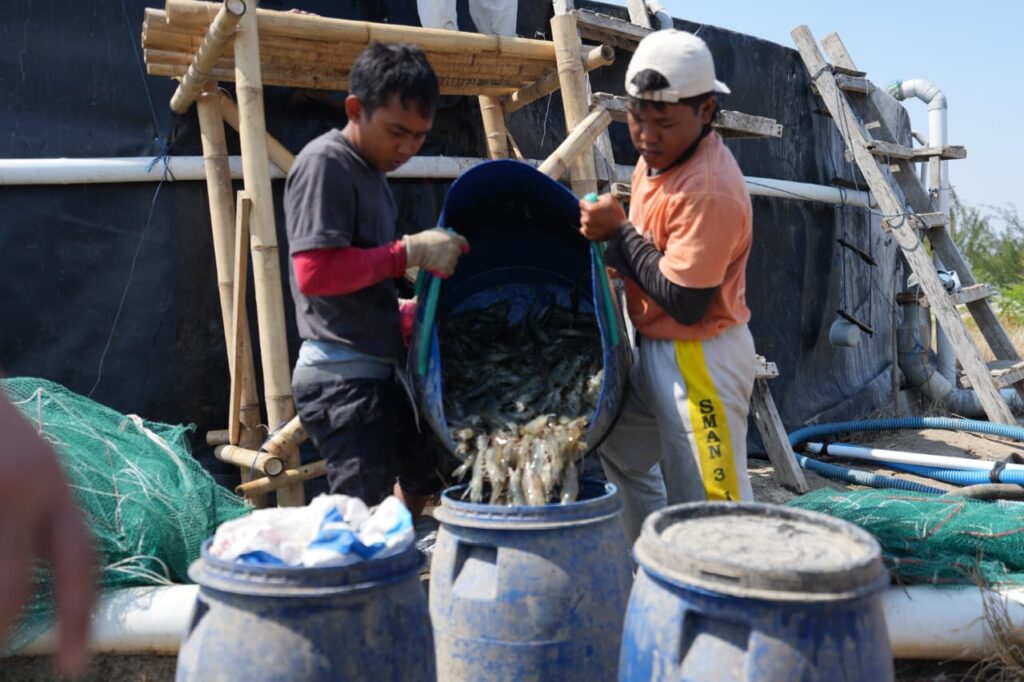
JENEPONTO – Hasanuddin University (Unhas) harvested vannamei shrimp (Litopenaeus vannamei) at the Unhas aquaculture ponds in Tamalate Village, Borong Tala, Jeneponto Regency, South Sulawesi, on Sunday, 27 September 2026. The harvest is part of a pond management cycle carried out in stages, taking into account the growth and density of the shrimp in the ponds.
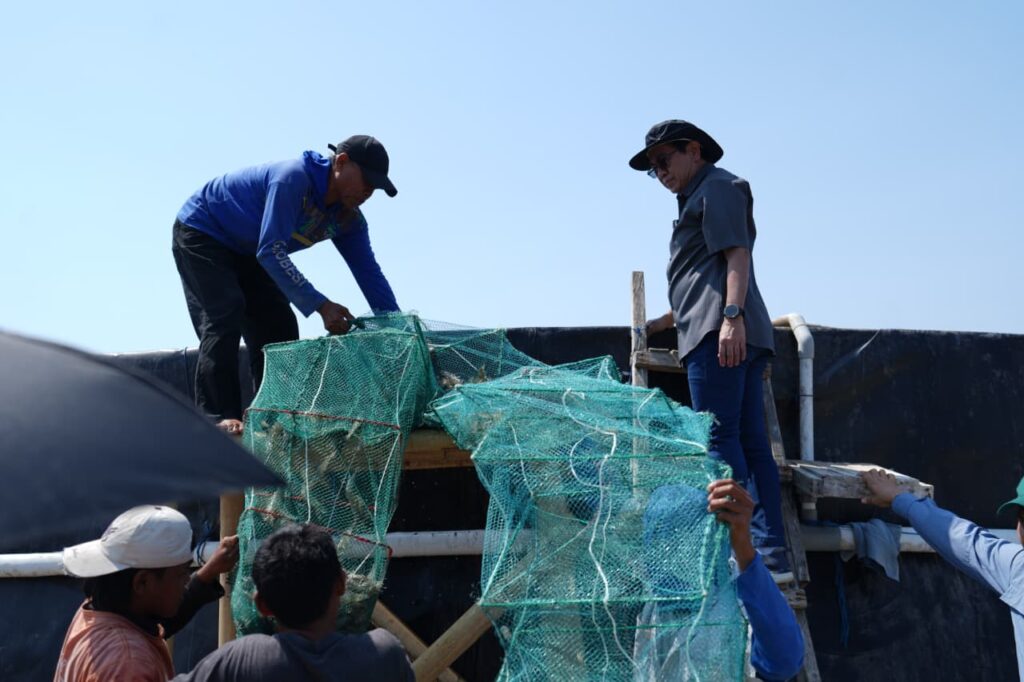
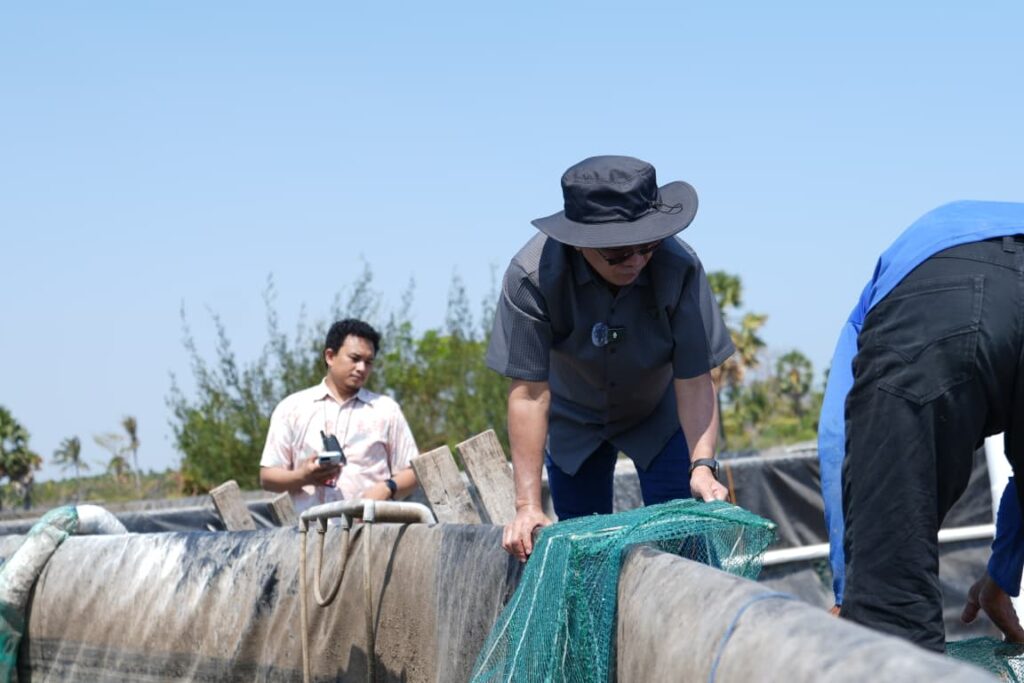
Unhas Rector Prof. Dr. Ir. Jamaluddin Jompa, M.Sc., also inspected the harvest, which was carried out using bagan (lift-net) equipment prepared about an hour in advance. The technique is used to minimize stress on the shrimp during harvesting.
“We had prepared the equipment about an hour beforehand. So the shrimp don’t need to be chased or lured first. We try to keep the harvesting process calmer,” said Prof. JJ.
Vannamei shrimp production harvested from the 11 ponds since August has reached about 60 tonnes. The harvest cycle itself began in June, using a partial harvest (thinning) system.
Partial harvesting is carried out by reducing the density of shrimp in a pond based on biomass growth. Once September began, a number of ponds underwent a full harvest to end the cultivation cycle while also giving the ponds the opportunity to go through cleaning and preparation before the next cycle.
The harvested shrimp ranged in size from 32 to 80. The variation in size indicates differences in growth rates during cultivation in each pond.
According to Prof. JJ, pond management is not only about production output but also about how each stage of cultivation is carried out in a measured way. Density control, harvest timing and harvesting techniques, through to post-harvest pond management, are all part of a chain of steps that determines the sustainability of production.
“From an academic standpoint, the Unhas aquaculture ponds in Jeneponto also serve as a space for applying and developing knowledge in fisheries. Production and cultivation data obtained in the field can be used to evaluate the efficiency of vannamei shrimp farming techniques and to support the development of fisheries technology based on local environmental conditions,” said Prof. JJ.
This phased management is expected not only to maintain the productivity of the ponds but also to support the use of the area as part of the development of fisheries education, research and innovation at Unhas.(*/aya)
Editor: Ishaq Rahman
This article is an English translation of the original Indonesian report.