
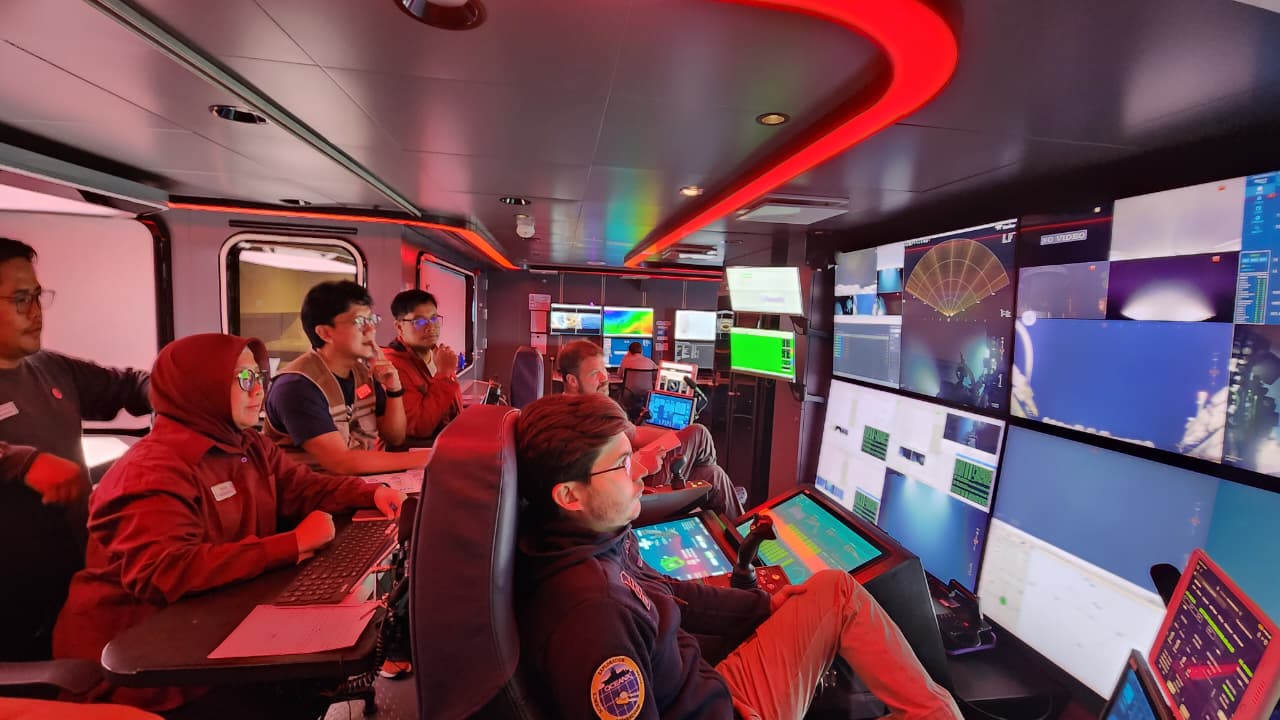
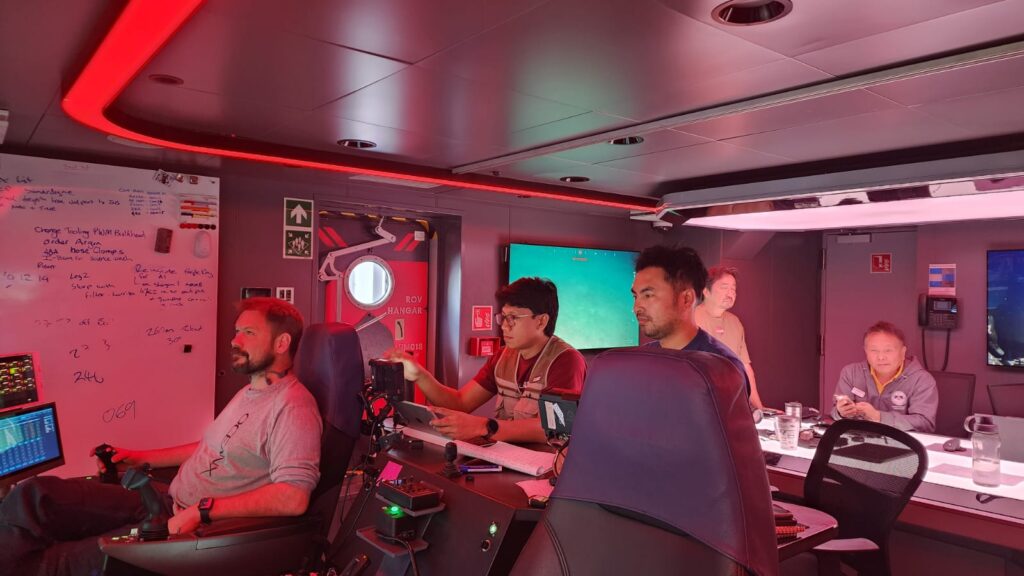
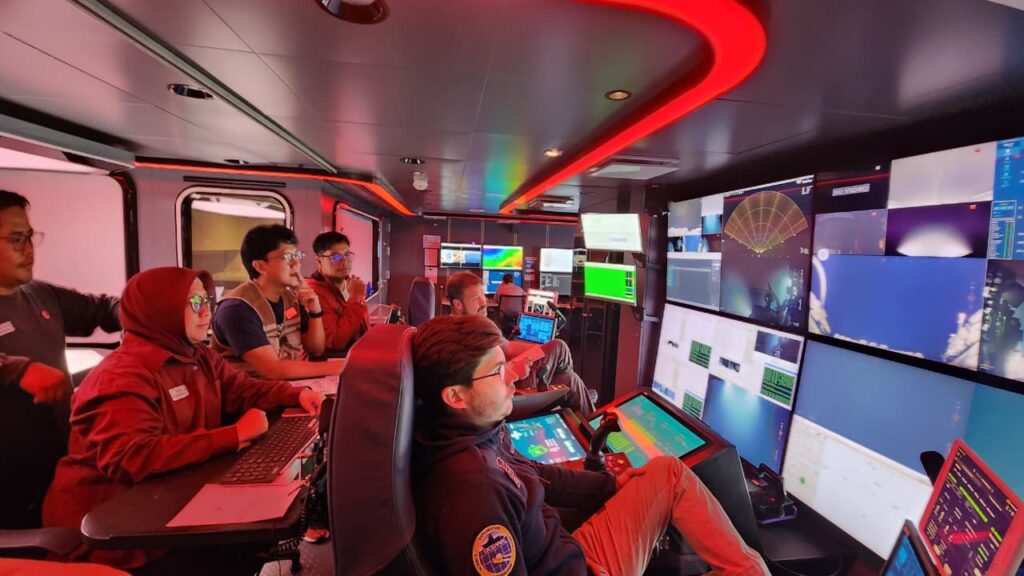
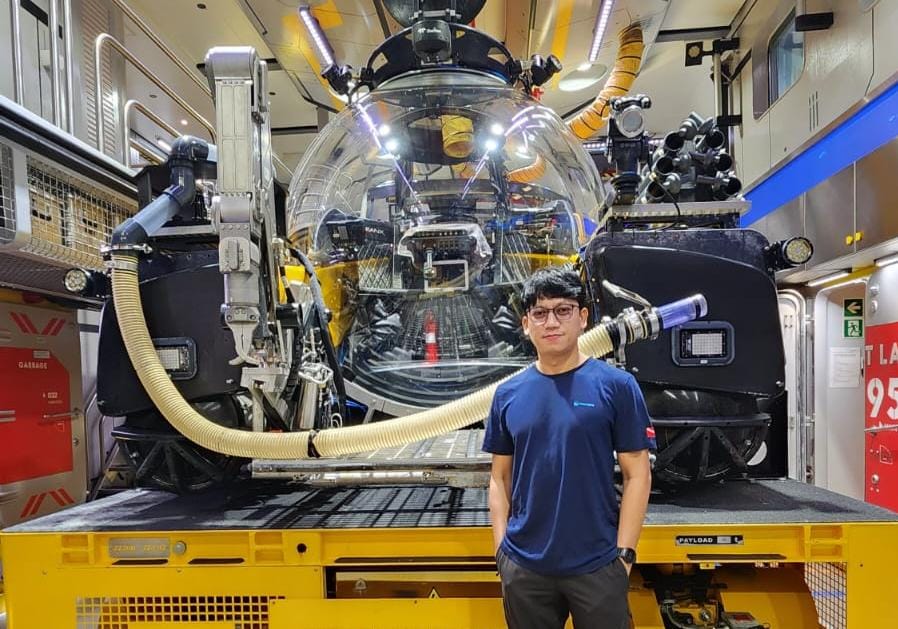
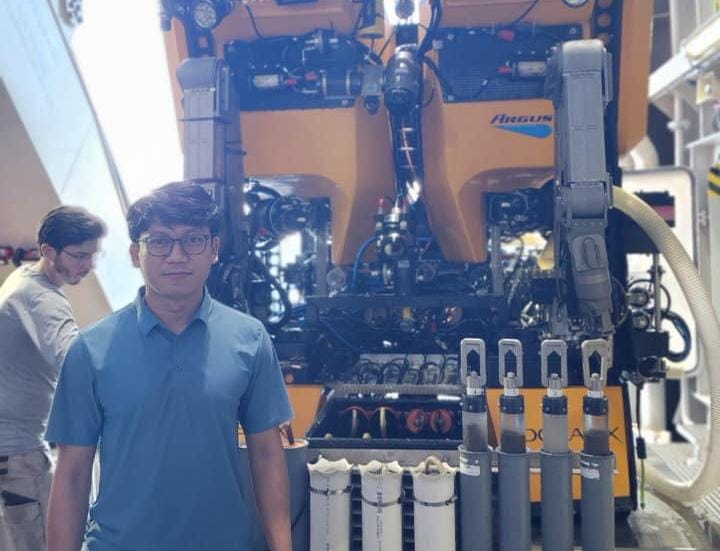
A researcher from the Faculty of Marine Science and Fisheries at Hasanuddin University (FIKP Unhas), Dr. Jamaluddin Fitrah Alam, and team took part in deep-sea research at a seamount complex north of Sulawesi. The research is a collaboration between OceanX and the National Research and Innovation Agency (BRIN) that uses the research vessel R/V OceanXplorer to explore biodiversity in seamount ecosystems.
The research aboard R/V OceanXplorer is part of the 2025 Deep-Sea Research Collaboration Mission titled Beneath the Ring The Sulawesi Seamounts. The research was designed in two phases. The first phase was completed in December 2025, while the second phase, held on 4–25 January 2026, focused on studying the biodiversity and ecological dynamics of the seamounts with the support of ROVs, submersibles, environmental DNA (eDNA) analysis, and oceanographic instruments.
Interviewed on Thursday (22 January 2026), Jamal explained that the mission targets underwater volcano ecosystems in the Sulawesi Sea that remain little explored. The study area lies outside territorial waters but still within Indonesia’s Exclusive Economic Zone. The pioneering data generated are expected to strengthen the scientific basis for drafting a proposed National Marine Protected Area.
The second leg involved 16 researchers from a number of institutions besides Unhas, including the Bandung Institute of Technology, Hokkaido University, Raja Ali Haji Maritime University, Indo Ocean Foundation, the University of Rhode Island, and Padjadjaran University. This cross-institutional collaboration is expected to strengthen data quality, depth of analysis, and the exchange of expertise among teams in deep-sea studies.
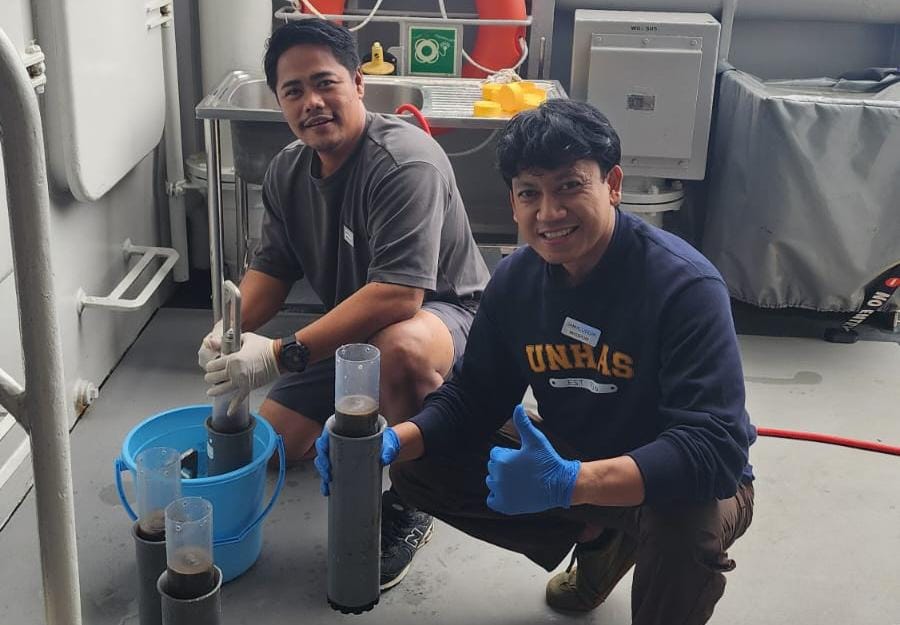
“Among the various study topics in this mission, the Unhas team is highlighting the link between seamounts and oceanographic processes and ecosystem productivity. We collected water and sediment samples at several depth zones. Sediment sampling followed the structure of the seamount, which lies at a depth of 4,000 m below the surface, from the summit, upper slope, and lower slope to the base,” Jamal explained.
According to Jamaluddin, the deep sea generally has layered and relatively stable water masses. However, when currents interact with the morphology of a seamount, this stratification can be disrupted, enhancing vertical mixing and exchange.
“This process is important because nutrients that have been ‘locked’ in deeper layers can potentially be pushed up to shallower depths through upwelling,” Jamal added.
Under certain conditions, Jamal continued, this mechanism can trigger an increase in primary productivity and boost the availability of natural food in the marine food chain. To explain the process in a more measurable way, the team is developing an ecosystem modeling approach.
The model is intended to link physical dynamics, water-mass exchange, and nutrient availability to their implications for productivity and food webs.
Research in the North Sulawesi seamount area is considered important for expanding the knowledge base on Indonesia’s deep-sea ecosystems. Amid growing attention to the deep sea, both for conservation and for use, research based on field data and integrated analysis forms the foundation for ensuring that marine spatial policy and planning are built on adequate scientific evidence.
In addition to producing scientific data and findings, Jamal added, the mission is also aimed at strengthening the capacity of Indonesian researchers through experience working in a large-capacity, cross-disciplinary research vessel environment. This step is projected to serve as an initial foundation for promoting longer, more focused, and sustainable deep-sea research collaboration. (*/jamal/mir)
Editor: Ishaq Rahman
This article is an English translation of the original Indonesian report.