
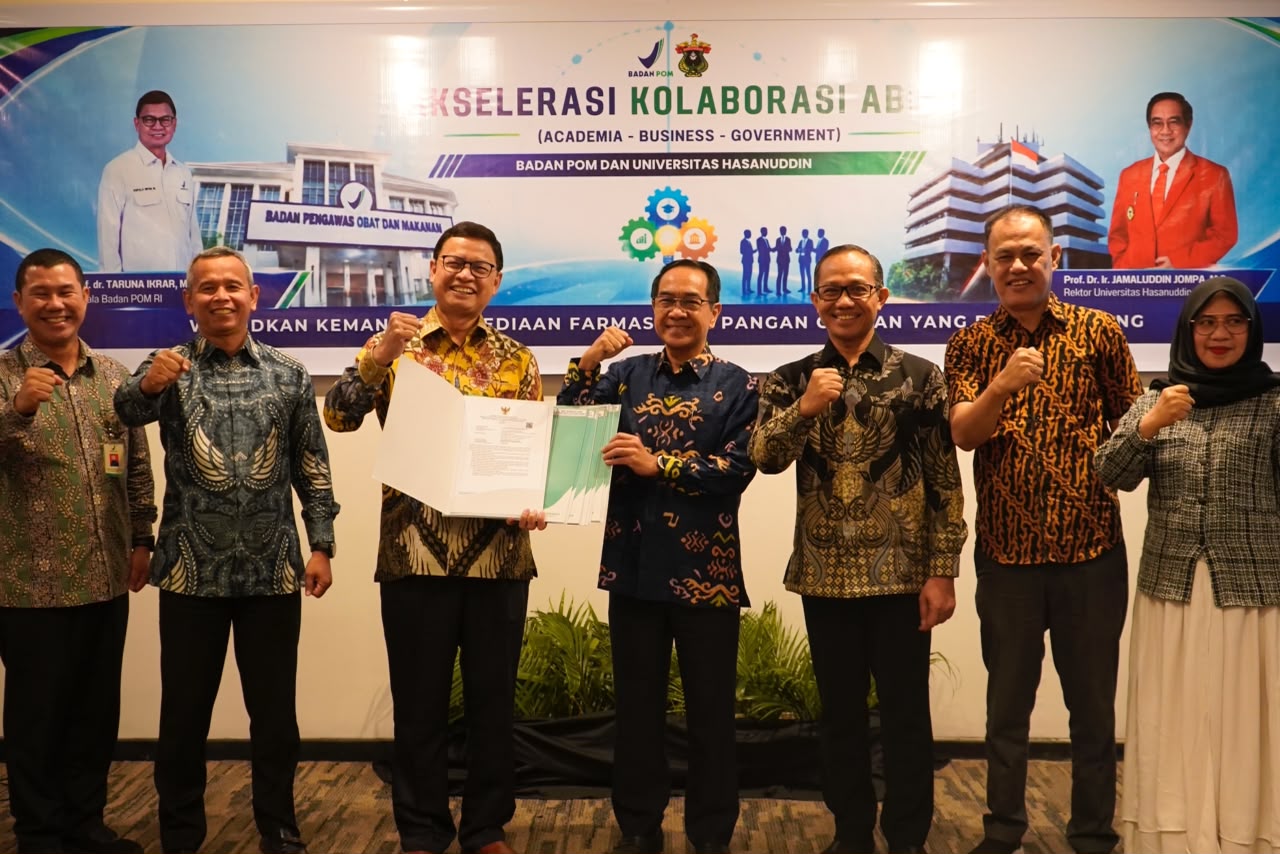
MAKASSAR – Amid demands that university research deliver real impact for society, Hasanuddin University (Unhas) has made an important leap in its innovation downstreaming agenda. A total of 15 products from faculty members’ research have officially obtained marketing authorization from the Indonesian Food and Drug Authority (BPOM), opening the way for campus innovations to be produced, marketed, and used widely.
The achievement also serves as a foothold for Unhas, which is targeting around 200 more innovation products to obtain the same legal status this year.
For universities, the success of research is no longer measured only by the number of scientific publications or patents produced. Beyond that, research is expected to transform into innovations that meet society’s needs, create economic value, and support national development.
In this context, BPOM marketing authorization is one of the strategic stages that ensure research-based products meet safety, quality, and suitability requirements before they reach the public.
Head of the BPOM regional office in Makassar Yosef Dwi Irwan Prakasa Setiawan said that collaboration is an important mechanism to ensure research results do not stop in the laboratory. Synergy among universities, government, and business will accelerate the use of research results by the public.
“This collaboration is important so that research results do not stop in the laboratory. Products born from the downstreaming process will have an economic impact, open business opportunities, and create jobs,” explained Yosef.
Unhas Rector Prof. Dr. Ir. Jamaluddin Jompa, M.Sc., said that obtaining BPOM marketing authorization is an important milestone in the journey of innovation downstreaming at Unhas. Until now, the next challenge after the campus produces excellent research has been ensuring that innovations meet regulatory requirements so they can be produced and used by the public.
“We should be proud, because one of the main problems all along has been marketing authorization. Research-based medicines and food products often stop at the research stage. Today we have proven that campus innovations can obtain legal status. This year we are targeting around 200 more innovation products to obtain marketing authorization,” stressed Prof. JJ.
According to Prof. JJ, Unhas is pushing the transformation of research toward public use. To realize this idea, collaboration with government and industry must be part of the follow-up.
On the same occasion, Head of BPOM Prof. dr. Taruna Ikrar, M.Biomed., Ph.D., emphasized that BPOM serves not only as a regulatory agency but also as a strategic partner in strengthening the national innovation ecosystem. The process of granting marketing authorization is part of efforts to build research-based industries that can compete globally.
“BPOM does not merely give a stamp. We want to ensure that products from downstreaming can grow, be marketed nationally, and even have the opportunity to be exported to global markets,” explained Prof. Taruna.
Accelerating downstreaming, according to Prof. Ikrar, can only be achieved through strong collaboration among government, universities, businesses, and the public.
The 15 products that obtained BPOM marketing authorization come from a range of food innovations based on local resources. They include bread, Virgin Coconut Oil (VCO), coconut oil, liquid palm sugar, palm sugar cubes, powdered palm sugar, sarabba, processed seaweed, seaweed noodles, seaweed cendol, seaweed brownies, seaweed muffins, seaweed meatballs, seaweed nuggets, and the Ginger Creamy drink.
The innovators behind these products are:
1. Prof. Dr. Ir. Amran Laga,
2. Prof. Syahidah, S.Hut., M.Si., Ph.D.,
3. Prof. Dr. Sartini, M.Si., Apt.,
4. Dr. Sitti Fakhriyyah, S.Pi., M.Si.,
5. Dr. Kasmiati, S.TP., M.P.,
6. Irwan, S.TP., M.TP.,
The BPOM marketing authorization certificates were presented to the researchers at the Academia, Business, Government (ABG) Collaboration Acceleration event held at the Ballroom of Hotel Claro Makassar on Saturday (11 July). The event was a forum to strengthen cross-sector synergy in accelerating the downstreaming of research results into products that are safe, legal, and ready to enter the market.
At present, at least 15 other faculty members behind innovations are preparing to apply for BPOM marketing authorization for the innovation products they have developed. With a target of more than 200 products obtaining legal status this year, Unhas continues to strengthen its innovation ecosystem to deliver real benefits to society (*/ams)
Editor : Ishaq Rahman
This article is an English translation of the original Indonesian report.