
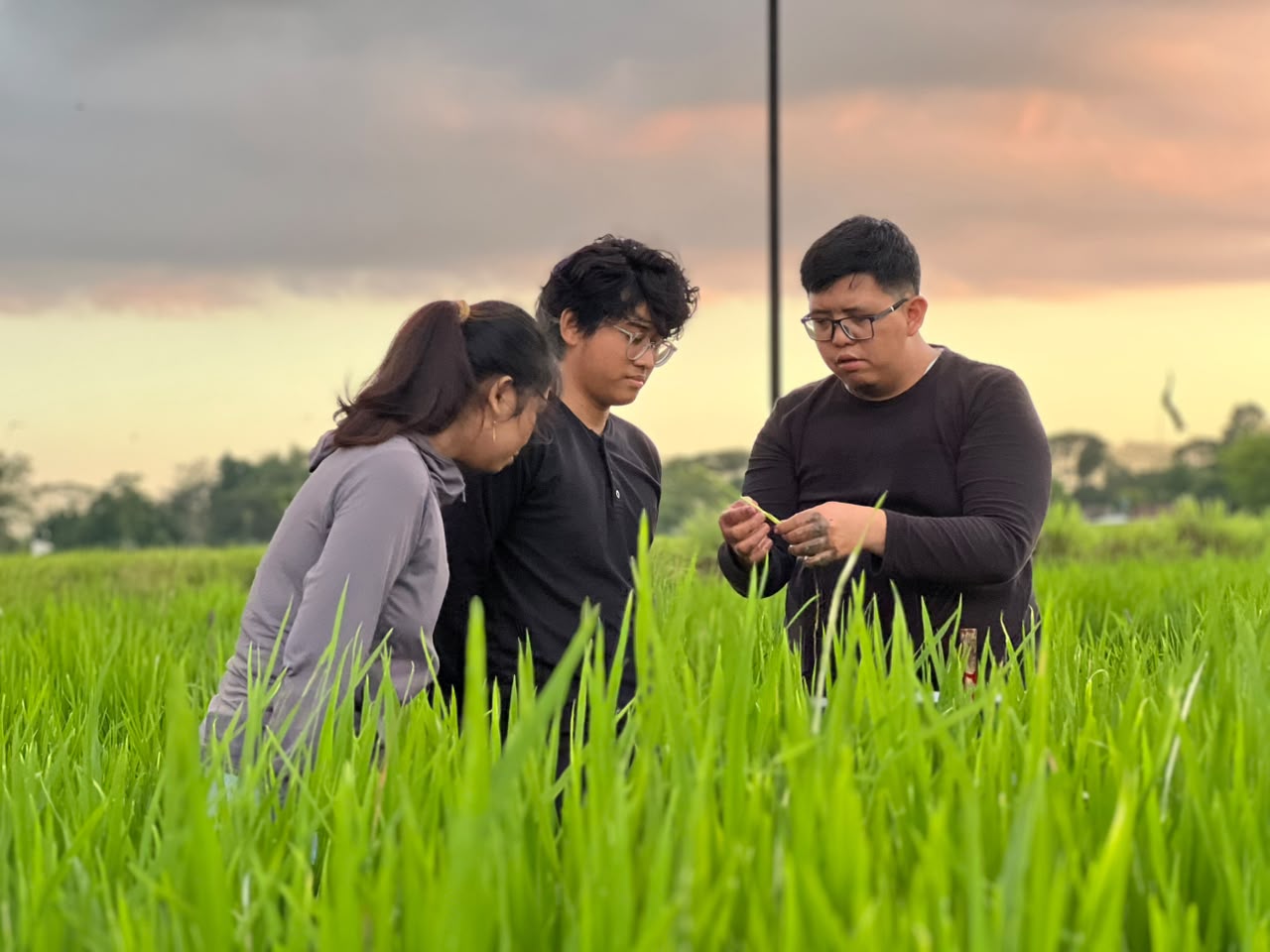
MAKASSAR — Dynamic climate change is putting pressure on agriculture, including rice production. Rising salinity and drought in a number of rice-producing centers also pose challenges to the sustainability of production and to food security.
In response, researchers at Hasanuddin University (Unhas) are developing rice lines tolerant to salinity and drought stress. The work aims to produce plants that can maintain their productivity under highly stressful environmental conditions.
Unhas rice breeder Dr. Muhammad Fuad Anshori, S.P., M.Si., explained that genetic improvement is one of the key approaches to producing crops able to adapt to environmental change. Breeding is carried out through the selection and development of lines with traits suited to the target conditions.
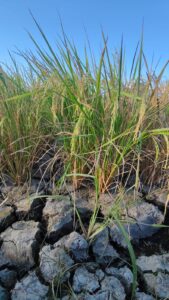
The research combines doubled haploid (DH) technology, used in the earlier line-development stage, with mutation techniques. The combination broadens the diversity of the lines while supporting selection for salinity and drought stress.
The development work has reached the evaluation and line-fixing stage. Trials have shown yields of around 6 tonnes per hectare under high salinity and drought.
“The development work has reached the evaluation stage and concluded with line fixing. As a result, we obtained yields of around 6 tonnes per hectare under high salinity and drought,” Fuad explained.
The work also extends to assembling hybrid rice in collaboration with Agriseed, particularly in developing restorer lines. This stage opens opportunities to use the genetic material produced by the breeding program to support hybrid rice development.
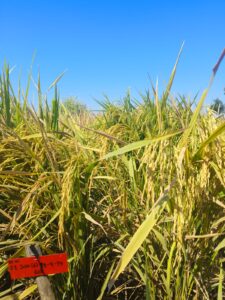
In trials using the PM AAS method, one line showed a crop-cut (ubinan) yield of around 12 tonnes per hectare. Fuad explained that the figure is still a crop-cut result, so further testing is needed to obtain a more representative picture of productivity.
“When this line was trialed with the PM AAS method, the crop-cut yield was around 12 tonnes. That is the crop-cut standard, so the assessment is still rough. Fertilization was also done according to farmers’ usual practice,” Fuad said.
The development of salinity- and drought-tolerant rice is in line with the Sustainable Development Goals (SDGs), particularly SDG 9: Industry, Innovation and Infrastructure, especially in strengthening scientific research, technology development, and innovation. The use of doubled haploid (DH) technology, mutation techniques, and line selection in this research reflects efforts to develop breeding technology that answers the challenges facing agriculture.
By strengthening genetics-based breeding research, Unhas continues to advance the development of plant genetic resources relevant to agricultural challenges and future food needs.
This article is an English translation of the original Indonesian report.