
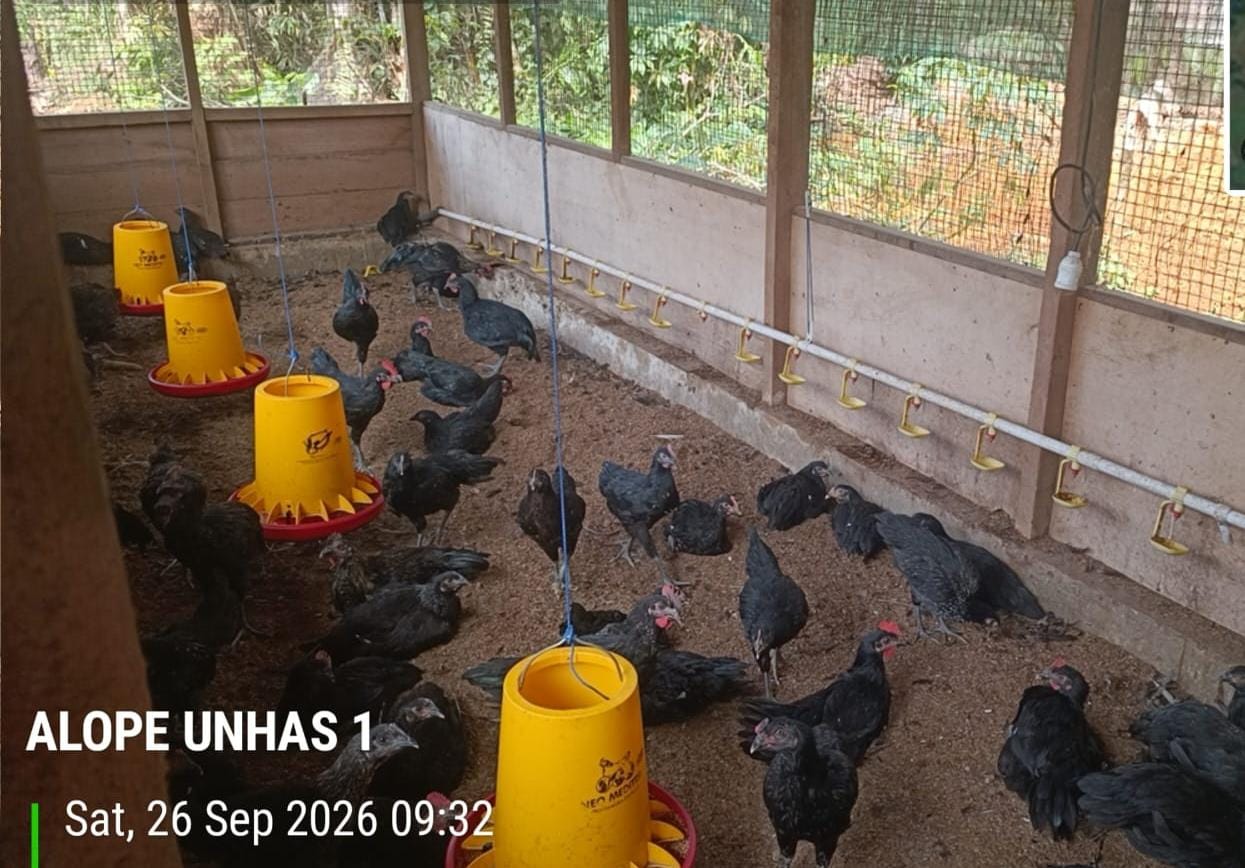
What stands out about the Waliko Group is the makeup of its members. The group consists of five people with disabilities, two of whom have physical disabilities.
EAST LUWU – The Faculty of Animal Science, Hasanuddin University (Fapet Unhas) together with PT Vale Indonesia is strengthening the downstreaming of research results through monitoring and mentoring of Alope Unhas 1 chicken farming with the Waliko Group in Pekaloa, Towuti District, East Luwu Regency, South Sulawesi, on Saturday (27 September).
The activity is part of technical assistance to evaluate how Fapet Unhas research results are applied at the farmer level. The Dean of Fapet Unhas, Prof. Dr. Ir. Syahdar Baba, S.Pt., M.Si., IPU, together with the Alope Unhas 1 Team, directly monitored the progress of the farming and discussed field husbandry conditions with members of the Waliko Group.
“We carry out this monitoring to see directly how the Alope Unhas 1 chickens grow and adapt at the farmer level. We want to make sure the husbandry practices being applied are appropriate, and also learn about the obstacles the group faces,” said Prof. Syahdar.
The monitoring covered feed management, housing conditions, livestock health, growth progress, and production records. These components are an important part of farm management because they can affect production performance and efficiency.
According to Prof. Syahdar, record-keeping and field evaluation are also needed to strengthen the process of downstreaming research results.
“Once research results have been applied in the community, we need data and feedback from farmers. From that, we can see what is working well and what still needs to be improved,” explained Prof. Syahdar.
The mentoring also aims to improve group members’ ability to manage the farming independently. The Alope Unhas 1 Team gave technical explanations on husbandry, feed management, livestock health, and recording the chickens’ progress.
“We want the group to be able to manage the farming independently. That is why what we provide is not only assistance with the livestock, but also knowledge and skills they can use in running their business,” said Prof. Syahdar.
Empowering People with Disabilities
What stands out about the Waliko Group is the makeup of its members. The group consists of five people with disabilities, two of whom have physical disabilities. Their involvement shows that applying animal science research can open up wider space for economic participation, including for groups of people who face limited access to business opportunities.
“This is also important to us because the Waliko Group has a special character. They are people with disabilities, yet they still have the ability to carry out productive activities. Our task is to provide access, knowledge, and mentoring so that this potential can grow,” said Prof. Syahdar.
From the perspective of the Sustainable Development Goals (SDGs), the Waliko Group’s involvement relates mainly to SDG 10 (Reduced Inequalities) by expanding economic empowerment opportunities for people with disabilities. This approach is also in line with the principle of No One Left Behind, which emphasizes ensuring that groups of people with diverse access and circumstances still benefit from the development process.
Applying Alope Unhas 1 chickens at the farmer level is part of efforts to broaden the use of Fapet Unhas research results. Direct interaction with farmer groups also gives the university a chance to gather information on farming conditions in the field.
“When a technology is applied, the situation is certainly not always the same as the research conditions. That is why monitoring like this is important, to see how the technology adapts and to give recommendations based on the real conditions farmers face,” said Prof. Syahdar.
The collaboration with PT Vale Indonesia also strengthens the space for applying these research results through support for community groups in the company’s operational area. The relationship among the university, business, and the community is expected to broaden the use of animal science innovations while strengthening local business capacity.
“Our hope is that this group will not only succeed in one rearing cycle, but will keep growing and manage its business with the knowledge it has gained. If the group’s capacity is strong, the research results we bring will also provide wider benefits,” said Prof. Syahdar.
Mentoring for Alope Unhas 1 chickens will continue periodically through monitoring of livestock progress, technical evaluation, and strengthening of the group’s capacity. These steps are expected to broaden the application of Fapet Unhas research results while supporting the development of animal husbandry based on community potential in East Luwu. (*/Fapet/aya).
Editor : Ishaq Rahman
This article is an English translation of the original Indonesian report.