
MAKASSAR – For decades, communities have produced palm sugar in ways that have barely changed. The process takes hours and generally still relies on additives to achieve the desired product. Yet behind these traditional methods, palm sugar holds great potential as a high-value local commodity that can be developed into competitive food products.
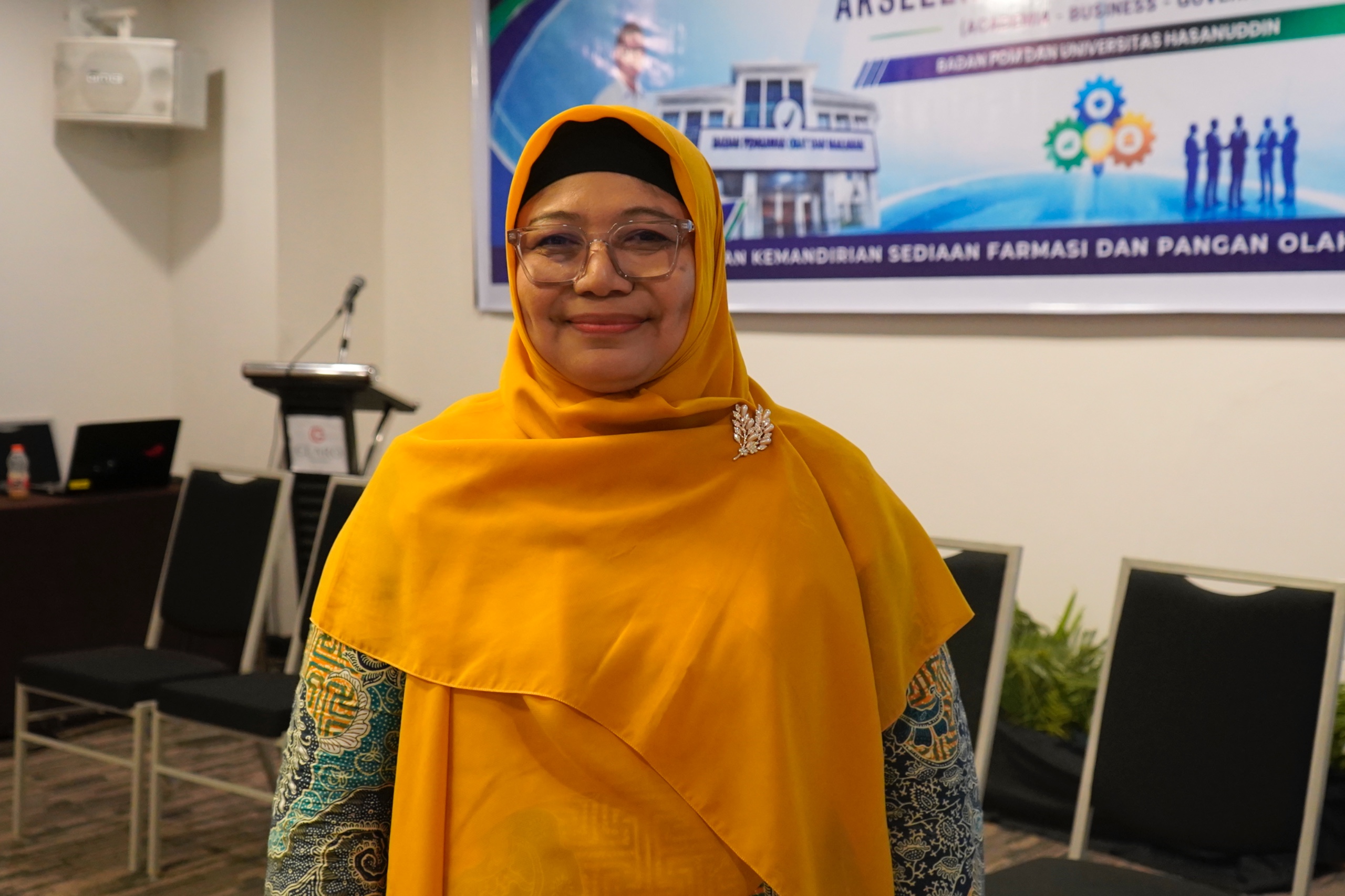
Seeing this opportunity, Prof. Syahidah, S.Hut., M.Si., Ph.D., a professor at the Faculty of Forestry, Hasanuddin University (Unhas), began research in 2016. More than simply creating new products, Prof. Syahidah and the team designed a palm sugar processing method that is more efficient and produces more consistent quality while preserving the natural character of palm sugar.
The research has produced four palm sugar product innovations as well as a processing technology that can cut production time by around 50 percent. Whereas making powdered palm sugar previously took about seven to eight hours, the technology developed by the Unhas research team can complete the process in only about three and a half to four hours.
“Palm sugar is very close to people’s lives. When we began the research in 2016, there was no information on quality standards for the palm sugar produced and sold in South Sulawesi. Yet its potential is enormous, and it is a source of income for communities in many areas,” explained Prof. Syahidah.
The research stemmed from the great potential of sugar palm trees in South Sulawesi, which are found in almost every regency. However, at that time there was no reference on quality standards for the palm sugar produced by communities, while demand for the product continued to rise.
Besides cutting production time, the innovation also eliminates the use of preservatives and other additives commonly used in traditional palm sugar processing, such as candlenut, grated coconut, or cooking oil. This approach yields a more natural product with more consistent quality.
“What sets our products apart from the palm sugar already on the market is that the production process does not use preservatives or other additives commonly used by palm sugar artisans,” added Prof. Syahidah.
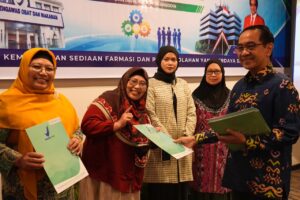
The four innovations developed are liquid palm sugar, palm sugar cubes, powdered palm sugar, and palm sugar sachets. Of these four products, three have obtained marketing authorization from the Indonesian Food and Drug Authority (BPOM), while the palm sugar sachet product is still completing the administrative process.
“For us, marketing authorization is the gateway for research-based products to be marketed more widely and deliver greater benefits to the public,” said Prof. Syahidah.
Prof. Syahidah said that demand for the palm sugar products from the research had in fact been coming in for some time. However, the team chose to postpone expanding marketing until all legal requirements were met.
“Market demand is actually quite high. But we chose to hold back on expanding marketing because we wanted to make sure all requirements were met. Now, having obtained marketing authorization, we are more confident about expanding distribution and reaching a wider market,” added Prof. Syahidah.
The BPOM marketing authorization certificates were presented at the Academia, Business, Government (ABG) Collaboration Acceleration event organized by BPOM in cooperation with Unhas at the Ballroom of Hotel Claro Makassar on Saturday (11 July).
For Unhas, the achievement is part of its commitment to accelerating the downstreaming of research results so that they do not stop as academic outputs but develop into innovations that add value, strengthen an economy based on local resources, and bring real impact to society. (*/mir)
Editor : Ishaq Rahman
This article is an English translation of the original Indonesian report.