
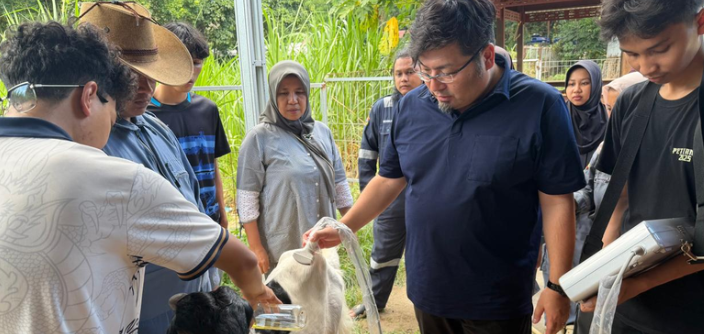
The Faculty of Animal Science, Hasanuddin University (UNHAS), in collaboration with the University of Miyazaki, Japan, successfully organised a specialised workshop and field-sampling activity from 5 to 8 July 2026. The event, titled “The Use of Ultrasound and 3D Camera on Goats and Cattle”, featured Dr Tokunaga Tadaaki, an Associate Professor from the Laboratory of Animal Behaviour and Environmental Management, Study Program of Animal and Plant Biosciences, Faculty of Agriculture, University of Miyazaki, as the main speaker and international research partner. The workshop was specifically designed to train laboratory assistants from the Animal Breeding and Genetics Laboratory and internship students from the MKPK Program at UNHAS.
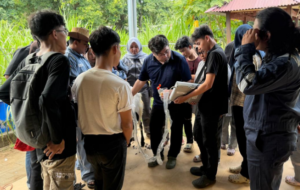
The hands-on training focused on using advanced, non-invasive technologies to estimate carcass quality and livestock body weight in real time. Participants were introduced to ultrasound devices to evaluate live animals for critical carcass traits, including the musculus longissimus thoracis area, subcutaneous fat thickness, intermuscular fat thickness, rib thickness, and marbling score. Additionally, they learned how to operate 3D cameras to estimate the live weight of Bali cattle based on real-time body dimension photography. The training sessions began on 5 July 2026 at the UNHAS goat pen, before moving to Barru Regency from 6 to 8 July 2026 to conduct field sessions at Bali cattle farms across Seppe’e, Bontolai, Cenne, and Batulappa villages.
This workshop was closely integrated with regular field-sampling activities for collaborative research and joint publications under the International Collaboration Research (I-CORE) Program (EQUITY WCU scheme-C, Agriculture and Forestry Subject 2025–2026), with Dr Tokunaga Tadaaki serving as the key research partner. Since January 2026, sampling has been conducted systematically every three months—including in April and July 2026—to collect body dimension and carcass trait data from Bali cattle at ages 12, 15, 18, 21, and 24 months. The research team plans to continue this data collection until at least July 2027.
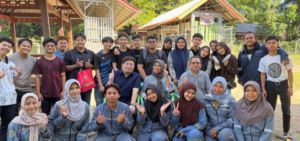
The ultimate goal of this extensive data collection is to establish a comprehensive overview of the growth and development patterns of Bali cattle. By analysing these parameters, researchers aim to create a reliable, data-backed foundation for selecting superior breeding bulls and cows, determining the precise growth inflection points of Bali cattle, and identifying the optimum slaughter age to maximise meat quality and yield. This international partnership represents a significant step forward in bringing precise, data-driven methodology to Indonesian livestock management.