
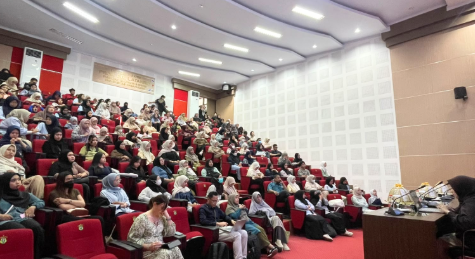
Makassar, Indonesia – June 30, 2026 – Faculty of Nursing, Hasanuddin University (UNHAS) successfully organized an international symposium entitled Stroke in Australia as part of its Visiting Professor Program. The event was held on Tuesday, June 30, 2026, from 9:00 a.m. to 11:30 a.m. at Prof. Dr. Latanro Hall, Graduate School of Economics and Business, UNHAS.
The symposium was officially opened by Professor Dr. Elly Lilianty Sjattar, S.Kp., M.Kes., Dean of the Faculty of Nursing, UNHAS. In her opening remarks, she emphasized the importance of international collaboration in advancing nursing education, research, and evidence-based healthcare practices. She highlighted that the Visiting Professor Program serves as a strategic platform for strengthening global partnerships and enhancing the capacity of healthcare professionals to address major health challenges, particularly stroke care.
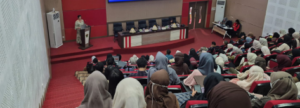
The symposium attracted approximately 100 active participants, including faculty members, undergraduate and postgraduate students, and practicing nurses from UNHAS and various healthcare institutions. The participants were actively engaged throughout the event, contributing to lively discussions and meaningful exchanges of knowledge and professional experiences.
The symposium featured three distinguished speakers from Monash University, Australia. Professor Dominique Cadilhac, Research Professor, presented an overview of Australia’s stroke care system and highlighted national initiatives aimed at monitoring and improving stroke services. She emphasized the importance of coordinated stroke systems, clinical registries, and continuous quality improvement in achieving better patient outcomes.
Dr. Tara Purvis, Senior Research Fellow at Monash University, delivered a presentation on data-driven quality improvement programs in hospitals. Using examples from stroke care, she demonstrated how healthcare data can support evidence-based decision-making, improve clinical performance, and strengthen healthcare quality through systematic evaluation and continuous improvement.
The final presentation was delivered by Andi Baso Tombong, MANP, a PhD Candidate at Monash University, who discussed patient safety in stroke and cardiovascular care within Australian hospitals. His presentation highlighted multidisciplinary collaboration, patient safety strategies, and best practices that contribute to delivering high-quality care while minimizing clinical risks.
The scientific sessions were moderated by Yusfina, S.Ft., Physio., M.Kes., who facilitated dynamic and interactive discussions between the speakers and participants. The question-and-answer session reflected the participants’ enthusiasm, with numerous questions focusing on evidence-based stroke management, quality improvement initiatives, patient safety, and opportunities for future international research collaboration.
The symposium also contributed to the achievement of the United Nations Sustainable Development Goals (SDGs), particularly SDG 3 (Good Health and Well-being) by promoting evidence-based approaches to improve stroke care and patient safety; SDG 4 (Quality Education) by providing opportunities for international academic exchange and professional development; and SDG 17 (Partnerships for the Goals) by strengthening collaboration between Hasanuddin University and Monash University in education, research, and healthcare innovation.
The symposium concluded successfully, providing valuable insights into Australia’s healthcare system and best practices in stroke management. Beyond enhancing participants’ knowledge, the event strengthened international academic collaboration and inspired faculty members, students, and healthcare professionals to implement evidence-based approaches that contribute to improving stroke care and patient safety in Indonesia.