
Hasanuddin University has once again recorded a strategic international achievement with the funding of a collaborative research proposal by the Spanish National Research Council (CSIC) under the I-COOP 2025 Program. CSIC officially announced that it had accepted and would fund the Unhas proposal as part of strengthening international research cooperation geared toward achieving the Sustainable Development Goals (SDGs).
CSIC, or Consejo Superior de Investigaciones Científicas, is Spain’s largest research body. Its focus is multidisciplinary scientific and technological research to advance national excellence, develop researchers, and advance the public and private sectors. The body operates under Spain’s Ministry of Science, Innovation and Universities and works globally.
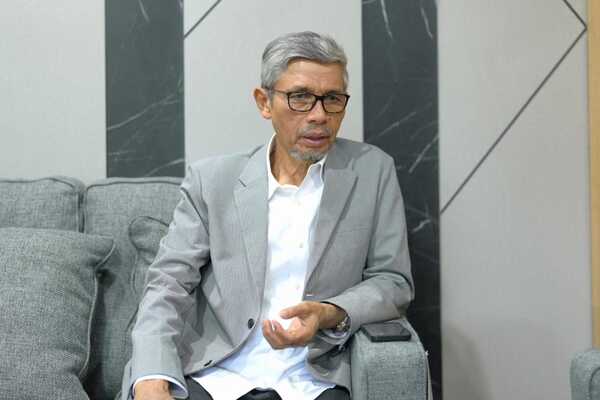
In an interview on Friday (9 January), Prof. Ir. Sumbangan Baja, M.Phil., Ph.D., the principal investigator, explained that the collaboration began with the establishment of Hasanuddin University’s Thematic Research Groups (TRG). The Department of Soil Science at the Faculty of Agriculture formed the TRG Geo Spatial for Sustainable Land Use (GIS Land Use).
The TRG GIS Land Use adopts the principles of the green economy, namely achieving optimal production value and land use while ensuring the sustainable use of land resources for prosperity. The TRG emphasizes multidisciplinary studies (biophysical, economic, social, and cultural) in a spatial context.
In an initial meeting with CSIC via Zoom, the Unhas TRG GIS Land Use proposed a project that directly supports the SDGs, particularly Life on Land (SDG Target 15). The proposal focuses on developing the use of robotic technology and Artificial Intelligence (AI) for land-use mapping and analysis.
The project, titled “Designing a 20-Year Forecasting Framework for Tropical Watershed–Coastal Systems Using Explainable AI and Remote Sensing Data,” is designed to build an AI-based modeling framework to generate long-term predictions of tropical ecosystem dynamics.
“At first we were not very confident this proposal would be funded, but we still prepared it seriously. As it turned out, CSIC’s response was very positive and the progress of this cooperation has been relatively fast,” said Prof. Sumbangan.
Prof. Sumbangan added that the collaboration holds great significance for Unhas. Through this cooperation, Unhas not only gains a new partner but also opens up opportunities to connect with wider international research networks.
The project began on 1 January and will run until 31 December 2027, a two-year cooperation with the Spanish partner. During this period, the partners will exchange information and resources supporting the research. Planned locations will be discussed further at the end of this month, with Kalimantan as one potential site given the size and significance of its tropical forests.
“The main output of this cooperation is reputable scientific publications. But beyond that, the project also has a strategic impact on enhancing Unhas’s academic reputation. Partners from Spain could become academic peers who give Unhas positive assessments within international networks,” Prof. Sumbangan added.
Prof. Sumbangan, who is also the University Secretary, hopes that more TRGs will be encouraged to access international research funding. The project is expected to serve as both a reference and a collaboration hub that opens opportunities for other research groups to join, so that the scale of research and funding can continue to grow.
In addition to strengthening research, the collaboration is also expected to have an impact on teaching and learning. International partners are planned to be directly involved in academic activities, including as adjunct professors, to enrich the global perspective of education on campus. (*/mir)
Editor: Ishaq Rahman
This article is an English translation of the original Indonesian report.