
BULUKUMBA – Advances in digital technology offer children new opportunities to learn, create, and interact. Online games, social media, and various digital platforms are increasingly within easy reach of elementary school-age children. However, the digital space also holds challenges that require attention. Phenomena such as rising aggressive behavior, the use of impolite language, and even cyberbullying can occur under the influence of online games. This shows that strengthening digital literacy needs to go hand in hand with developing children’s ability to manage their emotions and building their character from an early age.
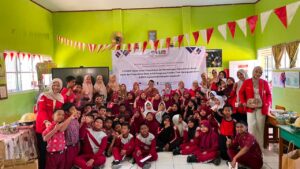
The Community Service Team of the Community Partnership Program at the Faculty of Nursing (FKep), Hasanuddin University (Unhas), delivered a psychoeducation and digital literacy program for students at UPT SDN 5 Appasarenge, Bulukumba Regency. The program, titled G-STAMP (Gamer Sehat Tanpa Makian dan Perundungan, or Healthy Gamers Without Swearing and Bullying), was designed as an educational medium to build healthy, safe, and responsible gaming habits through an approach based on mental health, character building, and digital literacy.
Team Leader Dr. Tuti Seniwati, S.Kep., Ns., M.Kes., explained that the program supports the achievement of the Sustainable Development Goals (SDGs), particularly SDG 3 on Good Health and Well-being, through strengthening mental health and emotional control, and SDG 4 on Quality Education, through improving children’s digital literacy.
“Children today are growing up in a digital environment that brings many benefits but also presents various challenges. That is why they need to be equipped with the ability to manage their emotions, communicate politely, and understand the ethics of interacting in the digital space. Through G-STAMP, we want to help students become smart, healthy, and responsible technology users,” said Dr. Tuti.
According to Dr. Tuti, the ability to use technology cannot be measured solely by skill in operating digital devices. Children also need to understand the consequences of everything they do in the digital space, including the importance of respecting others, avoiding hurtful speech, and being able to control their emotions when facing frustrating situations while gaming. Building these habits is expected to shape more positive digital behavior that carries over into everyday life.
During the activity, students learned about the benefits and risks of playing online games, how to recognize toxic gaming behavior such as swearing and bullying, and the importance of creating a safe, comfortable, and mutually respectful gaming environment. The material was delivered interactively so that it would be easy for the students to understand, while also encouraging them to adopt positive behavior when using digital technology.
As part of the learning, the team also introduced simple relaxation techniques to help students control their emotions when facing situations that trigger anger while gaming. The exercises included mindful breathing and pausing for ten seconds before responding.
This approach helps children recognize changes in their emotions, calm themselves down, and then consider a more appropriate response before acting. These skills are an important part of building emotional regulation, which contributes to children’s mental health.
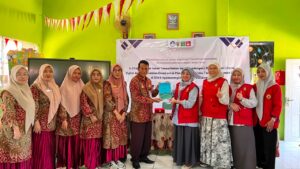
The principal of UPT SDN 5 Appasarenge, Arbain, A.Ma., S.Pd., M.Pd., expressed appreciation for the program, which was considered relevant to the needs of students in the digital era. According to Arbain, strengthening digital literacy needs to be balanced with character building so that children can use technology wisely and responsibly.
“The material provided was very useful because it helped students understand how to use technology wisely, communicate ethically, and control their emotions while gaming. We hope that education like this can continue so that it has a positive impact on the children’s character development,” said Arbain.
Through this program, Unhas is encouraging a stronger role for schools as learning spaces that not only develop academic abilities but also shape students’ character, mental health, and digital skills. Collaboration between universities and schools is expected to be a strategic step in preparing a young generation able to use technology productively, ethically, and responsibly.
The activity took place on Thursday (6 August) at UPT SDN 5 Appasarenge, Bulukumba Regency. The program involved 50 students from grades IV, V, and VI and was attended by the principal and teachers, as part of efforts to strengthen an education ecosystem that supports children’s mental health and digital literacy.
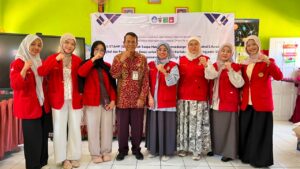
The members of the FKep Unhas community service team are:
1. Dr. Tuti Seniwati, S.Kep., Ns., M.Kes.
2. Dr. Suni Hariati, S.Kep.,Ns.,M.Kep.
3. Dr. Yuliana Syam, S.Kp., Ns, M.Si
4. Athina Saraya, S.Psi., M.Sc.
5. Annida Aulia Asysyalji
6. Putri Melati
7. Sitti Nurul Khafifah
8. Darnisa Indriani Dhanial
9. Nurayina Dar
(*/fkep/mir)
Editor: Ishaq Rahman
This article is an English translation of the original Indonesian report.