

Before being formally inaugurated as new members of the Council of Professors, four Unhas professors delivered their Acceptance Speeches before a limited Plenary Meeting of the Academic Senate on Tuesday (10 February). Each professor presented an acceptance speech in the professor’s own field of expertise.
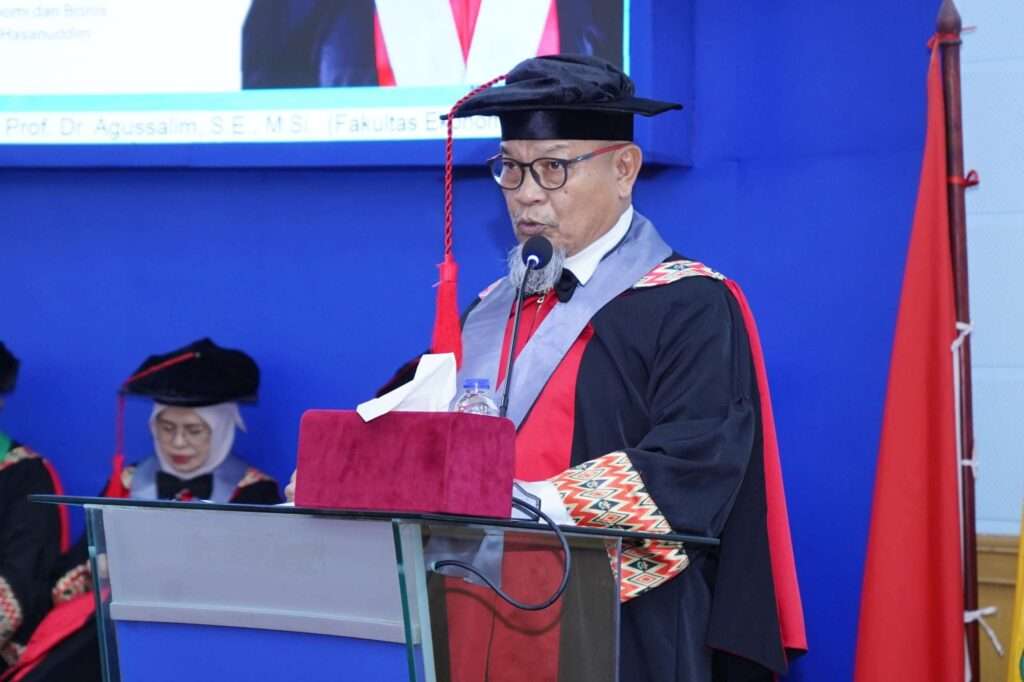
Prof. Dr. Agussalim, SE., M.Si.,
Prof. Agussalim spoke on the topic “Poverty: A Curse of Nature or Man-Made,” which explains poverty as a complex problem with wide-ranging dimensions.
The determinants of poverty include many variables that can be identified but are not easy to intervene in. Poverty must therefore be addressed systemically, structurally, holistically, comprehensively, collaboratively, and sustainably, a perspective that policymakers have so far failed to put into practice. Poverty reduction practices to date have tended to be partial, artificial, sporadic, charity-based, and even political.
Prof Agussalim said a comprehensive perspective is needed to address the causes and roots of poverty while empowering individuals to build a better future. In Prof Agussalim’s view, collective commitment among all parties is needed to create sustainable solutions that can tackle poverty in a real way.
Using a broader perspective, poverty should in fact be viewed through a moral lens: the disappearance of empathy and social solidarity from the social environment has the potential to perpetuate poverty.
“The fragility of social values and the fading of social cohesion in society put ever more pressure on poverty alleviation efforts. In that context, various structural adjustments are needed so that poverty reduction strategies, policies, and programs can produce more effective results,” said Prof Agussalim.
From a policy and planning perspective, Prof Agussalim proposed at least seven things that need to be done simultaneously to address poverty: strengthening the development paradigm, changing how poverty is viewed, shifting the methodological approach, renewing planning design, changing the pattern of poverty handling, expanding and strengthening access, and strengthening institutions and governance.
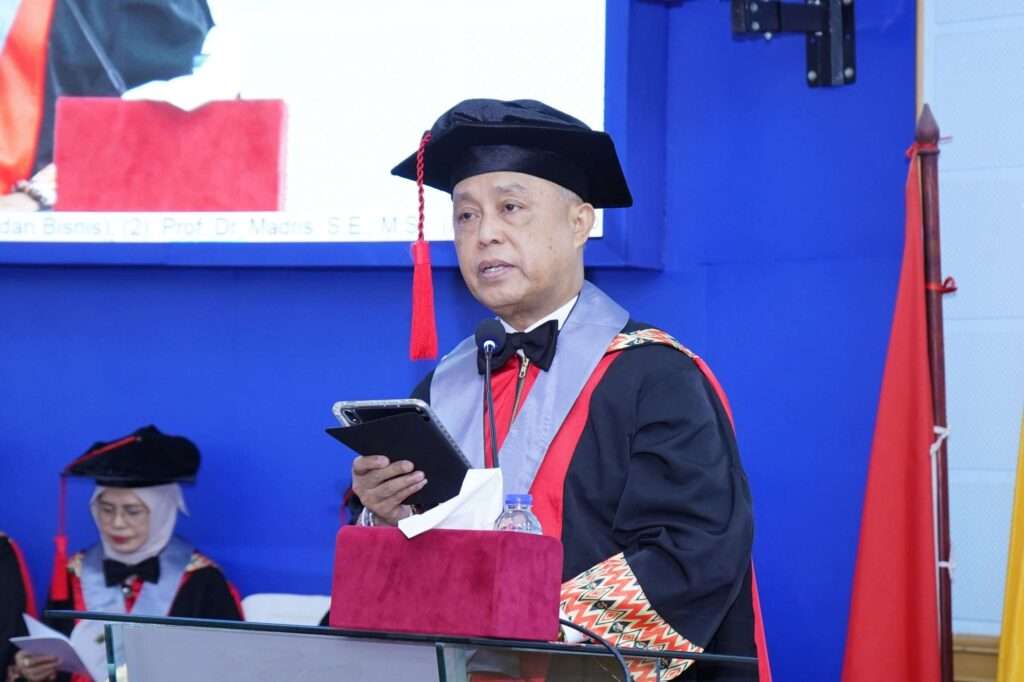
Prof. Dr. Madris, S.E., D.P.S., M.Si
On the same occasion, Prof Madris explained research on “Integration of the Output Market, the Labor Market, and Human Capital Quality Development in Reducing Unemployment in Indonesia.” Prof Madris noted that demand for a commodity (output) is a functional relationship between the price level and the quantity of the commodity that consumers are willing to buy.
From a labor perspective, Prof Madris said, demand means the functional relationship between the wage level and the amount of labor services used by service users as a factor of production, either as a substitute or as a complement factor of production.
Prof Madris further explained that, from a labor perspective, the population aged 15–18 is a young workforce that is already entering, or preparing to enter, the labor market, whether forced to work because they dropped out of school or because they have completed their formal education. Therefore, Prof Madris said, policies to expand or create new employment opportunities have been a crucial development issue.
On the young workers’ side, a common complaint is a lack of skills and work experience, especially among young workers who have dropped out of school. Among those who have graduated from a certain level of education, besides work experience and skill level, the mismatch between educational background and labor market needs is often an obstacle to employment.
“As one alternative way out of this problem, the presence of informal economic activities and individual enterprises, especially in urban areas, becomes very important as a more flexible absorber of labor, even if with low productivity and income,” said Prof Madris.
The demographic bonus is human resource capital with productive potential if it has good human capital quality. On the other hand, it can become a disaster for development if the quality is low, especially if job opportunities are unavailable and decent for job seekers. Added to this is the middle-income trap problem.
On future labor planning, Prof Madris stressed the need to look at both the demand side and the supply side of labor. On the demand side, theoretically, labor demand is determined by output demand. The higher the demand, the higher the demand for labor services. For this reason, planning for human capital quality development should be based on demand in the output market.
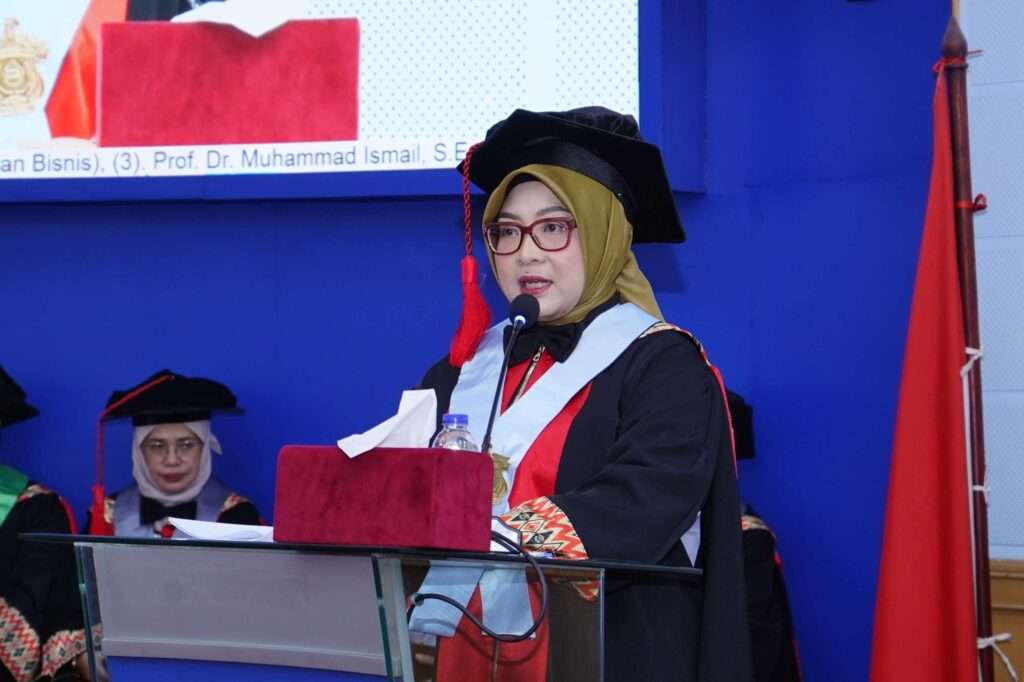
Prof. Dr. Muhammad Ismail, S.E., M.Si.,
Prof Ismail explained “FOMO as a New Paradigm in Generation Z Consumer Behavior: Theoretical Contributions to Buyer Decisions and Loyalty.”
Prof Ismail noted that in Indonesia, research findings show that FOMO among Generation Z has distinctive characteristics. It is more collective, more normative, and heavily influenced by digital social communities. Consumption is no longer merely an economic act but also a means of maintaining social connection and group identity.
Research over the past five years shows that FOMO has a significant effect on accelerating purchase decisions and increasing impulsive behavior among Generation Z. Furthermore, Prof Ismail said FOMO has been shown to act as a psychological link between social media engagement, digital promotion, and consumers’ purchase intent. But what is more interesting is the impact of FOMO on consumer loyalty.
“FOMO is not just an additional variable in consumer behavior models but a new explanatory framework that helps us understand why purchase decisions are becoming faster, why brand loyalty is becoming more fragile, and why digital platforms hold a dominant position in the modern consumption ecosystem,” said Prof Ismail.
Prof Ismail further added that such phenomena mark the emergence of what recent studies call fluid loyalty, in which consumer loyalty no longer attaches to brands alone but to digital ecosystems that can manage their experiences and social expectations.
Based on a series of studies and academic reflection over the past five years, Prof Ismail proposed a framework called the “FOMO-Based Consumer Decision Acceleration Theory.” The theory holds that FOMO is not merely an individual psychological condition but a structural mechanism in the digital ecosystem that speeds up how consumers process information and experience decisions. The framework rests on three main concepts: Decision Cycle Compression, Digital Social Urgency, and Ecosystem-Based Fluid Loyalty.
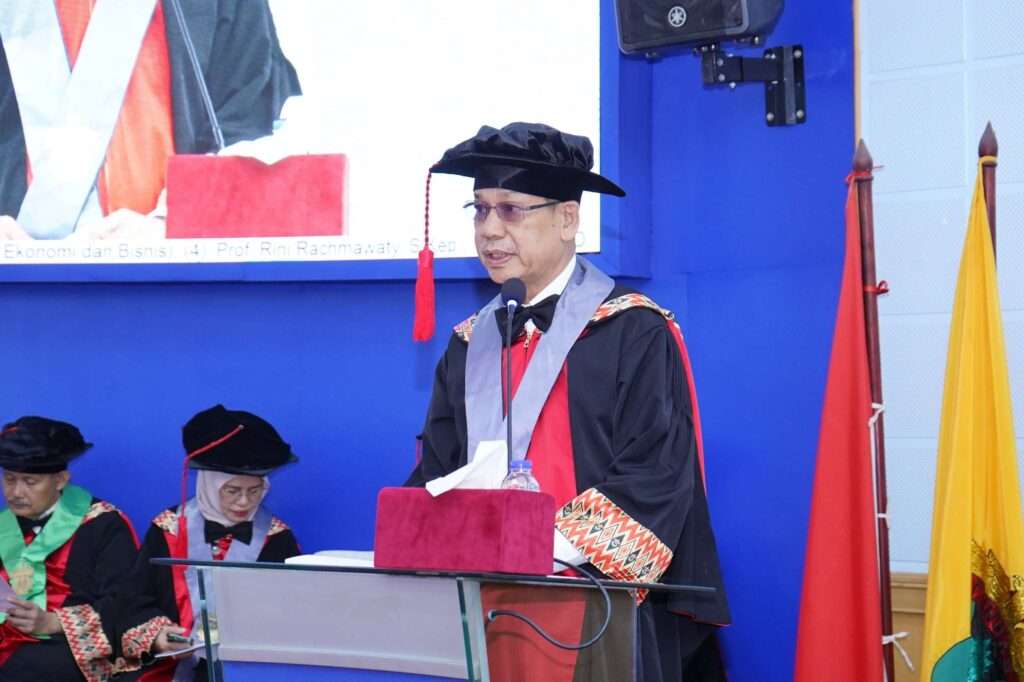
Prof. Rini Rachmawaty, S.Kep., Ns., MN., Ph.D
Closing the inauguration speeches, Prof Rini explained research on “Integrated Clinical Pathways and the iCare System as a Nursing Management Strategy for Improving the Quality of Health Services in Indonesia.”
Prof Rini explained that nursing management is the process of coordinating and integrating nursing resources to provide quality care to patients. In the era of the modern hospital, nursing management cannot be separated from efforts to standardize care processes that ensure the safety, effectiveness, and efficiency of services. In carrying out this function, clinical pathways are an important instrument.
Integrated Clinical Pathways (ICP) are one of the key tools in contemporary nursing management. ICP aims to translate clinical practice guideline recommendations into the care process, thereby maximizing patient safety and clinical efficiency.
“ICP is highly relevant in the Indonesian context. First, the national health insurance system, which uses a prospective payment scheme based on Indonesian Case-Based Groups (INA-CBGs), requires hospitals to deliver efficient care without sacrificing quality. Not only that, high variation in clinical practice among health workers can produce inconsistent outcomes and waste resources,” said Prof Rini.
Overall, Prof Rini said, applying a professional nursing practice model based on Integrated Clinical Pathways, for both physical illnesses and mental health disorders, brings broad benefits to various stakeholders. For patients, ICP ensures consistency and quality of nursing care, speeds recovery, and increases satisfaction with health services.
For health workers, ICP provides systematic guidance that eases interprofessional coordination and evidence-based clinical decision-making. For hospitals, ICP implementation has been shown to improve operational efficiency and have a positive impact on financial sustainability. For the national health insurance system, wide use of ICP can contribute to controlling health costs without sacrificing service quality.
“To maximize those benefits, we developed the iCare System, an online ICP application designed to ease documentation, compliance monitoring, and integrated evaluation of clinical outcomes. The application integrates disease-specific clinical pathways with Indonesian nursing language standards,” added Prof Rini.
Consistent ICP implementation integrated with technology can deliver health services that are safer, more effective, efficient, and patient-oriented. (*/mir)
Editor : Ishaq Rahman
This article is an English translation of the original Indonesian report.