
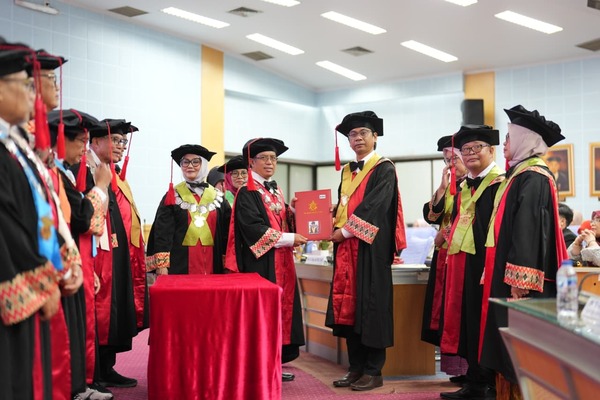
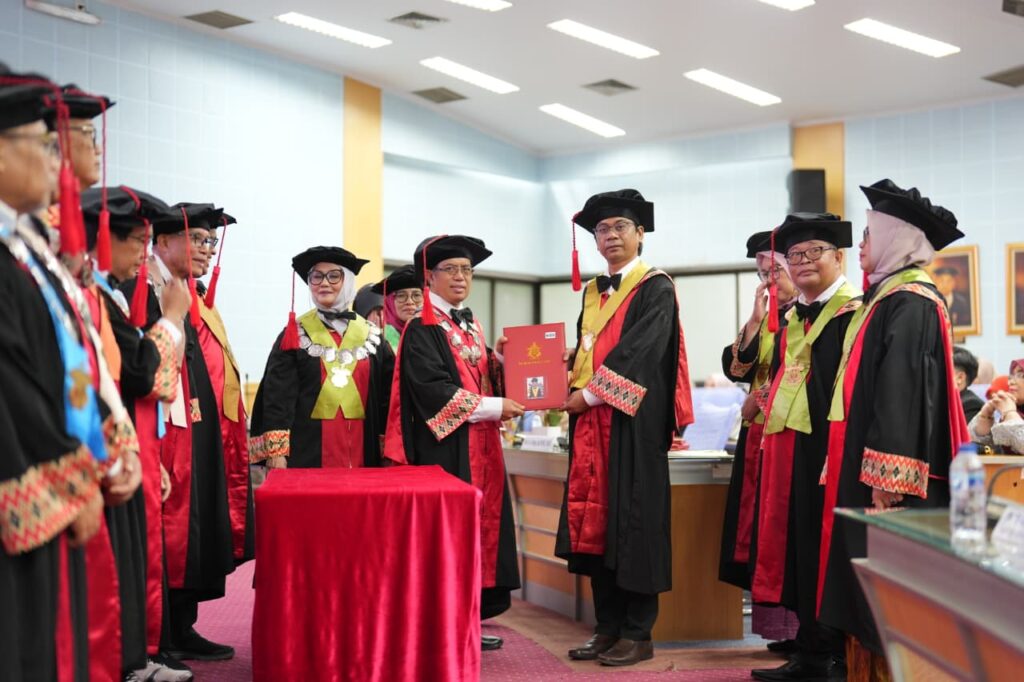
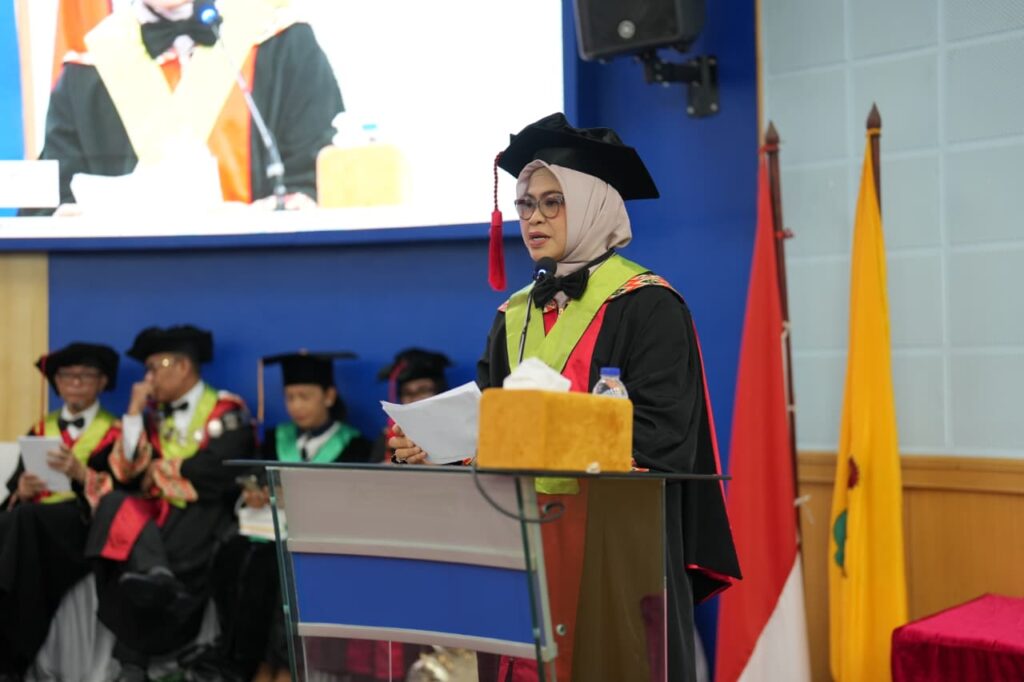
Before being officially inaugurated as new members of the Council of Professors, four Unhas professors delivered their acceptance speeches before a limited Plenary Meeting of the Academic Senate on Tuesday (20 January). Each professor presented an acceptance speech in their own field of expertise.
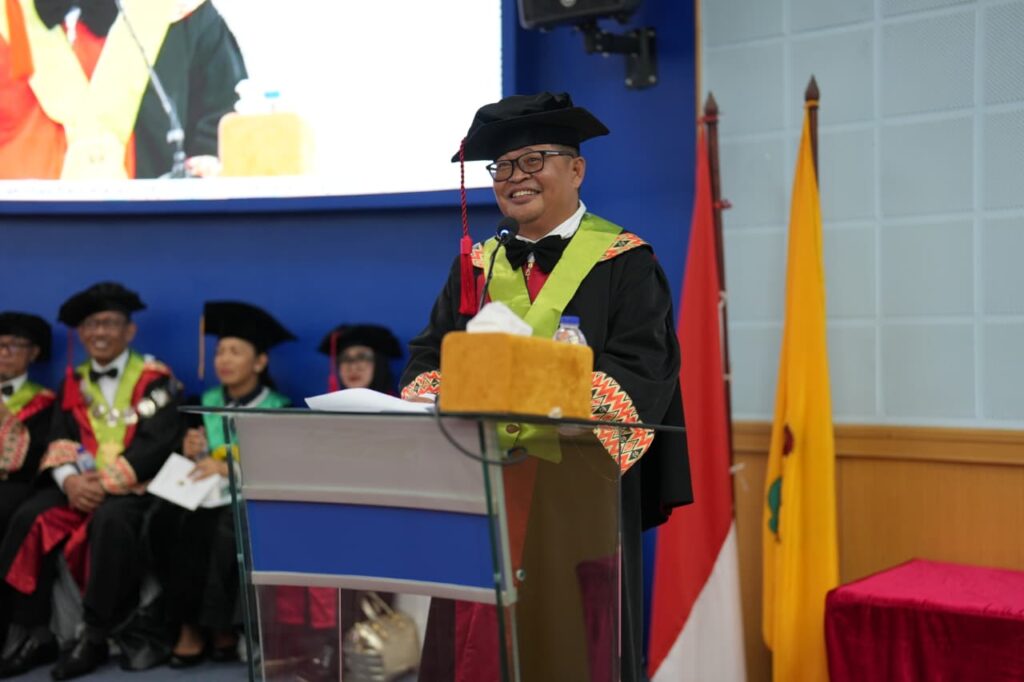
Prof. Ir. Yusri Syam Akil, S.T., M.T., Ph.D.,
The Professor of Energy Management at the Unhas Faculty of Engineering delivered a speech titled “Household Electrical Energy Management for Sustainable Consumption in Indonesia.”
Prof Yusri explained that management measures to improve electricity consumption efficiency can help mitigate climate change and cope with rising fuel prices and scarcity, including by reducing energy costs.
“Efforts to optimize electricity consumption, such as in the residential sector, are a challenging task for researchers because the factors driving load are so complex and can be unique to one area, along with other matters such as data availability. For that reason, models or frameworks need to be developed based on the environment in which the electrical load is studied,” said Prof Yusri.
The research has produced findings on managing household electricity consumption to be more efficient in the Indonesian context. Several recommendations derived from the analysis scenarios in the study include, among others, designing more realistic energy-saving strategies that refer to customer characteristics.
Prof. dr. Uleng Bahrun, Sp.PK., SubSp.I.K. (K)., Ph.D.,
The Professor of Immunology at the Unhas Faculty of Medicine spoke on “Monoclonal Antibodies: Research-Based Innovation in the World of Medicine.” In diagnostics, monoclonal antibodies play a major role in detecting disease more accurately and earlier. These antibodies are used in various laboratory test methods, such as ELISA, immunohistochemistry, and rapid tests, to identify the presence of specific antigens in biological samples.
Prof Uleng explained that monoclonal antibodies have become an important component of modern health care because of their ability to selectively recognize specific targets. In clinical practice, monoclonal antibodies are widely used as therapy for various diseases, such as cancer, autoimmune diseases, and infections.
“With a targeted mechanism of action, these antibodies can increase treatment effectiveness while reducing damage to healthy tissue. This makes them part of the increasingly developing precision medicine approach,” said Prof Uleng.
As technology continues to develop, the role of monoclonal antibodies in health care will become broader and more essential, with various advantages, including high specificity, consistent results, and the ability to be mass-produced using both conventional and recombinant technology.
Prof. dr. Marhaen Hardjo, M.Biomed, Ph.D.,
The Professor of Gastro-Entero Hepatology Biochemistry at the Unhas Faculty of Medicine outlined “Biomedical Translation for Liver Disease: Integrating Phytopharmaceuticals and Stem Cell Therapy Toward Future Regenerative Medicine.”
The liver has an excellent capacity for regeneration. In acute injury, mature liver cells can divide and replace damaged cells so that liver function can recover. In chronic injury, however, the regeneration process is no longer optimal.
Phytopharmaceuticals (Fitofarmaka) are natural-ingredient medicines developed through systematic scientific research. Unlike jamu (traditional herbal medicine), Fitofarmaka have undergone pre-clinical and clinical trials so that their safety and benefits can be accounted for. Phytopharmaceuticals and stem cells are two complementary approaches.
“Various studies show that Indonesian natural ingredients have great potential as hepatoprotectors. Bioactive compounds in phytopharmaceuticals work to reduce oxidative stress, suppress inflammation, improve metabolism, and inhibit the activity of stellate cells. With this mechanism, phytopharmaceuticals play an important role in the prevention and early-stage control of liver disease,” said Prof Marhaen.
Integrating phytopharmaceuticals and stem cells offers an integrated and highly promising approach to treating liver disease. Combining the two produces synergistic effects, including increased therapeutic effectiveness, reduced stem cell dose requirements, and potentially improved long-term treatment safety. In other words, phytopharmaceuticals are the biological foundation and stem cells are the regeneration engine, and together they build the therapeutic platform of the future for liver disease.
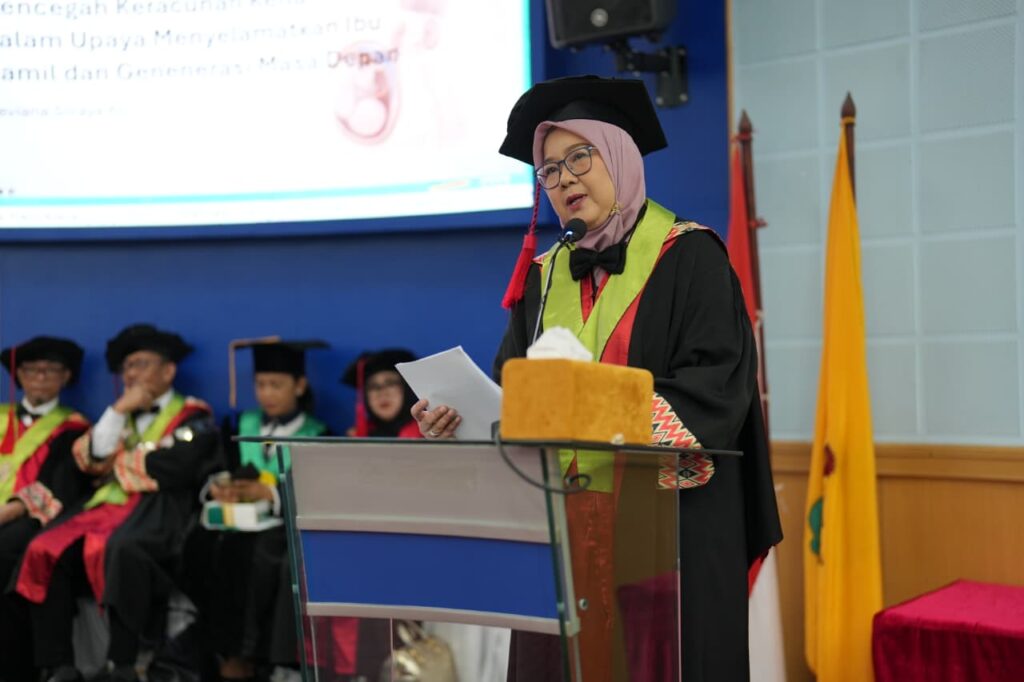
Prof. Dr. dr. Deviana Soraya Riu, Sp.OG., Subsp. KFM, MHPE
The Professor of Obstetrics and Gynecology at the Unhas Faculty of Medicine spoke on “Precision Nutrition: Hope for Preventing Pregnancy Poisoning (Preeclampsia) to Save Pregnant Women and Future Generations.”
The root of the disease begins early in pregnancy, with the failure of blood vessel remodeling in the uterus. Under normal conditions, these vessels should widen to ensure maximum nutrient supply to the fetus. In preeclampsia, however, this widening fails to occur.
“The urgency of this study is a medical reality: to this day, delivering the baby, or terminating the pregnancy, remains the only definitive cure for preeclampsia. In handling this disease, especially at preterm gestational ages, we face a dilemma: on one hand trying to achieve fetal maturation in the womb, on the other maintaining a pregnancy that poses a threat to mother and fetus,” said Prof Deviana.
Preventing preeclampsia is a global health mission with a real impact on the quality of the nation and the efficiency of the national health system. According to Prof Deviana, a paradigm shift is needed, from merely treating to preventing, and from general pharmacological interventions to strengthening the foundation of precision nutrition. (*/mir)
Editor: Ishaq Rahman
This article is an English translation of the original Indonesian report.