Five students from the Agricultural Engineering Study Program, Faculty of Agricultural Technology, Hasanuddin University (UNHAS), participated in the Tropical Biodiversity Summer Course 2026: Towards Sustainable Conservation, organized by the School of Life Sciences and Technology (SITH), Institut Teknologi Bandung (ITB), from 10 to 19 July 2026. The UNHAS delegation consisted of Najmah Shayna Tanzila, Nur Alisah, Hadija Rafaela Yudistira, Muh. Salsabil Bangsu, and Arham Sanieko Junianto.
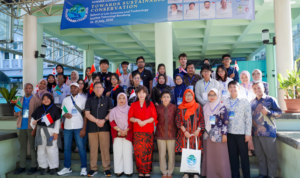
The international program brought together students from Afghanistan, Pakistan, Nigeria, Tanzania, Vietnam, Malaysia, and the United Kingdom, along with participants from several Indonesian universities. Over the course of ten days, participants collaborated in multinational teams to explore issues related to tropical biodiversity conservation through an interdisciplinary approach that combined classroom learning, field observations, scientific discussions, and cultural exchange.
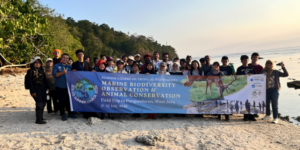
One of the program’s highlights was a field expedition to the Pangandaran Nature Reserve, where participants conducted direct observations of tropical forest and coastal ecosystems. During this fieldwork, students engaged in insect surveys to identify insect diversity and marine biota surveys to study various marine organisms and their ecological roles in maintaining coastal ecosystem balance. The field data collected served as the foundation for collaborative case studies addressing biodiversity conservation and sustainable ecosystem management.
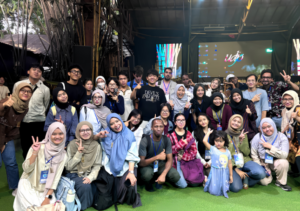
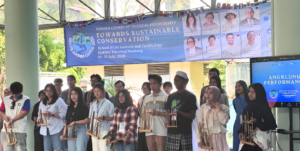
Beyond the scientific activities, participants also joined academic visits to the ITB Museum and took part in intercultural exchange activities at Saung Angklung Udjo. There, students from different countries interacted through traditional musical performances and learned to play the angklung together. These activities fostered cross-cultural communication, strengthened international friendships, and encouraged participants to appreciate diverse cultural perspectives while working in a global academic environment.
The program concluded with the Final Case Study Presentation where each multinational team presented evidence-based analyses and proposed solutions to biodiversity conservation challenges identified throughout the program. This final session provided participants with an opportunity to strengthen their critical thinking, scientific communication, problem-solving and teamwork skills while collaborating with peers from diverse academic and cultural backgrounds. The participation of the Agricultural Engineering students culminated in two prestigious awards: Best Case Study Presentation and Best Group Cultural Performance. These achievements reflect not only their academic excellence and innovative thinking but also their outstanding collaboration, adaptability, and active engagement in intercultural activities throughout the program.
These initiatives align with several United Nations Sustainable Development Goals (SDGs). By focusing on terrestrial biodiversity, tropical forest ecology, and species conservation during field studies, the program advances SDG 15: Life on Land. The marine ecosystem assessments conducted at the Pangandaran Nature Reserve support SDG 14: Life Below Water, while the collaborative learning framework fosters SDG 4: Quality Education. Additionally, the inter-institutional partnership between UNHAS, ITB, and international participating institutions embodies SDG 17: Partnerships for the Goals.
Participation in the Tropical Biodiversity Summer Course 2026 represents the ongoing commitment of UNHAS to the internationalization of higher education by expanding student mobility, strengthening global academic partnerships, and equipping students with the global competencies needed to address future sustainability challenges.