
MAKASSAR – Disposable diapers are very popular. They are easy and convenient to use, which makes life simpler for parents, especially mothers raising babies. Behind that convenience, however, lies an environmental problem that keeps growing.
Modern diapers are made from a combination of plastic and synthetic absorbent materials that take a very long time to break down in nature. This waste is one of the hardest types of household waste to handle, needing hundreds of years to decompose. Indonesia produces roughly 7.8–9.2 million tons of plastic waste every year, most of it not properly managed. This could pollute the environment, especially rivers and the sea.
Every day, millions of disposable diapers end up as waste. A baby uses an average of 5 to 8 diapers per day in the first year of life. In 2025, an estimated 4.4–4.8 million babies were born in Indonesia. That means there is the potential for 22.5–36 million baby diapers every day, or 8.1–13.1 billion disposable diapers every year, ending up as waste.
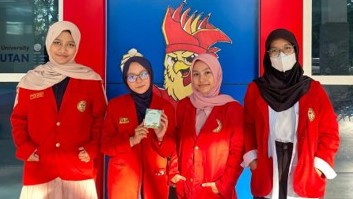
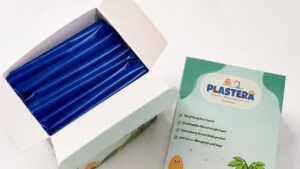
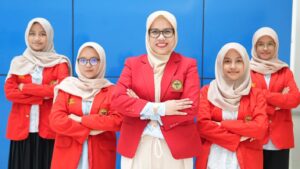
This issue caught the attention of a Student Creativity Program in Entrepreneurship (PKM-K) team from Hasanuddin University (Unhas). The students, from across disciplines, developed PLASTERA (Plastic Decomposer Era), a biocomposite-based wrapper for diaper waste. The innovation uses organic waste in the form of cassava peels and eggshells, enriched with eco-enzyme to support the biodegradation process.
Team leader Andi Aliyah Tenri Awaru explained that the innovation was born from a real need in the community and offers a solution to a problem that the public is barely aware of. Andi Aliyah said measures are needed to manage diaper waste in order to reduce its negative impact on the environment.
“Scientifically, we make use of the characteristics of several biomaterials. Starch extracted from cassava peels serves as the main ingredient forming a bioplastic that breaks down more easily than petroleum-based plastic. Meanwhile, eggshell powder is used to reinforce the material’s structure, increasing the mechanical strength of the wrapper. The integration of eco-enzyme is expected to create conditions that better support microorganism activity in the decomposition of organic waste,” Aliyah said, explaining the innovation.
Beyond the environmental aspect, PLASTERA is also designed to meet users’ practical needs. The wrapper bag comes with an adhesive so that diaper waste can be sealed more tightly, helping reduce unpleasant odors, and its compact design makes it easy to carry when traveling.
Even so, the researchers stressed that material innovation is only one part of the solution. Managing diaper waste still requires changes in public behavior, from sorting waste and disposing of it correctly to developing more adequate waste processing systems. Without good management support, using eco-friendly materials will not necessarily have the maximum impact.
To widen its use, the Unhas PKM-K team plans to introduce PLASTERA through social media, marketplaces, bazaars, and various student entrepreneurship exhibitions. Educating the public about the importance of managing diaper waste will also be part of the product’s development.
The team’s supervisor, Dr. Ir. Nursinah Amir, S.Pi., M.P., IPM., hopes the innovation can grow beyond the Student Creativity Program. In Dr. Nursinah’s view, research that starts from the use of organic waste has the potential to give rise to simple technologies able to address the challenge of waste management while supporting environmental preservation.
“As the team’s supervisor, we encourage and facilitate Unhas students to be attentive and sensitive to community problems. Not many realize that behind the convenience of baby diapers as an expression of every parent’s love, there is a potential problem that calls for a balanced response. This is where science makes an impact,” Nursinah said.
The development of PLASTERA shows that students have many ways of putting forward their critical ideas. With concern and sensitivity toward future threats, students can make real contributions. Amid the growing volume of disposable diaper waste, biomaterial innovations like this serve as a reminder that solving the waste problem requires a combination of technology, education, and changes in public behavior.
Unhas Student Creativity Program in Entrepreneurship team:
1. Andi Aliyah Tenri Awaru (Faculty of Marine Science and Fisheries)
2. Fashila Aulia (Faculty of Economics and Business)
3. Putri Naila Az-Zahra Yusri (Faculty of Health Sciences)
4. Nabila Zahirah Putri Amri (Faculty of Engineering)
Supervisor: Dr. Ir. Nursinah Amir, S.Pi., M.P., IPM.(*/fikp/ir)
Editor: Ishaq Rahman
This article is an English translation of the original Indonesian report.