
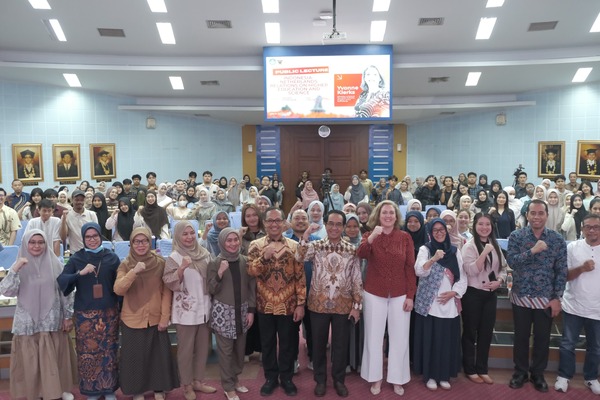
Hasanuddin University (Unhas) continues to strengthen its internationalization by promoting global collaboration that is oriented not only toward academic strengthening but also toward creating real impact for society. Through a public lecture titled “Indonesia–Netherlands Relations on Higher Education and Science,” Unhas hosted Yvonne Klerks, Counsellor for Education and Science at the Embassy of the Kingdom of the Netherlands.
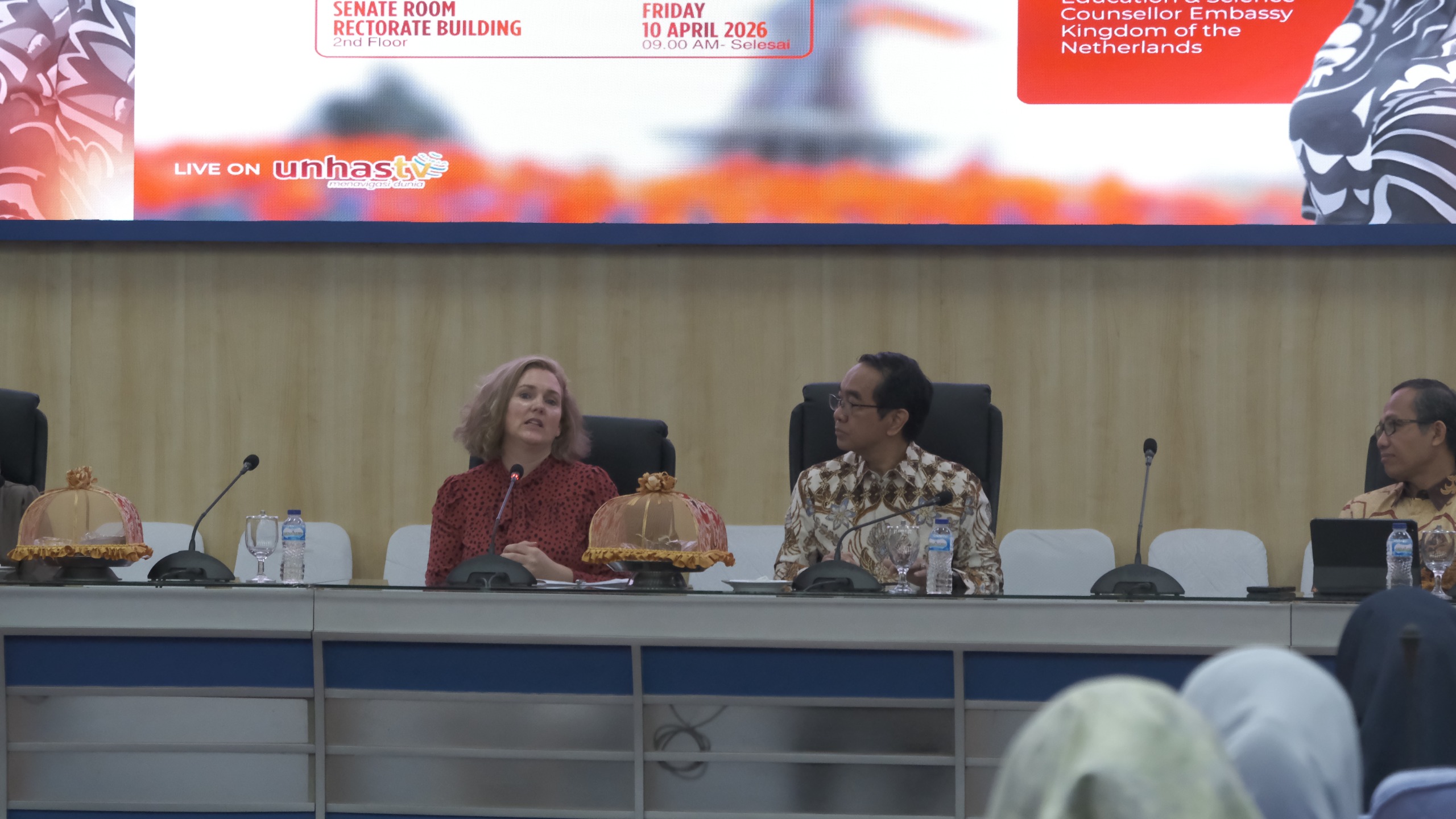
In her presentation, Ms. Klerks highlighted how the Netherlands has built a higher education and research system integrated with global needs. Although relatively small geographically, the Netherlands has become one of the world’s innovation hubs by strengthening collaboration among universities, industry, and government.
Ms. Klerks explained that the Dutch higher education system consists of two main tracks: research universities and universities of applied sciences. The two systems are designed to complement each other, with academic research developed in line with practical needs in the field.
Ms. Klerks also stressed that international relations are an important part of developing higher education and science in the Netherlands. Indonesia is one of the priority countries, so cooperation continues to be strengthened through a government-to-government approach as well as direct collaboration between universities.
“Our role is to ensure strong connectivity is built between institutions, so that research and education collaboration can run effectively and deliver real impact,” explained Klerks.
Klerks further outlined various collaboration platforms that students and academics can use, such as the Indonesia–Netherlands Knowledge House, which brings together universities from both countries.
In research, Klerks explained that there are opportunities for joint funding between the Netherlands and Indonesia, including through collaboration with institutions such as LPDP and NWO. Research focuses on strategic global issues such as the blue economy, food security, and environmental sustainability.
According to Klerks, the triple helix approach is the main key, integrating the roles of universities, industry, and government in driving innovation. This synergy is the key to ensuring research does not stop at publication but produces applicable and impactful solutions.
For Unhas, international collaboration such as that built with the Netherlands is an important part of strengthening the quality of education and research. Rector Prof. Dr. Ir. Jamaluddin Jompa, M.Sc explained that Unhas continues to encourage collaboration with strategic partners to drive synergy that is not only academic but also contributes to the development of impactful innovation.
“Unhas continues to improve the competitiveness of its graduates at the international level. One concrete step targeted is to ensure that all Unhas students have English competency at a global standard,” said Prof. JJ.
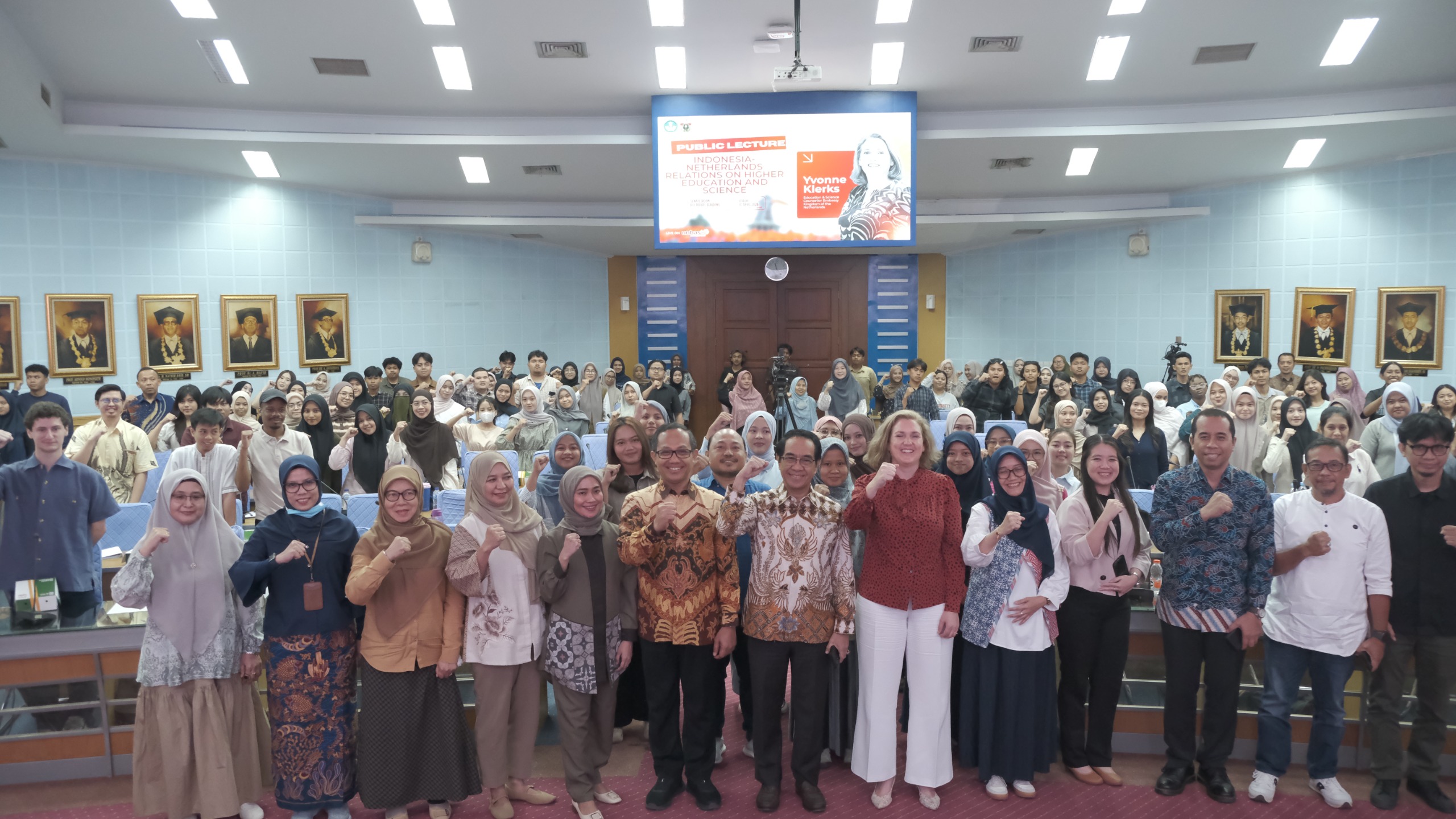
Through the public lecture, Unhas further strengthens its international network while opening wider opportunities for collaboration in research and innovation based on global needs. The event, attended by hundreds of lecturers and students, took place in the Senate Room on Friday (10 April) and served as a discussion space for building a global academic collaboration ecosystem that is adaptive and impactful.
Synergy among universities, government, and international partners is expected to produce innovations that are not only academically relevant but also make real contributions to sustainable development. (*/mir)
Editor: Ishaq Rahman
This article is an English translation of the original Indonesian report.