
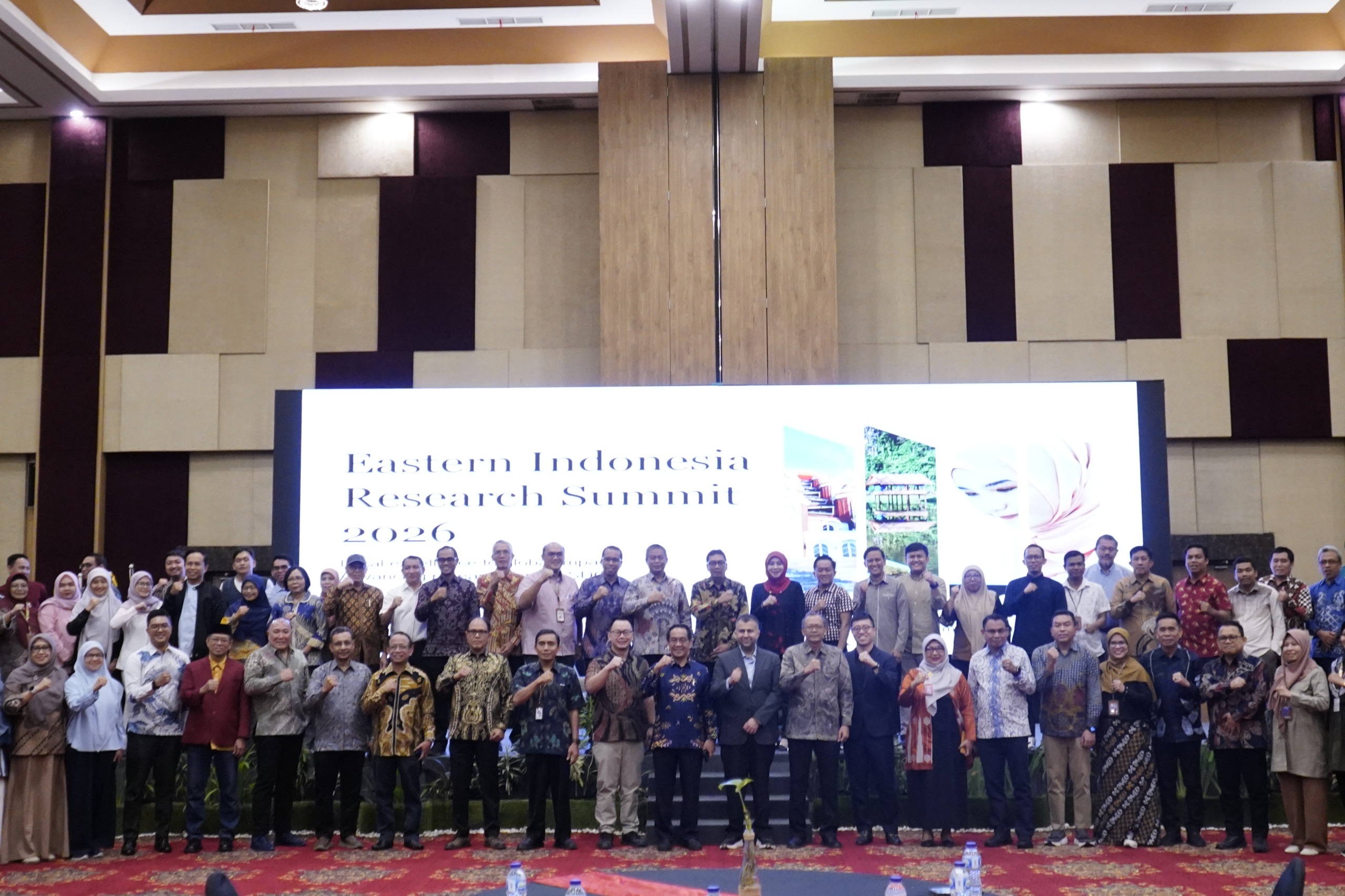
MAKASSAR – Research is no longer seen as a series of activities that ends with a scientific publication. Advances in artificial intelligence (AI), data analysis, and cross-disciplinary collaboration have changed how knowledge is produced, validated, and put to use in addressing global challenges. This transformation requires universities to build research ecosystems that are not only productive but also open, ethical, and impactful.
That spirit underpinned the collaboration between Elsevier and Hasanuddin University (Unhas) in organizing the East Indonesia Research Summit 2026, held at the Unhas Hotel and Convention Center, Makassar, on Tuesday (14 July).
Under the theme Local Excellence to Global Impact: Advancing Research for the Sustainable Development Goals (SDGs ), the forum brought together university leaders, researchers, librarians, and policymakers to discuss strategies for strengthening research quality, increasing the visibility of scientific publications, expanding collaboration, and promoting research that delivers real benefits to society.
Opening the forum, Elsevier Strategic Engagement Manager Dr. Johan Jang presented a talk titled SDGs and AI: Elsevier Introduction to LeapSpace. Jang introduced LeapSpace, an artificial intelligence (AI)-based solution developed by Elsevier to support the research process more effectively and to help universities use technology to produce high-quality, impactful research.
Dr. Jang explained that the development of AI has changed many stages of the research lifecycle, from literature searches and information analysis to scientific collaboration. In Dr. Jang’s view, AI must be used responsibly while upholding academic integrity, so that technology strengthens the quality of research rather than replacing the scientific process.
“Through LeapSpace, Elsevier encourages the use of AI to support data-driven decision-making, accelerate innovation, and increase research’s contribution to achieving the Sustainable Development Goals. This approach is expected to help universities build research ecosystems that are more collaborative, adaptive, and able to meet global challenges,” said Dr. Jang.
Meanwhile, Elsevier’s Regional Director for Southeast Asia & Australia-New Zealand (ANZ), Omar Malik, affirmed Elsevier’s commitment to supporting the strengthening of research capacity in Indonesia. In Malik’s view, Indonesia has great potential to become one of the region’s centers of scientific growth because of its biodiversity, marine resources, and diverse development challenges, which open room for strategic research.
Elsevier’s support goes beyond providing access to scientific literature. It also includes strengthening institutional capacity, developing the competencies of lecturers and researchers, expanding academic networks, and using research data to improve the quality and societal impact of research.
“Collaboration is the foundation for building high-quality research. When institutions, researchers, and sources of knowledge are connected to one another, the chances of producing innovations that make an impact grow,” said Omar.
As part of this effort, Elsevier offers various solutions that support the research ecosystem, one of which is the ScienceDirect platform, which provides access to millions of internationally reputable scientific articles. Access to these scientific sources is expected to strengthen learning, research, and innovation within universities.
The Rector of Hasanuddin University, Prof. Dr. Ir. Jamaluddin Jompa, M.Sc., welcomed the collaboration. In the Rector’s view, the partnership with Elsevier is an important moment for widening access to scientific knowledge sources while strengthening the research capacity of the academic community.
“This collaboration is a good opportunity to strengthen the research culture at Unhas. Access to quality scientific references will support more innovative research that is competitive globally,” said Prof. JJ.
The forum also discussed a range of strategic issues, from the use of AI in research and strengthening research integrity to increasing the visibility of scientific publications and research’s contribution to achieving the Sustainable Development Goals (SDGs).
Through this collaboration, Elsevier and Hasanuddin University hope that stronger access to knowledge, technology, and academic networks will foster outstanding research from eastern Indonesia that is not only academically reputable but also delivers real impact for society and sustainable development. (*/dhs)
Editor: Ishaq Rahman


This article is an English translation of the original Indonesian report.