
Hasanuddin University (UNHAS), through the Faculty of Dentistry, strengthened their international academic engagement through the Diaspora Berdampak program. This program was supported by a grant received by Prof. Muhammad Ruslin, drg., M.Kes., Ph.D., Sp.B.M.Mf., Subsp. Ortognat-D. The program brings Indonesian diaspora academics and international scholars into a series of academic and research activities aimed at expanding knowledge exchange, strengthening research collaboration, and supporting the development of innovative approaches in health sciences and dental education. As part of the program, the Faculty of Dentistry welcomed Prof. Sri Hastuti Kurniawan, B.S., M.S., Ph.D. from the University of California, Santa Cruz (UCSC), United States, for a series of activities held from 23–30 September 2026. Her visit included international guest lectures, research seminars, and research workshops involving lecturers, researchers, and students.
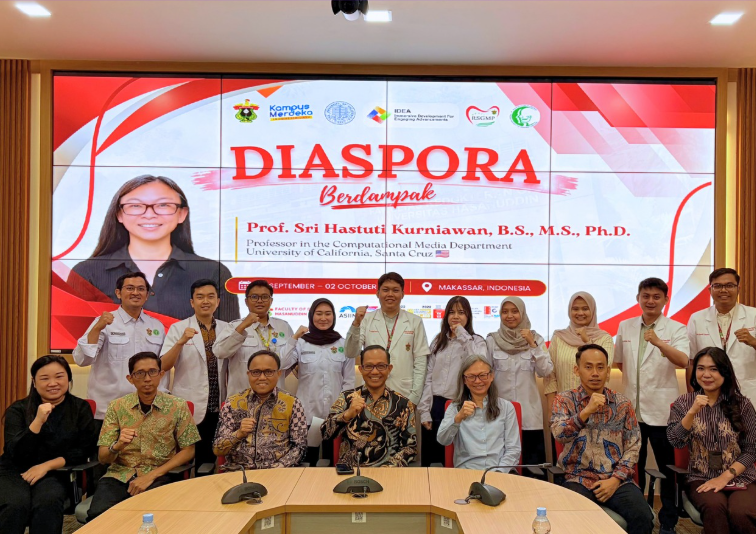
The academic series covered a range of interdisciplinary topics, including “Human-Computer Interaction (HCI) in Healthcare System” and “Immersive Reality Technology Research Seminar – Holographic Tracking and Dynamic Plan Transfer for Complex Surgery Procedure.” Participants also joined workshops on thesis and research topics related to mixed and immersive reality technologies. Other sessions explored the development of robotic and haptic devices, as well as scientific article collaboration for reputable journals. Through these activities, participants were introduced to emerging technologies and research approaches with potential applications in healthcare and dentistry, including artificial intelligence, human-computer interaction, immersive reality, robotics, and haptic technology.
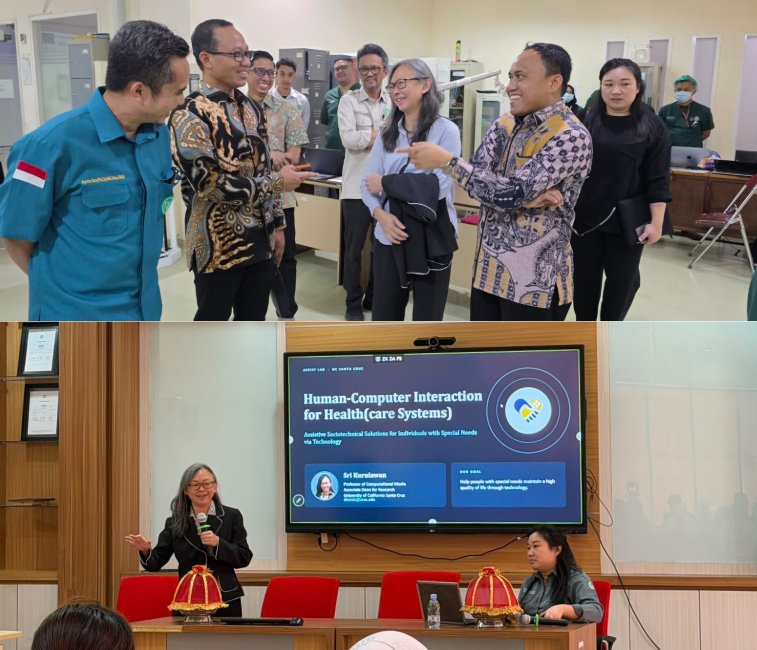
Beyond knowledge sharing, this event also provides a platform for building longer-term research networks and identifying opportunities for joint research, academic publication, and future international collaboration. The implementation of the program reflects the Faculty of Dentistry’s continued efforts to expand UNHAS’s global academic network and create meaningful opportunities for international knowledge exchange. By connecting the university with diaspora academics and international scholars, the program supports a more collaborative, innovative, and globally engaged research environment.