
Five study programs at Hasanuddin University from the Faculty of Social and Political Sciences (FISIP), the Faculty of Economics and Business (FEB), and the Faculty of Law (FH) have received full accreditation (fully accredited) from the international accreditation agency FIBAA (Foundation for International Business Administration Accreditation), valid until 12 September 2029.
This achievement reflects the fulfillment of international quality standards in governance, the learning process, and the quality assurance system in place.
The five study programs that earned the accreditation are:
- Law
- State Administrative Law
- Development Economics
- Communication Science
- International Relations
The five study programs have met the quality indicators set by FIBAA, including a curriculum based on learning outcomes, academic governance, and support from educational resources.
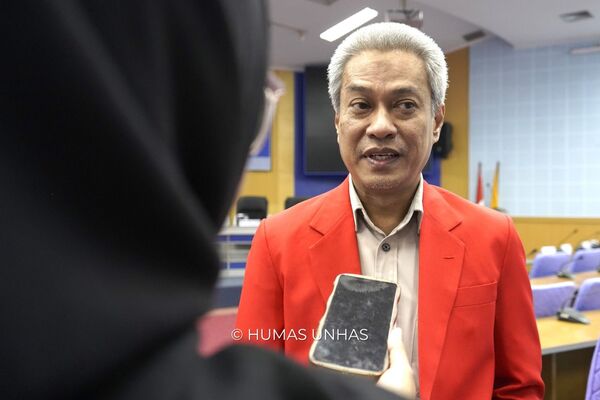
Chair of the Institute for Quality Assurance and Education Development (LPMPP) at Hasanuddin University, Prof. Dr. Ir. Musrizal Muin, M.Sc., explained that the success was underpinned by a structured internal collaboration model. The model integrates the roles of university leaders, accreditation managers, study program management units (UPPS), study program heads, and the Task Force into a single systematic workflow.
“The key factor lies in a work culture based on collaboration and consistent communication at every level of management,” Prof. Musrizal said.
From a quality assurance perspective, this approach shows integration between strategic policy at the university level and operational implementation at the study program level. This synergy allows monitoring, evaluation, and the fulfillment of standards to be carried out in a way that is more adaptive to the indicators set by international accreditation agencies.
“This collaboration model functions not only for meeting accreditation requirements but also as a sustainable framework for strengthening the internal quality assurance system,” said Prof. Musrizal.
As a result, quality management is not merely administrative but has developed into an organizational culture internalized at every level.
This achievement affirms that strengthening systems, consistent governance, and integration among units are important determinants in raising the global competitiveness of study programs, while also reinforcing Hasanuddin University’s position on the international higher education map.(*/dhs)
Editor : Ishaq Rahman
This article is an English translation of the original Indonesian report.