

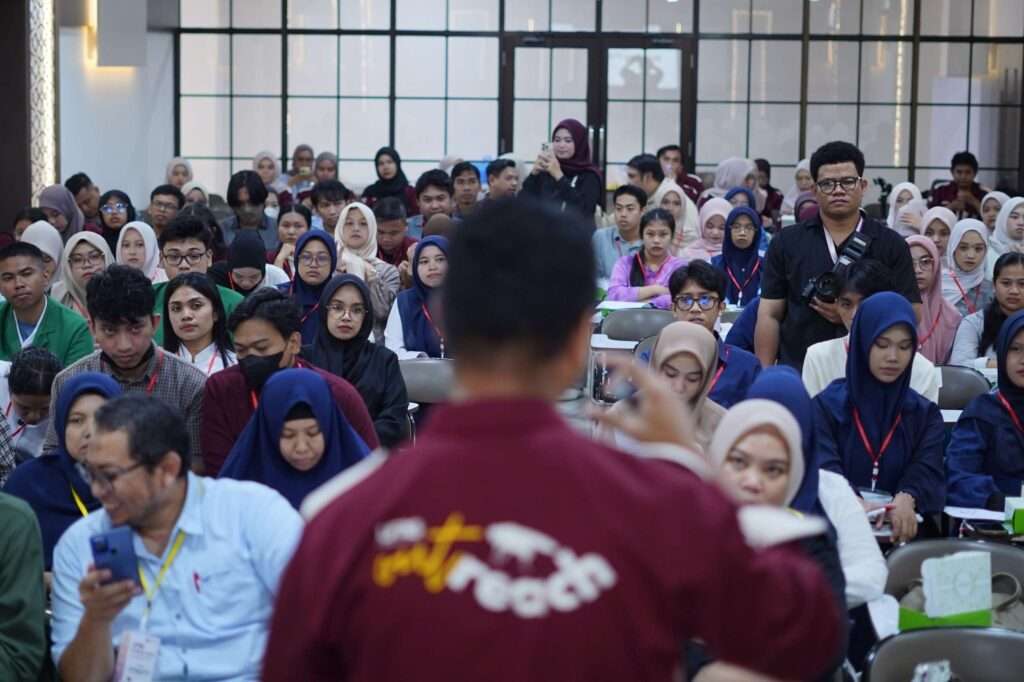
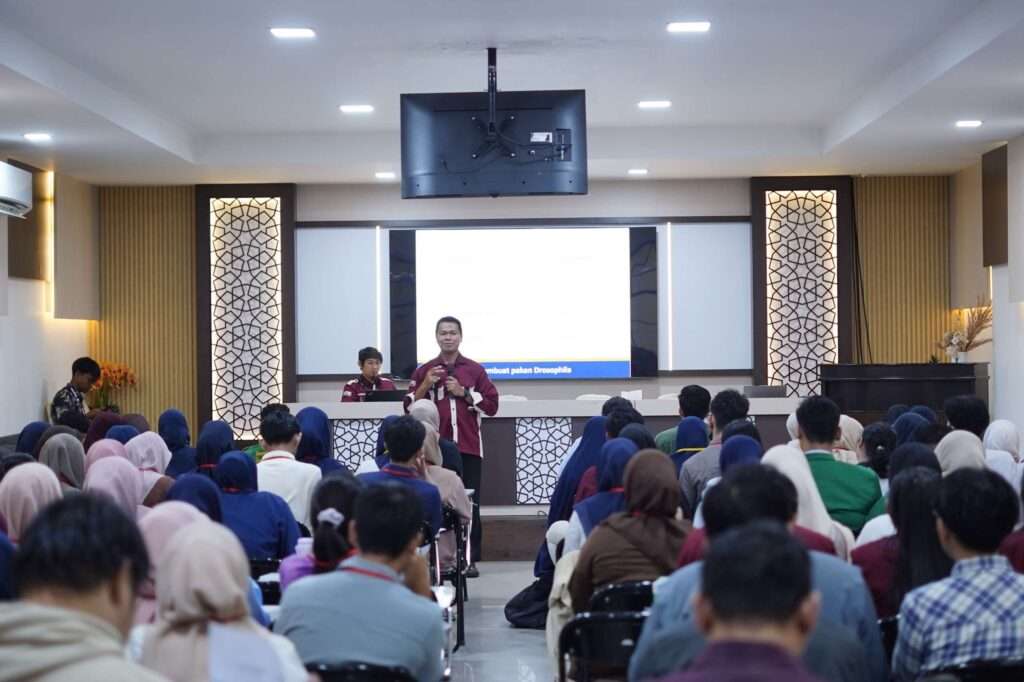
The Faculty of Pharmacy of Hasanuddin University, through the Unhas Fly Research Group (UFRG), held a Drosophila melanogaster research practicum involving participants from various universities in Sulawesi and surrounding areas. The event, part of the Outreach 2026 series, began at 09:00 WITA (Central Indonesia Time) at the Faculty of Pharmacy Laboratory, Unhas Tamalanrea Campus, Makassar, on Wednesday (11 February).
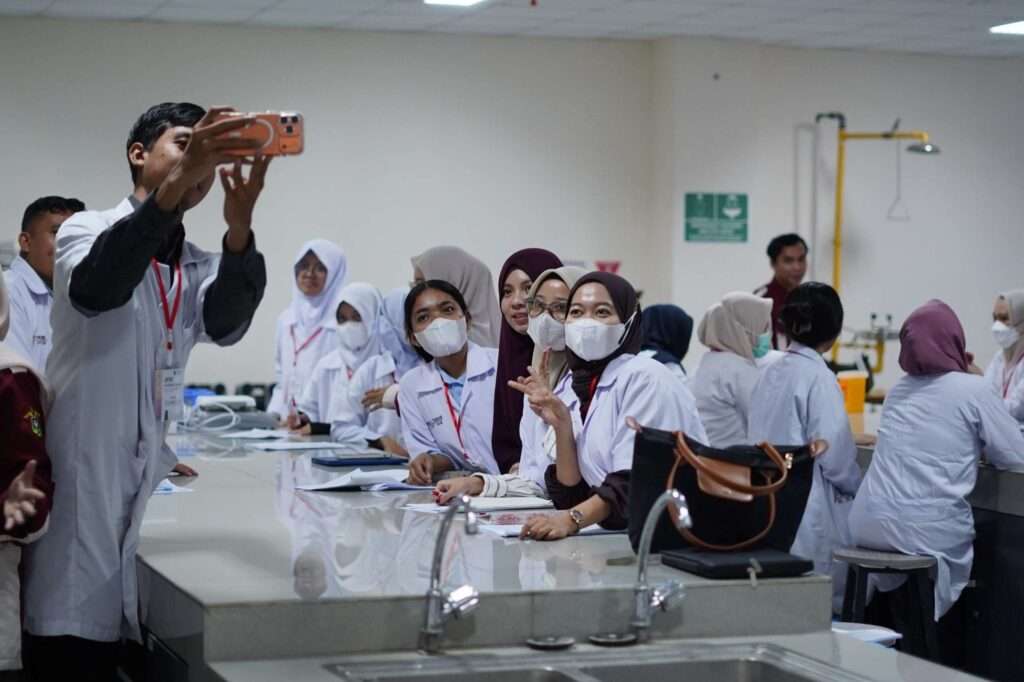
Prof. Firzan Nainu, S.Si., M.Biomed.Sc., Ph.D., Apt., (Founder of UFRG) explained that the event was designed to emphasize a hands-on approach to learning research. Through direct laboratory practice, participants gained not only theoretical understanding but also took an active part in the research process by handling and managing Drosophila melanogaster as a model organism.
Prof. Firzan further explained that Outreach 2026 is the first event organized by UFRG and has secured a funding grant from the Genetic Society of America (GSA). The support was provided to fund the outreach activity as an effort to strengthen model-organism-based research capacity in Indonesia.
According to Prof. Firzan, the event aims to give Drosophila research greater exposure so that it can be adopted by individual universities. UFRG is committed to driving science progress by involving more institutions, while also expanding efforts to disseminate knowledge through the use of Drosophila melanogaster.
“In Indonesia, we are the pioneers in developing Drosophila research. With the scientific expertise we have, we feel a responsibility to spread that knowledge. Today, the development of science is no longer based on competition but on collaboration among universities,” Prof. Firzan explained.
Prof. Firzan also emphasized that using Drosophila melanogaster as a model organism offers a research solution far more efficient than using laboratory animals such as mice, which require large costs. At relatively low cost, students have wider opportunities to conduct research independently.
“UFRG is open to the public and to collaboration. The most important goal for us is for participants to be able to establish a Drosophila laboratory at their own institutions so that research can grow sustainably,” Prof. Firzan added.
The expected outcomes of the event include greater exposure for Drosophila research, the establishment of Drosophila laboratories at participants’ home institutions, and the building of cross-university collaboration at the regional and national levels.
Earlier, the Outreach 2026 series began with a webinar titled “Introducing Drosophila Melanogaster as a Model for Advancing Undergraduate Research in Indonesia.” The webinar featured four experienced Drosophila melanogaster researchers who shared scientific insights, research approaches, and the potential uses of fruit flies in various fields of research.
As a follow-up, on the second day of Outreach 2026, participants took part in a practicum divided into two sessions. In the first session, participants received training on preparing Drosophila food, determining the life cycle, identifying males and females, and Drosophila anesthesia techniques using CO₂.
In the second session, participants had the opportunity to conduct simple Drosophila tests that can be applied in the health sciences. The participants consisted of lecturers and students from 12 universities in Makassar and the Sulawesi region more broadly, with the entire program scheduled to run until 17:00 WITA. (*/mir)
Editor: Ishaq Rahman
This article is an English translation of the original Indonesian report.