
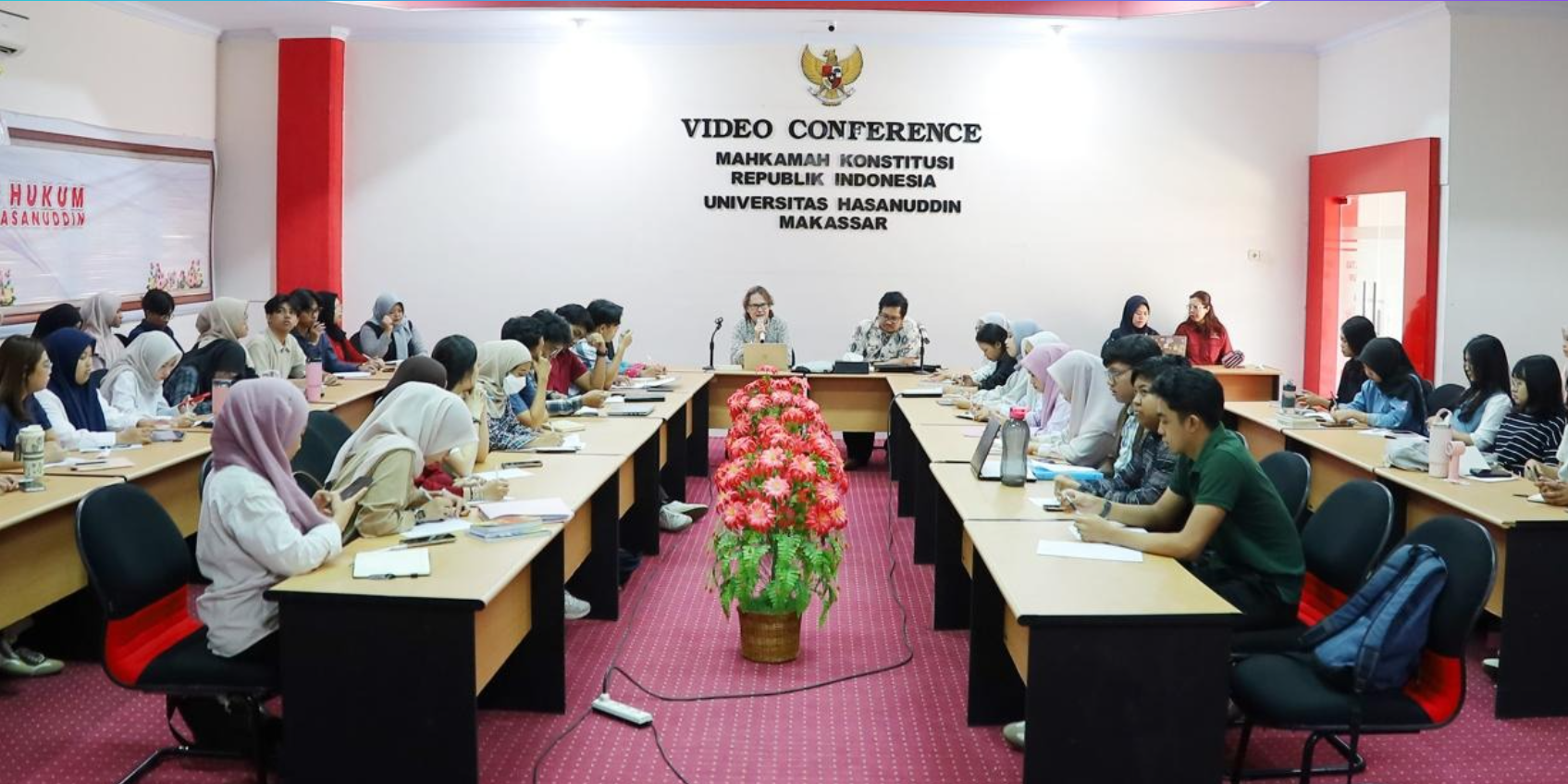
The Faculty of Law at Hasanuddin University (FH UNHAS) hosted Professor Stefan Koos, Adjunct Professor at FH UNHAS and Professor at Universität der Bundeswehr München, Germany, as part of its Visiting International Lecturer programme on 12–13 October 2026. The academic activities took place at the Harifin A. Tumpa Moot Court Room and the Video Conference Room at FH Unhas.
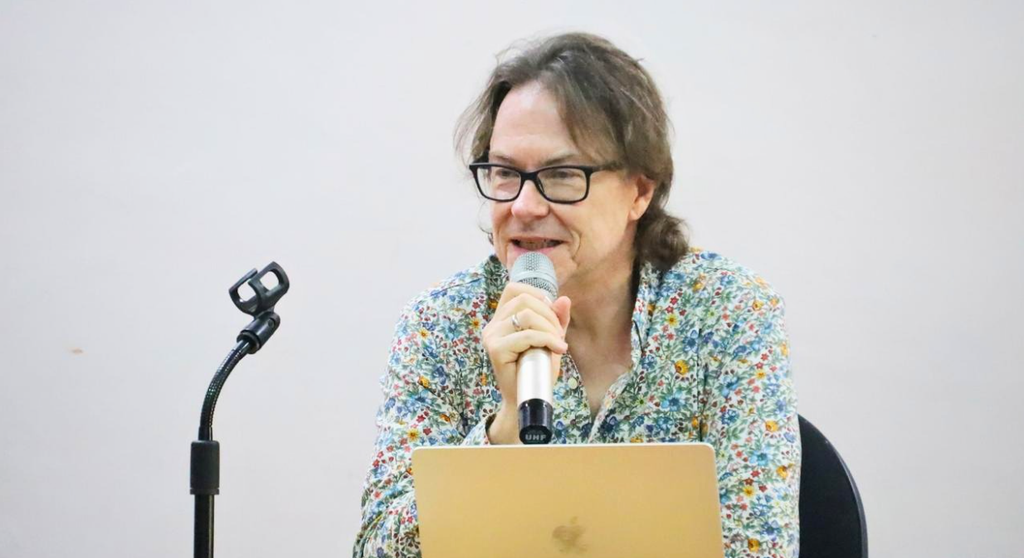
On the first day, Professor Koos delivered a lecture entitled Artificial Intelligence and Communication: Legal, Ethical and Societal Challenges. His presentation examined the legal, ethical, and social implications of artificial intelligence (AI), particularly in the context of rapid technological development and the growing integration of AI into everyday life.
Professor Koos highlighted the tendency for public discussions about AI to focus excessively on alarming scenarios. He encouraged a more balanced assessment of the technology, drawing attention to practical concerns, including the potential decline in critical analytical skills resulting from overreliance on AI and the continuing challenges of protecting personal data in the digital environment.
He also emphasised the importance of becoming Homo Digitalis—an individual who understands the risks of digital technology and takes responsibility for their actions and presence in the digital world.
“There is no guarantee of 100% data security in the digital space. Government regulation alone is not enough; we must also be aware of and take responsibility for our own digital existence and all its consequences,” Professor Koos stressed.
His lecture further addressed the challenge of balancing AI regulation with technological innovation. Referring to regulatory developments in the European Union and China, he highlighted the importance of approaches that protect society while allowing technological innovation to progress.
On the second day, Professor Koos turned to Private International Law, focusing particularly on the concept of Ordre Public, or public policy. He explored differences between the Indonesian and German legal systems in matters involving international marriages, property arrangements, divorce, and interfaith marriages. Comparative perspectives from Singapore and other European countries also enriched the discussion of cross-border legal issues.
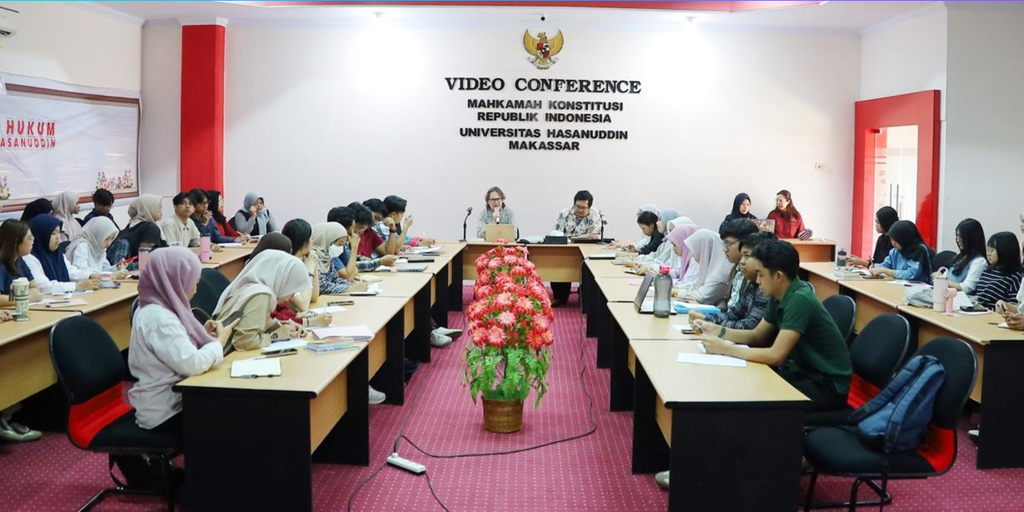
The sessions featured interactive discussions with FH Unhas students, who raised critical questions concerning contemporary legal challenges, including liability for the misuse of deepfake technology and the implications of AI development.
Through this academic programme, FH Unhas seeks to broaden students’ understanding of contemporary global legal issues, strengthen critical thinking, and encourage a deeper appreciation of the relationship between technological innovation, individual responsibility, and the development of effective legal frameworks at both national and international levels.