
The Graduate School of Hasanuddin University (UNHAS) expanded its international academic engagement through an online guest lecture on “Water and Environmental Engineering and Science” on Monday, 21 September 2026, featuring Prof. Dr. Muthukrishna Vellaisamy Kumarasamy from the University of KwaZulu-Natal, South Africa. In his opening remarks, Prof. Sukri Palutturi, S.KM., M.Kes., M.Sc.PH., Ph.D., Dean of the UNHAS Graduate School, expressed his appreciation to Prof. Kumarasamy and highlighted opportunities for longer-term collaboration through joint research, student and staff exchanges, and visiting professor programs.
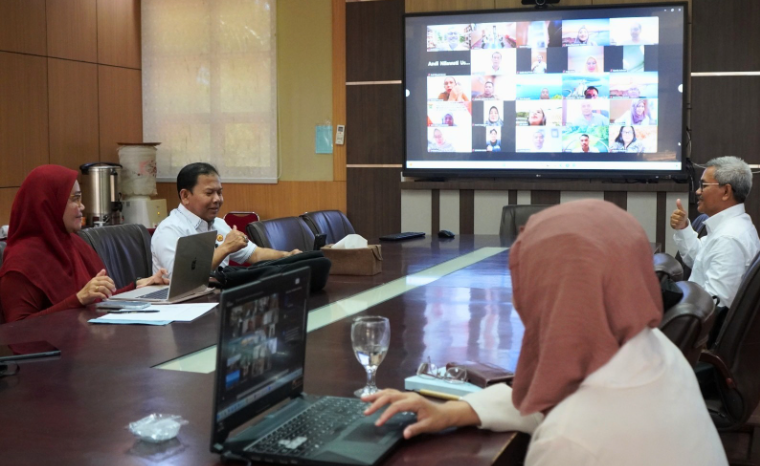
Prof. Kumarasamy, a civil engineering academic who leads the Civil Engineering discipline at the University of KwaZulu-Natal, presented modelling innovation as an important tool for understanding water resource dynamics and developing effective environmental protection strategies. His lecture covered water resource management, watershed planning, and flood risk management, emphasizing the importance of integrating economic efficiency, social equity, and environmental sustainability.
He explained that assessing water bodies requires a combination of quantitative indicators, including river discharge, water availability, and groundwater levels, and qualitative indicators covering physical, chemical, and biological conditions. Amid growing pressures from agriculture, urbanization, stormwater runoff, wastewater discharge, industrial activities, and climate change, hydrological and water quality models can complement field monitoring to assess risks and support more effective pollution-control strategies.
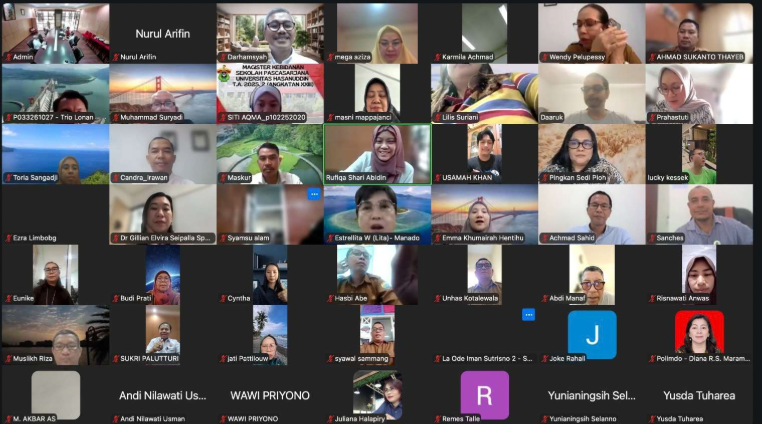
The lecture also addressed emerging contaminants in aquatic environments, including antibiotic residues, pharmaceutical compounds, personal care products, and microplastics. Prof. Kumarasamy presented a water quality modelling study from a South African river basin involving sampling at 18 locations, laboratory analysis, and mathematical modelling. Through the case study, participants learned how models are developed through data collection, parameter identification, calibration, validation, and simulation to identify areas with high pollutant concentrations and support sustainable watershed management.
During the discussion, participants explored minimum data requirements for modelling, applications in different research contexts, and approaches to tracing sources of antibiotic contamination. Moderated by Dr. Ir. Darhamsyah, M.Si., the session also opened opportunities for collaboration between UNHAS and the University of KwaZulu-Natal, including joint publications and research projects, visiting positions, student and staff exchanges, thesis and dissertation examination, curriculum development, advisory board participation, and joint conferences.
Through the guest lecture, the UNHAS Graduate School provided its academic community with international perspectives on environmental engineering, integrated water resource management, and modelling technologies. The engagement also contributes to expanding academic connections between Indonesia and South Africa while creating opportunities for future research collaboration addressing increasingly complex water and environmental challenges.