
Prof. Drs. Burhanuddin Arafah, M.Hum., Ph.D., Professor of English Literature at the Faculty of Cultural Sciences, Hasanuddin University (UNHAS), presented an innovative educational framework at the EUROCALL 2026 Conference in Belfast, Northern Ireland. Hosted by Ulster University from 8 to 11 September 2026, the international conference carried the theme “Promoting Linguistic Diversity Through CALL.”
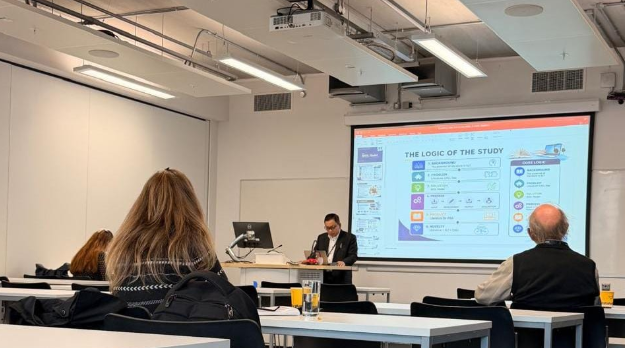
During the conference, Prof. Arafah presented his research paper entitled “IDOL Model: The Literature-Integrated CALL Materials – An Innovative Framework for ELT.” The study addresses a gap in English Language Teaching (ELT), particularly the limited systematic approaches for transforming printed literary texts into effective digital and Computer-Assisted Language Learning (CALL) materials. At the center of the study is the IDOL Model, which stands for Input, Development, Output, and Language Acquisition. Rather than beginning with technology, the framework adopts a needs-driven approach by first identifying learners’ subjective and objective needs before selecting and integrating appropriate digital tools.
As a practical application of the framework, the study developed a digital learning platform prototype called “Literature for PIBA,” built using WordPress. The platform integrates five classic short stories, including Jack London’s To Build a Fire and O. Henry’s The Gift of the Magi, alongside inductive grammar activities, contextual vocabulary learning, and interactive multimedia tasks. The materials were also structured using Krashen’s i+1 principle to support gradual language development. The study used Kirkpatrick’s Four-Level Evaluation Model to assess learning outcomes and demonstrated how the IDOL Model can serve as an adaptable and replicable framework for developing instructional materials in different ELT contexts.
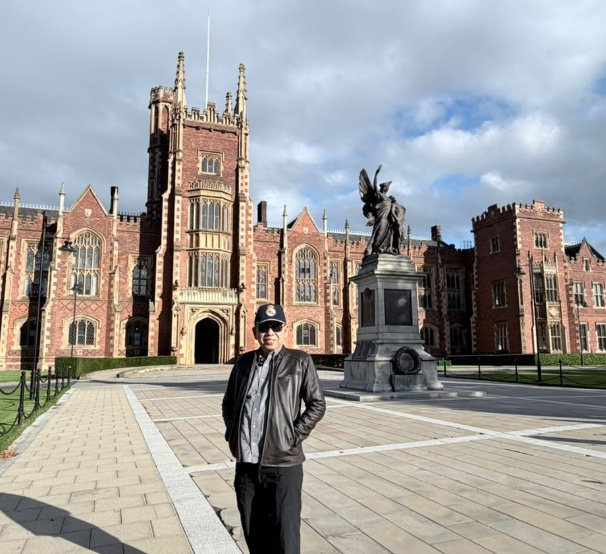
Prof. Arafah, who has been recognized among the world’s top 2% of scientists in rankings associated with Stanford University and Elsevier, emphasized that the main contribution of the study lies in its systematic integration of literature, language pedagogy, and digital technology within a single material-development process. His participation in EUROCALL 2026 highlighted Hasanuddin University’s contribution to international discussions on language education, digital learning, and innovative approaches to English language teaching.