
Hasanuddin University (UNHAS) strengthened its academic ties with South Korea through a visit by Prof. Kim Soo-il, Chairman of the Busan Indonesia Center (BIC), on Monday, 21 September 2026. The visit featured the signing of a Memorandum of Understanding (MoU) between UNHAS and BIC, followed by a guest lecture for the university community.
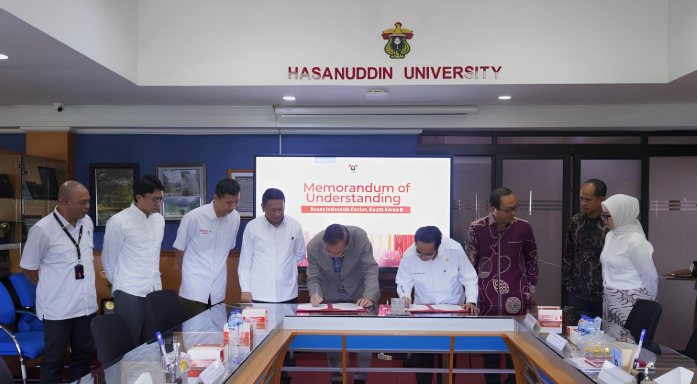
The collaboration marks a step toward expanding academic and research engagement between UNHAS and institutions in South Korea, with opportunities ranging from advanced study and human resource development to research collaboration, knowledge exchange, and broader institutional networking.
The MoU was signed by UNHAS Rector Prof. Dr. Ir. Jamaluddin Jompa, M.Sc., and BIC Chairman Prof. Kim Soo-il at the Rector’s Meeting Room on the eighth floor of the UNHAS Rectorate Building.
Through the agreement, UNHAS and BIC aim to develop academic and research programs while strengthening connections between UNHAS and higher education institutions in South Korea. One area highlighted during the meeting was expanding opportunities for young UNHAS lecturers to pursue further study and gain international academic experience.
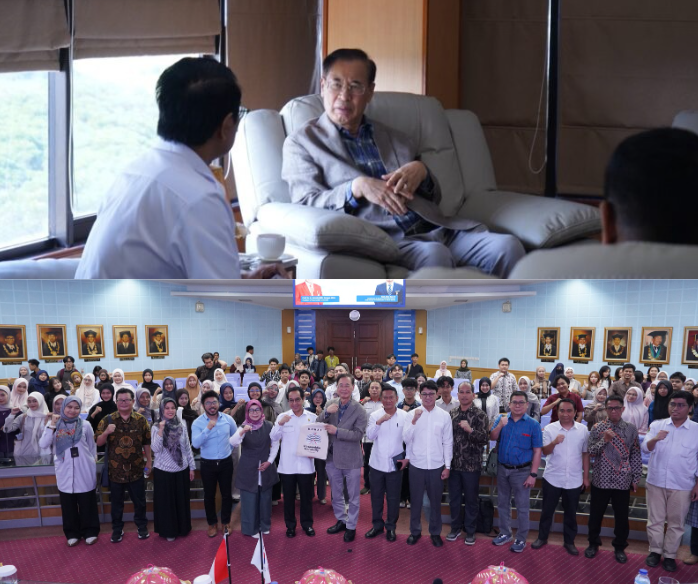
Prof. Jamaluddin Jompa emphasized that international partnerships should create tangible opportunities for the university’s academic community. He expressed hope that BIC’s extensive network in South Korea could help connect UNHAS lecturers, researchers, and students with universities and other potential partners.
“We want to encourage our young lecturers to pursue further education through our international partner networks. We hope the Busan Indonesia Center can serve as a bridge, providing access and connecting them with partner universities in Korea so that this collaboration can bring tangible benefits to the development of UNHAS human resources,” Prof. Jamaluddin said.
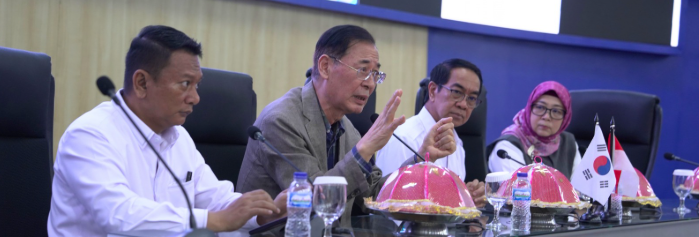
Prof. Kim welcomed the partnership and highlighted its potential to deepen educational and research relations between Indonesia and South Korea. Through BIC’s network, the collaboration is expected to facilitate connections with higher education institutions and create opportunities for academic exchange and joint research.
Following the MoU signing, Prof. Kim continued his visit with a guest lecture titled “Unlock Your Potential: Preparing for a Successful Future” at the Senate Room on the second floor of the UNHAS Rectorate Building.
During the session, Prof. Kim shared insights drawn from his decades-long engagement with Indonesia and encouraged students to prepare for their futures through education, knowledge, scientific capacity, and the courage to pursue opportunities. He also reflected on challenges he had encountered throughout his personal and professional journey and how continuous learning helped shape his career.
Prof. Kim has maintained close ties with Indonesia throughout his career. In addition to his academic work, he served as Honorary Consul of the Republic of Indonesia in Busan from 1993 to 2007 and as Indonesia’s Ministry of Tourism representative in South Korea from 2012 to 2016. He also served as South Korea’s Ambassador to Timor-Leste from 2008 to 2009.
In his lecture, Prof. Kim emphasized the importance of human connections in strengthening relations between Indonesia and South Korea. He also highlighted the role of education and investment in human resources in South Korea’s development, encouraging young people to develop their capabilities and prepare themselves for future challenges.
“Human relationships are one of the important elements that strengthen relations between Indonesia and South Korea,” Prof. Kim said.
Prof. Jamaluddin noted that Prof. Kim’s visit aligned with UNHAS’ broader efforts to strengthen academic connections between Eastern Indonesia and South Korea.
“We want to optimize relations between Indonesia and Korea while building an academic bridge between Eastern Indonesia and Korea,” he said.
Beyond institutional cooperation, UNHAS seeks to translate the partnership into opportunities for students, lecturers, and researchers to gain international academic experience. Potential initiatives include student, staff, and researcher exchanges, advanced study opportunities, research collaboration, and stronger connections with universities in South Korea.
The combination of the MoU signing and guest lecture reflected the broader purpose of Prof. Kim’s visit to UNHAS: strengthening institutional cooperation while connecting that partnership directly with the university’s academic community. Through its collaboration with BIC, UNHAS aims to expand sustainable academic networks between Eastern Indonesia and South Korea and create new pathways for education, research, and people-to-people exchange.