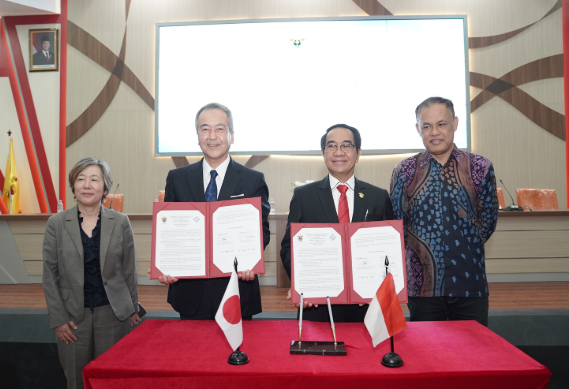
Hasanuddin University (UNHAS) and Hartford International University for Religion and Peace in the United States have strengthened their academic partnership through the signing of a memorandum of understanding in Jakarta. The collaboration focuses on peace and interreligious studies and is expected to open new opportunities for joint research, academic exchange, teaching, and scholarly dialogue.
Under the agreement, the two universities will explore cooperation in areas of mutual academic interest, including joint research, the exchange of instructional materials, student and faculty mobility, and the organization of seminars, workshops, conferences, and other academic forums.
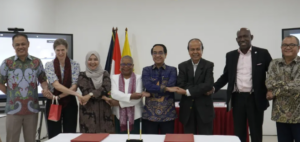
UNHAS Rector Prof. Dr. Ir. Jamaluddin Jompa, M.Sc., emphasized the value of bringing different experiences and perspectives together to address complex global challenges.
“This collaboration strengthens the relationship between the two institutions, particularly in research and education, and we hope it will generate knowledge and ideas that have a meaningful impact on society,” he said.
The partnership also creates space for Indonesian perspectives, particularly the social and cultural experiences of South Sulawesi, to contribute to international conversations on religion, reconciliation, and peacebuilding. Prof. Jamaluddin introduced the Bugis-Makassar principles of Sipakatau, Sipakainge, and Sipakalebbi, which emphasize human dignity, mutual responsibility, and respect for others.
These locally rooted values offer a perspective on how communities can maintain trust, navigate differences, and sustain relationships within diverse societies.
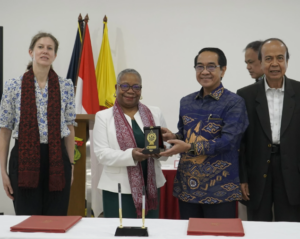
Hartford International University contributes extensive experience in interreligious studies, peacebuilding, and the study of religion in plural societies. Through collaborative research, classes, academic mobility, and scholarly forums, the partnership can connect this expertise with UNHAS’ experience and knowledge from Indonesia.
Moving forward, the two institutions aim to translate the agreement into concrete academic activities, including collaborative research, student and faculty exchanges, joint publications, and scholarly programs. More importantly, the partnership creates a sustained academic space where differences can be examined through dialogue, mutual respect, and evidence-based scholarship—an increasingly important contribution in societies shaped by religious, cultural, and political diversity.