
Dr. Achmad Fikry of Hasanuddin University (UNHAS) strengthened his clinical expertise in advanced vascular access through a four-week Advanced Vascular Access Fellowship at the General Hospital of Thessaloniki “G. Papanikolaou” in Thessaloniki, Greece, in August 2026.
Conducted under the supervision of Prof. Orestis Ioannidis, the fellowship focused on developing clinical competencies in the assessment, selection, placement, and management of vascular access devices. The program combined clinical observation with supervised hands-on procedures, allowing Dr. Fikry to gain direct exposure to vascular access practices in an international hospital setting.
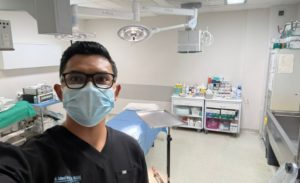
Throughout the fellowship, he participated in patient evaluation and clinical decision-making related to the selection of appropriate vascular access. His training included the use of ultrasound guidance and practical experience with several vascular access devices, including peripherally inserted central catheters (PICCs), chemoports, PICC-ports, and central venous catheters (CVCs).
The experience also provided insight into different techniques for venous access placement and management, connecting procedural skills with broader considerations in patient care. Learning Beyond the Procedure. Beyond technical training, the fellowship introduced Dr. Fikry to a more comprehensive and multidisciplinary approach to vascular access management. Clinical discussions addressed patient safety, vascular access strategy, complication management, and post-procedure evaluation. These components highlighted the importance of considering each patient’s clinical condition and long-term treatment needs when determining the most appropriate vascular access.
“The fellowship was particularly valuable because I was not only able to observe a range of procedures, but also perform hands-on procedures directly under Prof. Orestis’ supervision,” Dr. Fikry said. “Many of the techniques and approaches I learned are highly relevant to further development in clinical practice in Indonesia.”
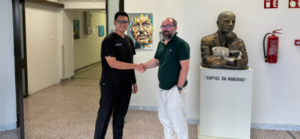
During his time at G. Papanikolaou General Hospital, Dr. Fikry also observed how vascular access services are organized within the hospital and exchanged perspectives with healthcare professionals involved in patient management. These interactions provided a broader understanding of how specialized vascular access services can integrate procedural expertise, multidisciplinary collaboration, and continuity of patient care.
The knowledge and clinical skills gained through the fellowship are expected to contribute to the further development of vascular access services within the Faculty of Medicine at UNHAS and UNHAS teaching hospitals, particularly for patients with chronic kidney disease who require hemodialysis and other patients who depend on reliable long-term vascular access. The fellowship also creates an opportunity for international experience to be transferred into clinical practice and medical education in Indonesia.
For UNHAS, this type of professional development can support institutional capacity in the areas that include interventional nephrology, vascular access, and hemodialysis care, while providing opportunities to introduce international clinical approaches into teaching and healthcare services. The experience is therefore expected to extend beyond the individual fellowship participant by contributing knowledge and practical insights that can be shared with colleagues, students, and healthcare professionals within the university’s academic and clinical environment.