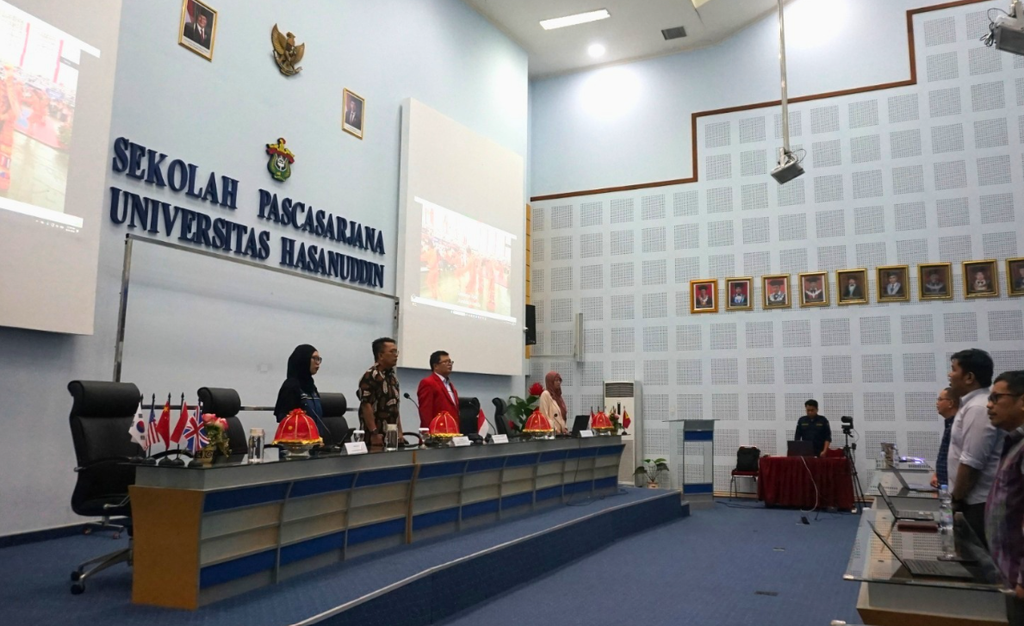
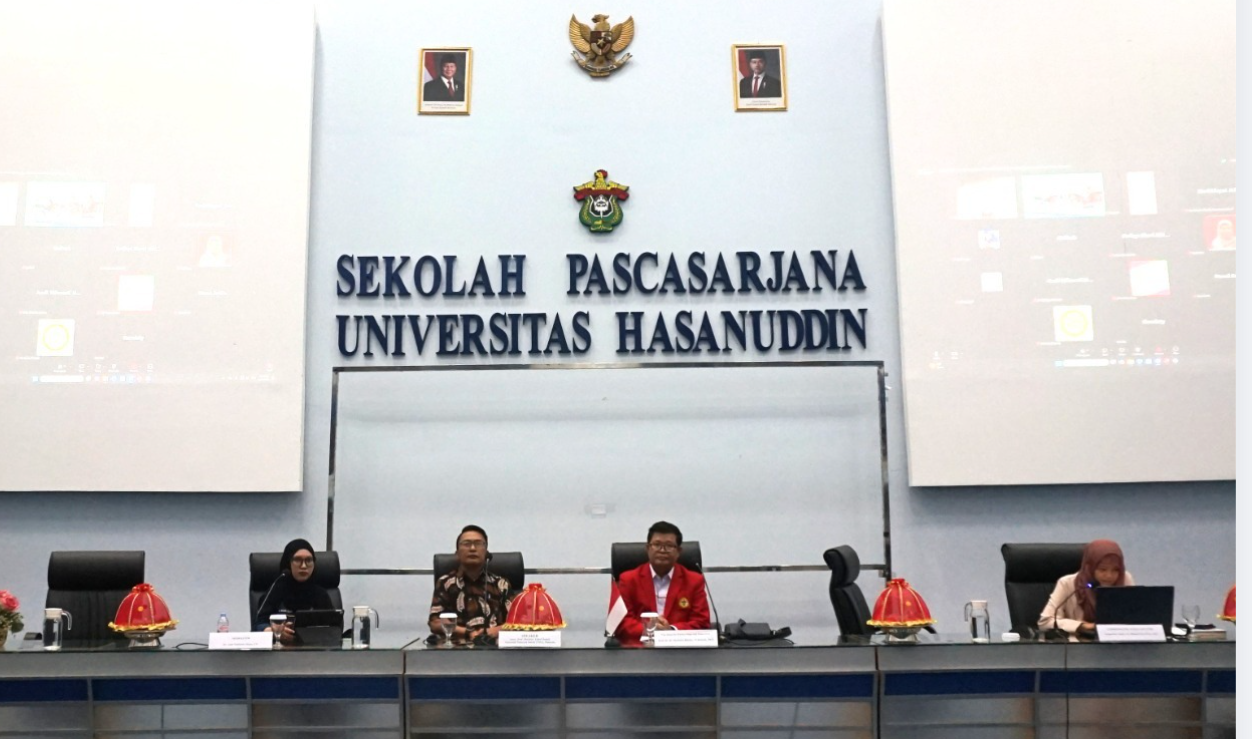
The Graduate School of Hasanuddin University (UNHAS) hosted an international guest lecture on Monday, 5 October 2026, featuring Assoc. Prof. Ts. Dr. Lee Hoong Pin from INTI International University, Malaysia. Held on Zoom, the lecture explored the potential of biomass-based concrete to generate electricity, introducing an innovative approach to sustainable construction and renewable energy.
Under the theme “Catalyzed Biomass Concrete: A Game Changer for Sustainable Construction through Renewable Energy Resources,” the session was opened by the Dean of the UNHAS Graduate School, Prof. Sukri Palutturi, Ph.D., and moderated by Rufiqa Shari Abidin, Ph.D. In his opening remarks, Prof. Sukri highlighted the importance of international guest lectures in connecting students and academics with global research developments. He also expressed hope for future academic exchanges and research collaboration with Malaysian institutions.
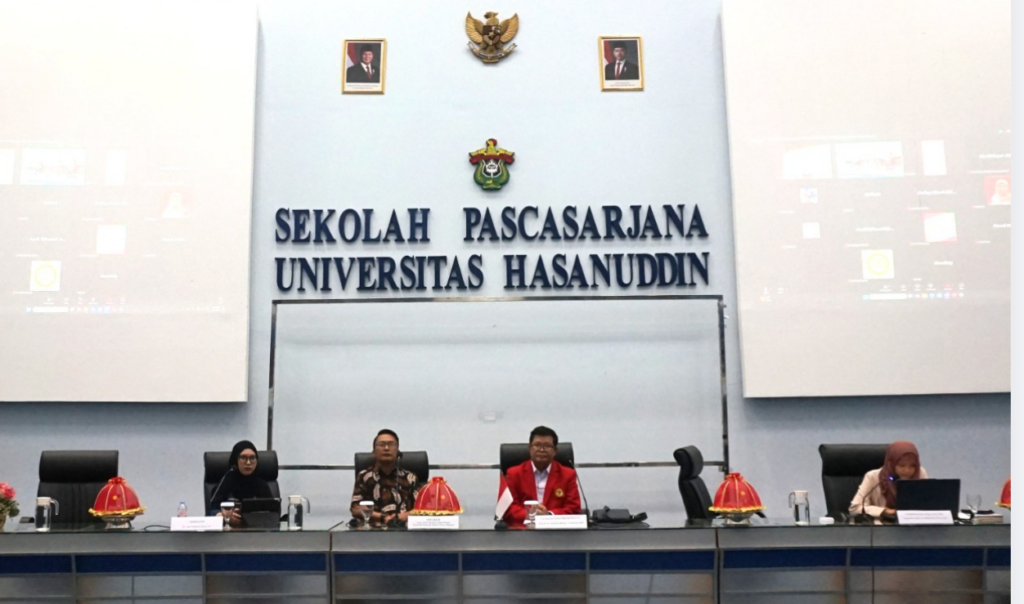
During his presentation, Dr. Lee introduced Catalyzed Biomass Concrete (CBC), an experimental construction material that combines biomass, catalysts, and concrete to explore the possibility of generating electricity. He explained that the research addresses three interconnected challenges: climate change, the construction industry’s carbon footprint, and growing global energy demand. By integrating energy-generating capabilities into building materials, the technology could potentially expand the role of conventional construction materials beyond their structural functions.
Dr. Lee further discussed how CBC could complement existing renewable energy technologies, particularly by exploring electricity generation associated with temperature differences. He outlined the research process, including material preparation, biomass and catalyst integration, sample fabrication, and electrical performance testing. The experiments also examine variations in material composition, sample dimensions, and temperature conditions, alongside mechanical testing and material characterization to assess the technology’s feasibility.
Highlighting the relevance of the research to Indonesia and Malaysia, Dr. Lee noted that both countries possess substantial biomass resources and growing infrastructure needs. Converting biomass residues into value-added construction materials could create opportunities for resource efficiency and circular economy applications. However, he acknowledged that CBC remains under development, with further research needed to improve its electricity-generation performance and evaluate its potential for practical construction applications.
The guest lecture provided a platform for academic exchange between Indonesia and Malaysia, connecting expertise in material engineering, biomass utilization, and renewable energy innovation. Through international academic engagement, the UNHAS Graduate School continues to encourage research collaboration and expose students to emerging technologies that could contribute to more sustainable construction practices.