
Hasanuddin University (UNHAS), through its Graduate School, hosted Prof. Dr.Eng. Akira Tai from Fukuoka Institute of Technology, Japan, for a guest lecture on climate change and increasing flood risks on Wednesday, 16 September 2026. Held under the theme “Climate Change and Increasing Flood Risks: Challenges and Adaptation,” the hybrid lecture took place at the Prof. Dr. Ir. Fachruddin Hall, Graduate School of UNHAS, and online via Zoom. The session brought together students, lecturers, researchers, and participants from various disciplines to discuss approaches to climate adaptation and disaster resilience.
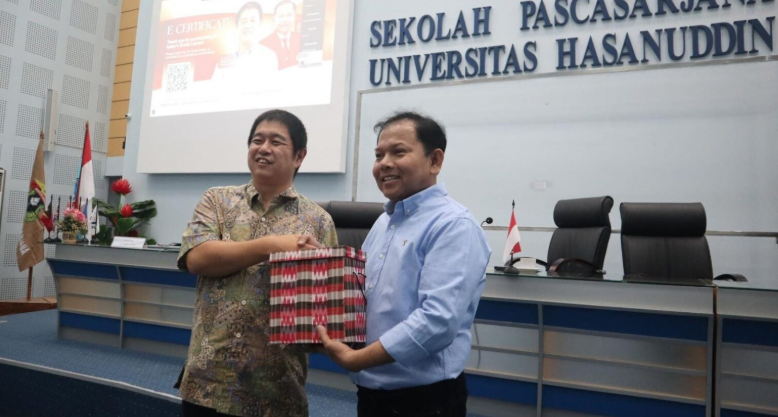
Prof. Sukri Palutturi, SKM., M.Kes., M.Sc.PH., Ph.D., Dean of the Graduate School, emphasized that climate change is a multidimensional challenge affecting the environment, public health, infrastructure, economic activity, safety, and community well-being. “Universities have a strategic role in producing knowledge, innovation, and policy recommendations that can strengthen community resilience to the impacts of climate change. Through this activity, we hope to generate new ideas and collaborations for contextual, inclusive, and sustainable adaptation approaches,” he said.
During his presentation, Prof. Akira Tai examined the relationship between climate change, increasingly extreme weather events, and flood risks. He highlighted changing rainfall patterns, rising global temperatures, urban development, and land-use changes as factors that can increase vulnerability to hydrometeorological disasters. Drawing on Japan’s experience, he explained that effective flood risk management requires more than physical infrastructure. Scientific data, risk modeling, early warning systems, spatial planning, community preparedness, and integrated governance are also essential components of climate adaptation.
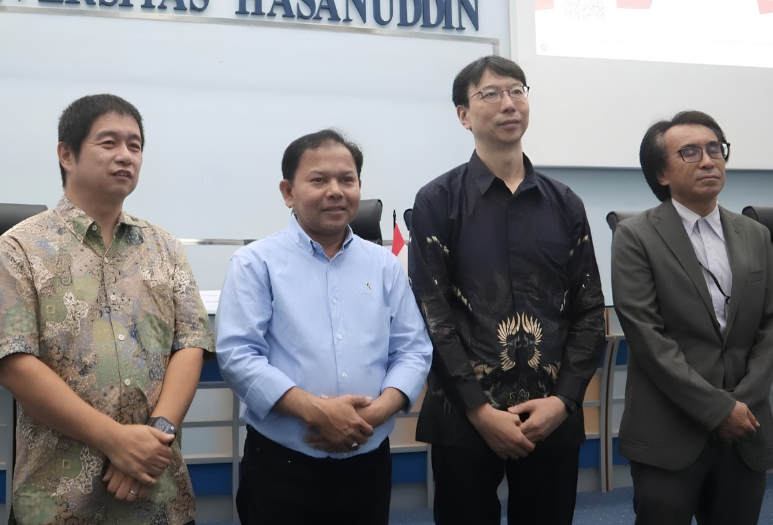
He further emphasized that adaptation strategies should reflect the geographical, social, environmental, and institutional characteristics of each region. Research findings, he noted, should also be translated into policies and practical measures that reduce risk and protect vulnerable communities. Moderated by Ir. Evi Aprianti S., S.T., Ph.D., the discussion explored water resource management, resilient infrastructure, technology, and locally relevant strategies for climate adaptation. Through the guest lecture, the Graduate School strengthened international academic exchange while providing a platform for interdisciplinary discussion on climate resilience and evidence-based approaches to reducing flood risks.