
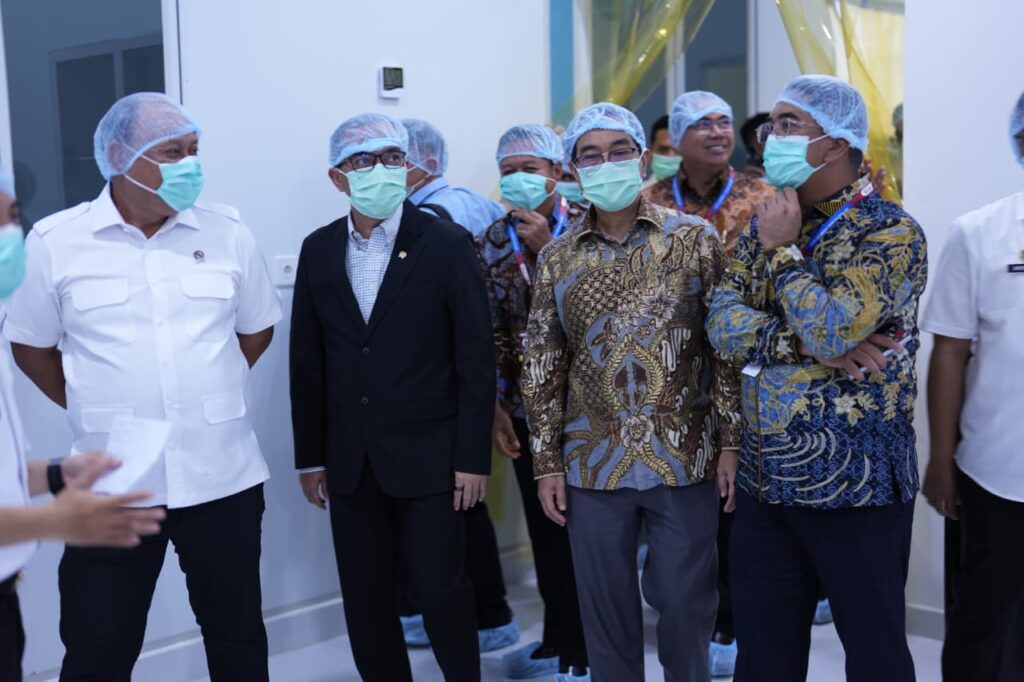
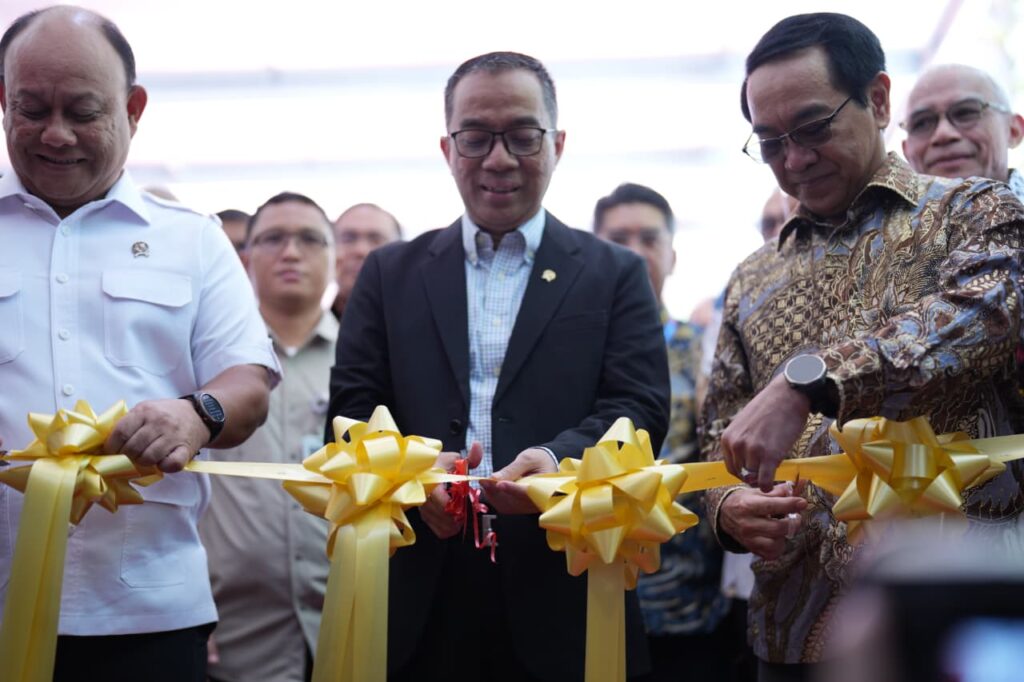
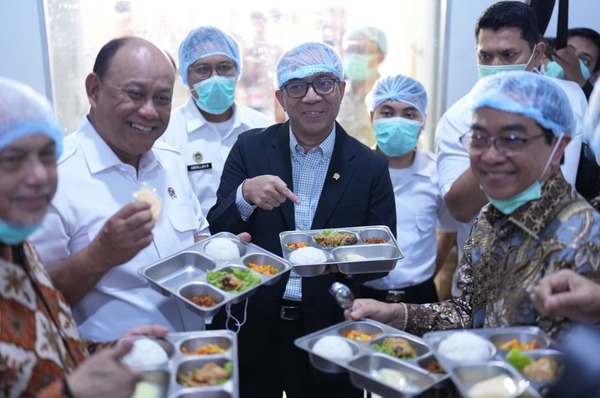
Minister/Head of the National Nutrition Agency (BGN), Dadan Hindayana, inaugurated the Tamalanrea 14 Nutrition Fulfillment Service Unit (SPPG), managed by the Yayasan Metavisi Akademik Nusantara foundation owned by Hasanuddin University. The facility, inaugurated on Tuesday, 28 April 2026, is designed not only as a kitchen for the Free Nutritious Meals (MBG) program but also as a living laboratory for research on nutrition, food security, and public health.
The SPPG is part of support for improving the quality of human resources through optimal nutrition fulfillment, and also supports the MBG Program, one of the national priority agendas under the President’s Asta Cita framework.
The inauguration was also attended by the Governor of South Sulawesi (Andi Sudirman Sulaiman), the Minister of Higher Education, Science, and Technology (Prof. Brian Yuliarto, ST, M.Eng, Ph.D), the Deputy Chair of the Regional Representative Council (DPD) of the Republic of Indonesia (Tamzil Linrung), a Member of the House of Representatives of the Republic of Indonesia (Prof. Dr. H.A.M. Nurdin Halid), and rectors of legal-entity state universities (PTN-BH) from across Indonesia.
Unhas Rector Prof. JJ explained that the SPPG on campus was not built as an ordinary production kitchen. The facility is an integrated system that links community service with education, research, and innovation.
“This is a nutrition laboratory, a center of study, and a research space for developing various models of nutrition interventions for children, pregnant women, and other vulnerable groups,” said Prof. JJ.
Such a model is important because nutrition is not only about the availability of food but also about nutritional quality, consumption patterns, food distribution, and public education. With a campus-based approach, every process can be measured, evaluated, and developed using scientific data.
Unhas also encourages the involvement of units within the campus, particularly in agriculture and animal husbandry, as suppliers of raw materials for the program. This scheme opens the way to a healthy food supply chain that is shorter, more efficient, and quality-controlled.
In addition, the involvement of academics and students is seen as able to spur startups in agritech, food technology, and social entrepreneurship that support community nutrition programs.
“This is an opportunity to develop new businesses that sustainably support the program’s needs,” the Rector added.
South Sulawesi Governor Andi Sudirman Sulaiman said nutrition interventions have a direct impact on children’s growth and development. Based on observations in various regions, nutritious meal programs have shown changes in children’s behavior and physical condition.
“Children have become more energetic, their appetite has increased, and they are getting used to eating regularly,” said the Governor.
From a public health perspective, access to nutritious food at school age is closely linked to concentration in learning, immunity, and long-term cognitive development. For that reason, programs such as MBG are seen as more than social assistance; they are a biological and educational investment.
The Governor also said South Sulawesi recorded a 0.24 percent decline in the poverty rate. One driving factor was the movement of the local economy through demand for food supplies for the MBG program.
When raw materials are sourced from farmers, livestock breeders, fishers, and micro, small, and medium enterprises (UMKM), the nutrition program produces a multiplier effect: improving health while also raising community incomes.
Head of the National Nutrition Agency Dadan Hindayana said Unhas has an advantage because it can prepare its supply chain independently. In the Head of BGN’s view, a university model like this can serve as a national example.
Dadan Hindayana stressed that bodily health is strongly correlated with economic productivity. Individuals with good nutritional status tend to have better capacity to learn, work, and be active.
Through SPPG Tamalanrea 14, Hasanuddin University shows that a campus can play a new role in development: not only a center of education and research, but also a place where science-based solutions to problems of nutrition, health, and community welfare are born. (*/dhs)
Editor : Ishaq Rahman
This article is an English translation of the original Indonesian report.