
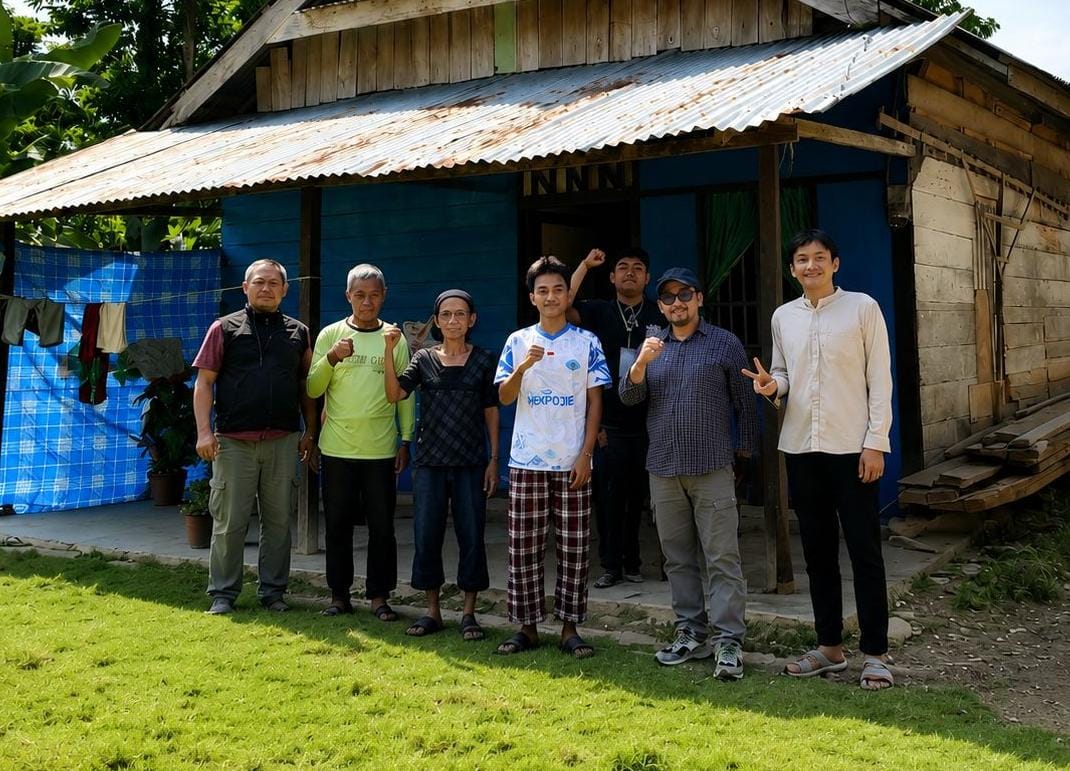
MAKASSAR – Hasanuddin University (Unhas) is conducting field verification of applicants for the Indonesia Smart Card for Higher Education (KIP Kuliah) Scholarship as part of the selection process, to ensure that educational assistance goes to students who are truly entitled to it.
The field verification is carried out by a team made up of Vice Deans from various faculties at Hasanuddin University. They visit prospective students’ homes in person to gain a comprehensive picture of each family’s socioeconomic condition, one of the bases for determining KIP Kuliah recipients for the 2026/2027 Academic Year.
Besides observing living conditions and the surrounding environment, the verification team also talks with the parents or guardians of prospective students. This step is an important part of making sure the data submitted by applicants matches actual conditions on the ground, so that the selection process can be objective, transparent, and accountable.
Vice Rector for Academic and Student Affairs of Hasanuddin University, Prof. Muhammad Ruslin, drg., M.Kes., Ph.D., Sp.B.M.Mf., Subsp. Ortognat.D., said that field verification reflects Unhas’s commitment to ensuring the KIP Kuliah program truly reaches students entitled to receive assistance.
“KIP Kuliah is an expression of the government’s commitment to opening access to higher education for high-achieving students from low-income families. Unhas is responsible for ensuring that the selection process is careful, objective, and carried out with integrity. That is why field verification is so important, so that this assistance is truly received by those who are entitled to it,” said Prof. Ruslin.
Prof. Ruslin added that the direct involvement of the Vice Deans in the verification process shows Unhas’s seriousness in safeguarding the credibility of the KIP Kuliah program.
“We want every decision to be based on actual conditions on the ground. That way, KIP Kuliah can be distributed to the right targets and give young people wider opportunities to obtain a quality higher education,” Prof. Ruslin added.
During the verification, the team not only gathered data on the prospective students’ socioeconomic conditions but also saw firsthand the many stories of struggle behind their determination to continue to university. In humble homes across various regions, great hopes of changing the future through education are kept alive.
These stories are a reminder that KIP Kuliah is not merely tuition assistance, but a bridge of hope for young people with academic potential and a strong determination to achieve their goals.
Editor: Ishaq Rahman


This article is an English translation of the original Indonesian report.