
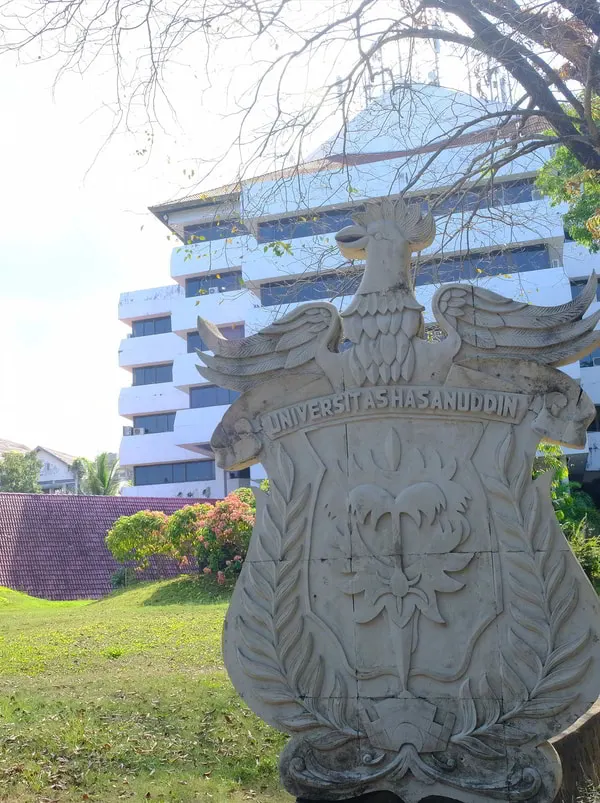
Hasanuddin University (Unhas) has once again gained global recognition through the QS World University Rankings by Subject 2026.
In the QS Quacquarelli Symonds release announced on Wednesday (25 March), QS WUR placed Unhas in the world rankings in three fields of study:
- Agriculture & Forestry (ranked 251–300 in the world),
- Politics & International Studies (ranked 301–400 in the world),
- Medicine (ranked 601–650 in the world).
Unhas’s global position in these three fields shows an improvement for Medicine (from 701-850 last year). Unhas enters the list for Politics & International Studies only this year. Meanwhile, its position in Agriculture & Forestry is unchanged from the previous year.
The 2026 edition covers more than 18,300 study programs at more than 1,700 universities in 100 countries, assessed across 55 disciplines and five broad subject areas.
Nationally, the three fields hold competitive positions: Agriculture & Forestry is in the top three, Politics & International Studies is fourth, and Medicine is fifth. This achievement shows very positive dynamics in Unhas’s academic performance at the international level.
Unhas Rector Prof. Dr. Ir. Jamaluddin Jompa, M.Sc, stressed that this achievement should be understood not merely as a symbol of prestige, but as a quantitative representation of the institution’s academic performance, research, and reputation at the international level.
“The QS World University Rankings by Subject is essentially a comparative instrument that measures the relative position of a study program or discipline within the global ecosystem. This achievement therefore reflects Unhas’s academic strength in certain fields that have met international competitive standards,” said Prof. JJ.
The QS methodology is based on five main indicators in its assessment:
- Academic reputation,
- Employer reputation,
- Citations per paper,
- H-index,
- International research network.
Each indicator carries a different weight in each discipline, adjusted to the characteristics of knowledge production and publication culture in that field.
In this context, the academic reputation and employer reputation indicators reflect global perceptions of the quality of graduates and scholarly contributions, compiled through international-scale surveys.
Meanwhile, citations per paper and H-index serve as quantitative proxies for measuring the impact and productivity of research based on bibliometric data. The international research network, in turn, assesses the intensity and breadth of cross-border research collaboration.
“Thus, Unhas’s position in this ranking shows that in certain fields we have recognized research capacity, a growing network of international collaboration, and increasing levels of global trust,” explained Prof. JJ.
This view is in line with the global analysis delivered by QS Senior Vice President Ben Sowter, who highlighted the increasingly competitive and specialized landscape of world higher education.
“The QS World University Rankings by Subject 2026 show that the global higher education landscape is becoming more competitive and focused. Amid the dominance of traditional countries, there is a significant rise from Asia, the Middle East, and Latin America. Global reputation is increasingly determined by excellence in specific fields, through stronger research, collaboration, and engagement with industry,” said Ben Sowter.
The Rector also stressed that Unhas’s orientation is not solely on improving its ranking position, but on building a sustainable, globally competitive academic system.
“Becoming a world-class university is not only about rankings, but about consistency in producing knowledge, innovation, and graduates who are relevant to global needs. QS provides a measuring framework, but the main substance remains the quality and impact we build,” said Prof. JJ.
This achievement also positions Hasanuddin University as one of the higher education institutions in Indonesia contributing to strengthening national visibility and competitiveness in an increasingly competitive and differentiated global higher education landscape. (*/aya/dhs)
Editor: Ishaq Rahman
This article is an English translation of the original Indonesian report.