
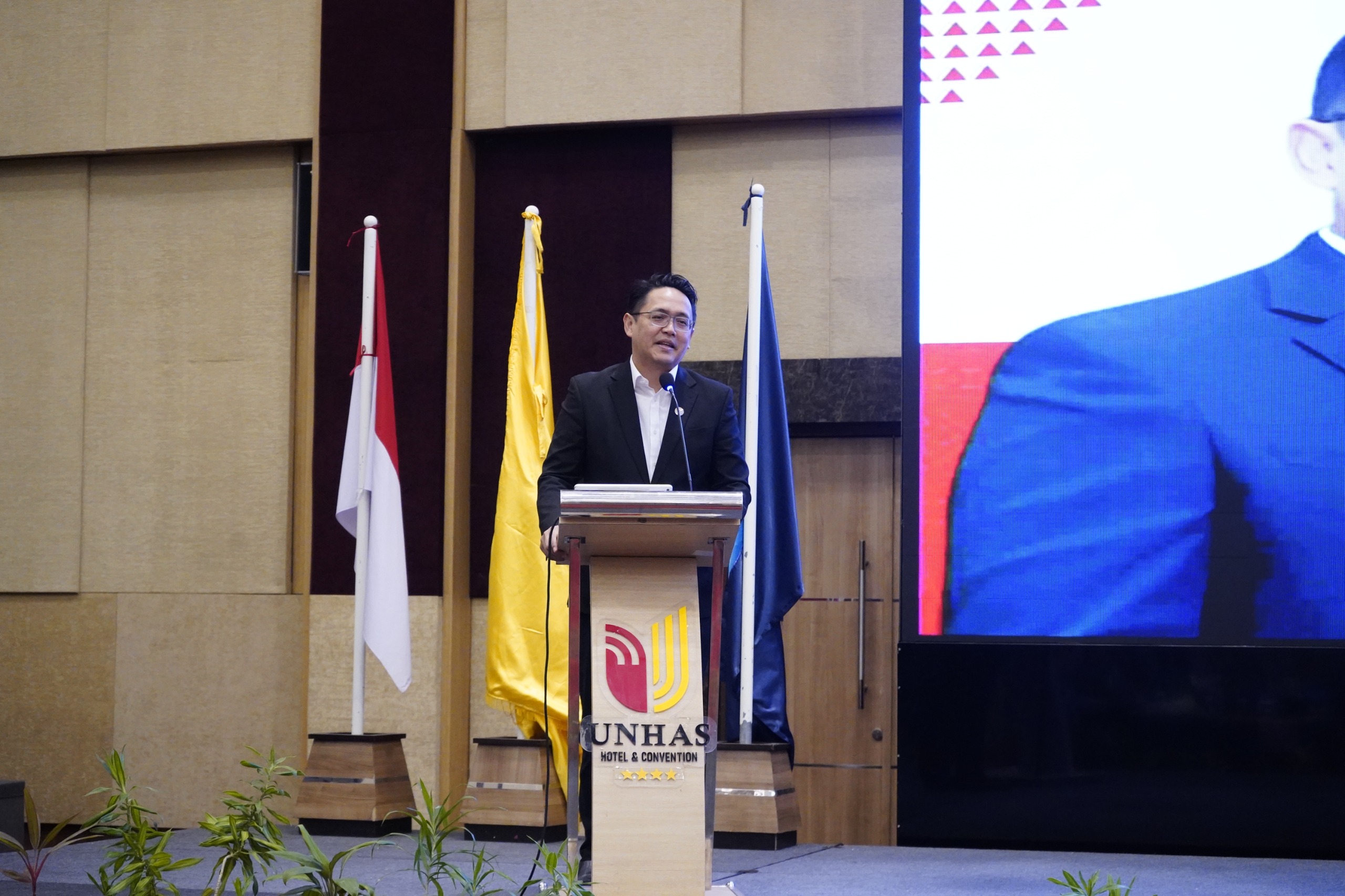
MAKASSAR – Climate change is a challenge that no single country or discipline can solve alone. In that spirit, the Partnership for Australia-Indonesia Research (PAIR) Annual Meeting 2026 brought together researchers, government, universities, industry players, and development partners from Indonesia and Australia to strengthen research collaboration in producing science-based solutions for society.
Director General of Research and Development at the Ministry of Higher Education, Science, and Technology (Kemdiktisaintek), Dr. Fauzan Adziman, S.T., M.Eng., stressed that the research paradigm must shift from merely producing academic outputs toward research capable of delivering real impact for society. Amid the complexity of climate change issues, the success of research is no longer measured only by the number of publications, but by its ability to meet development needs through evidence-based policy and implementation.
Fauzan explained that this orientation is beginning to show through the various studies developed within the PAIR consortium. Several research findings have already made a tangible contribution by serving as a reference in drafting policies at the regional level. According to Dr. Fauzan, this proves that research can go beyond the academic sphere and become part of efforts to solve the problems people face.
“This is what we mean by impact, which does not only mean providing benefits to society, but also being able to serve as a reference and provide benefits to the government in the policy-making process,” Dr. Fauzan said.
Dr. Fauzan hopes researchers will not focus only on their own projects but will build connections between studies so that each one complements the others. Through cross-disciplinary and cross-institutional collaboration, the challenges faced by society, including climate change, can be understood more fully while also producing innovations that are more relevant to community needs.
Dr. Fauzan emphasized the importance of understanding the local context in every study. Each research team needs a clear map of the areas and community groups that will benefit from the research results, known as a pathway to impact. This approach is an important step so that the implementation of research results is designed from the outset and can deliver measurable benefits.
“Our hope is that the collaboration that has been built will grow even stronger. Sulawesi is the originator of this program, but going forward we want to make it more inclusive for development in Maluku and Papua. Through the consortium’s success in Eastern Indonesia, we hope this model can be expanded to other regions so that it delivers an even greater impact,” Dr. Fauzan added.
Besides ensuring continued support for PAIR, Kemdiktisaintek also encourages researchers to make use of the International Research Partnership Program to strengthen partnerships with overseas institutions. The program is expected to broaden collaboration networks, support academic mobility, and increase the dissemination of Indonesian research findings at international scientific forums.
This view was reinforced by the Rector of Hasanuddin University, Prof. Dr. Ir. Jamaluddin Jompa, M.Sc., who said climate change is a cross-border issue whose most tangible impacts are felt by coastal communities. Sea-level rise, coastal erosion, changing weather patterns, and the declining quality of marine ecosystems are challenges that no single institution or discipline can resolve alone.
“The theme of climate change and coastal communities reminds us that the value of research is measured not only by scientific publications, but also by the extent to which it can deliver real impact for society. In line with the spirit of the Impactful Campus (Kampus Berdampak), we hope every study truly delivers meaningful benefits to society,” said Prof. JJ.
According to Prof. JJ, coastal communities are on the front line of climate change impacts because these changes directly affect their livelihoods, food security, and the sustainability of their social and cultural lives. Therefore, collaborations such as PAIR serve as a strategic space to bring together researchers, government, universities, industry players, and communities in producing science-based solutions that can be applied through policy and concrete action.
Unhas was entrusted to host the PAIR Annual Meeting 2026, held in the Unhas Ballroom in Makassar on Tuesday (21 July). This trust stems from Unhas’s active involvement as one of the institutions in the PAIR Sulawesi consortium, which has been developing various collaborative studies with partners in Indonesia and Australia.
The Partnership for Australia-Indonesia Research (PAIR) Annual Meeting 2026 is a flagship program of the Australia-Indonesia Centre (AIC), jointly funded by the Australian and Indonesian governments. The event brought together researchers from ten universities in Indonesia and Australia, along with nine universities in Sulawesi, to present research findings on the impact of climate change on coastal communities in Eastern Indonesia while strengthening cross-country research collaboration. (*/mir)
Editor: Ishaq Rahman


This article is an English translation of the original Indonesian report.