
MAKASSAR – The world today faces global pressures and complexity, from geopolitical shifts and technological disruption to the demands of sustainable development. In these conditions, universities are expected to produce knowledge that can answer real-world problems. Professors play a strategic role as drivers of research, innovation, and scientific collaboration that benefit society.
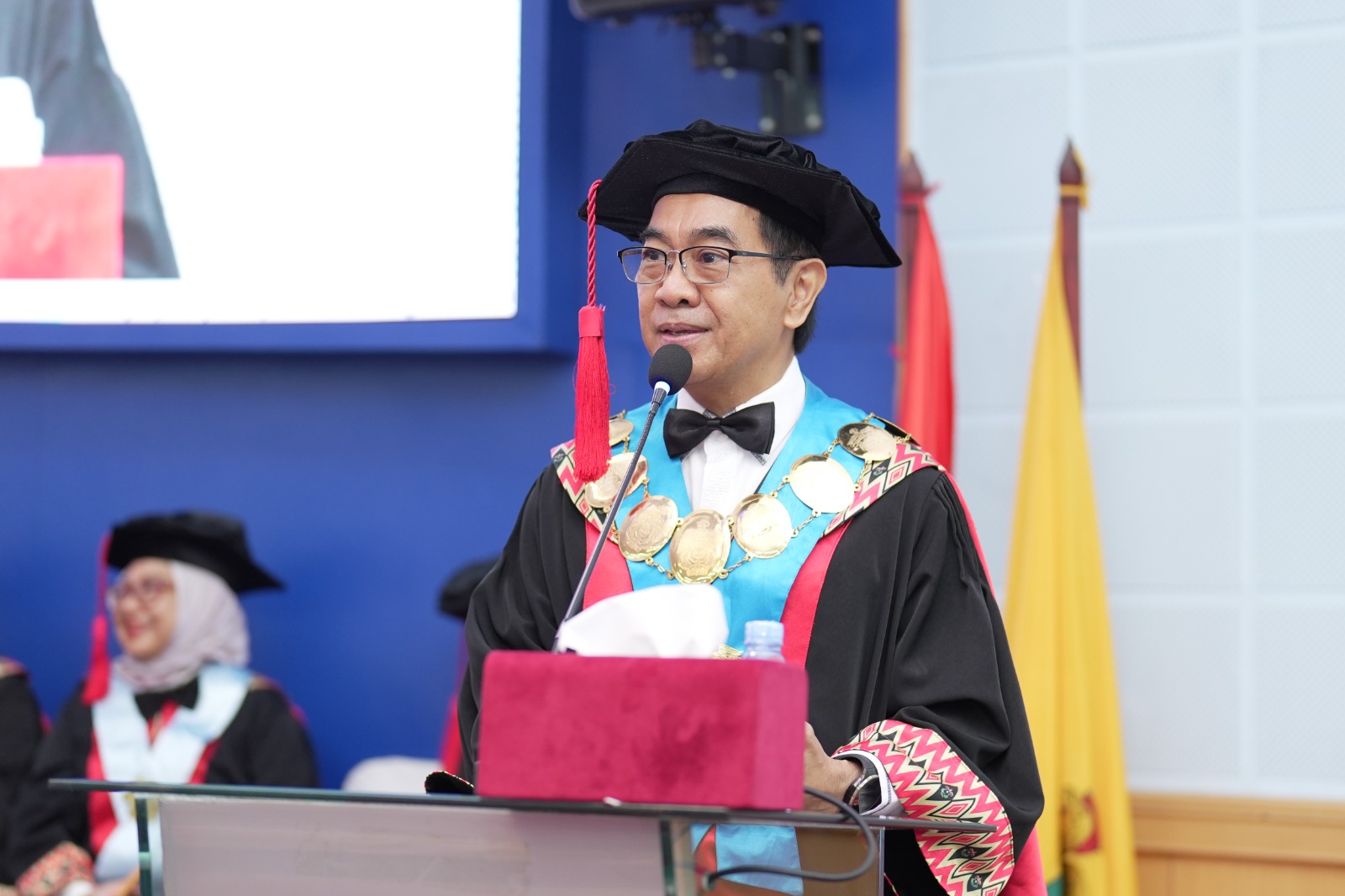
The message was delivered by the Rector of Hasanuddin University (Unhas), Prof. Dr. Ir. Jamaluddin Jompa, M.Sc., after the inauguration of four new professors at the Limited Plenary Meeting of the Academic Senate for the Ceremony of Professorship Acceptance, held in the Academic Senate Room of the Unhas Rectorate Building, Tamalanrea Campus, Makassar, on Friday (17 July). The proceedings were attended by the Chair, Secretary, and Members of the Academic Senate, the Board of Trustees, the Council of Professors, the academic community, the professors’ families, and invited guests.
In the remarks, Prof. Jamaluddin Jompa, known affectionately as Prof. JJ, stressed that the main challenge facing universities today is not merely increasing academic productivity, but ensuring that every resource produces real impact through research and innovation.
According to Prof. JJ, efficiency remains necessary in managing a university, but effectiveness is the more important measure because it determines how far research, education, and community service contribute to development.
“Efficiency is important, but what matters more is effectiveness in achieving goals,” said Prof. JJ.
This view is in line with the global trend that places universities at the center of knowledge creation and as producers of evidence-based solutions. In this paradigm, the quality of an institution is no longer measured only by the number of scientific publications, but also by the extent to which research results drive technological innovation, strengthen public policy, improve public welfare, and support economic development.
Prof. JJ explained that Hasanuddin University holds a strategic position as one of the pillars strengthening Indonesia in the eastern region. The philosophy of the Unhas logo, which represents the Rooster of the East, is, in Prof. JJ’s view, not merely an institutional symbol but also reflects a spirit of leadership, courage, and the ability to be an agent of change through science.
“We must fulfill that role through the development of innovation, the strengthening of a knowledge-based economy, and academic contributions in responding to ever-evolving geopolitical dynamics,” said Prof. JJ.
Prof. JJ also stressed the importance of strengthening science diplomacy, namely using scientific cooperation as an instrument for building international relations while producing solutions to cross-border problems. Through global academic networks, universities can accelerate the exchange of knowledge, improve research quality, and expand Indonesia’s contribution to the advancement of science worldwide.
According to Prof. JJ, the changing geopolitical landscape is increasingly shaped by geoeconomic factors, in which mastery of science, technology, and innovation determines a nation’s competitiveness.
“For that reason, universities need to strengthen research capacity that can support strategic policies and innovations relevant to society’s needs,” said Prof. JJ.
Prof. JJ urged the professors to keep building cross-disciplinary collaboration so that complex problems can be solved through a comprehensive scientific approach. By bringing different fields of knowledge together, universities have a greater chance of producing innovations that are not only academically outstanding but also deliver real benefits for national development.
“Hasanuddin University must continue to be a pillar that gives rise to innovation, strengthens the economy, and contributes to geopolitical dynamics through research and science diplomacy,” Prof. JJ concluded.(*/mir/ir)
Editor: Ishaq Rahman
This article is an English translation of the original Indonesian report.