The Faculty of Animal Science (FAPET) at Hasanuddin University (UNHAS) has successfully underscored its commitment to internationalization by hosting a series of reciprocal general lectures in May 2026. This initiative serves as a concrete implementation of the long-standing academic and research partnership between UNHAS and Kobe University, Japan, which has been actively thriving since 2018. Conducted virtually via Zoom , the exchange brought together hundreds of students and prominent researchers from both nations to discuss the frontiers of animal breeding, genetics, and livestock conservation.
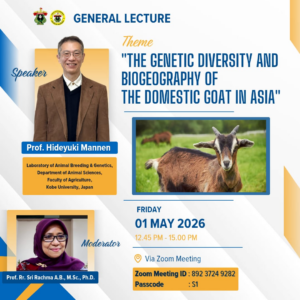
The first session, held on 1 May 2026, featured a compelling presentation by Prof. Hideyuki Mannen, Head of the Laboratory of Animal Breeding and Genetics at the Graduate School of Agricultural Science, Kobe University. Addressing an audience of 350 UNHAS students, Prof. Mannen delivered a lecture titled “The Genetic Diversity and Biogeography of the Domestic Goat in Asia.” His presentation emphasized the critical importance of evaluating, surveying, and conserving genetic variation among native breeds. He highlighted sophisticated genetic analysis methods—such as Mitochondrial DNA, the SRY gene, and SNP arrays—which form the backbone of an extensive joint research network spanning multiple Asian and African institutions, including UNHAS. The session sparked high interactive enthusiasm from Indonesian students, who inquired about migration routes, domestication centers, and the impact of selective breeding on genetic diversity.
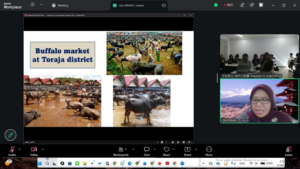
In a reciprocal academic exchange, the second general lecture took place on 18 May 2026. This session featured Prof. Rr. Sri Rachma A.B., M.Sc., Ph.D., Head of the Laboratory of Animal Breeding and Genetics at the Faculty of Animal Science, UNHAS, as the keynote speaker. Speaking to students of the Animal Breeding course at Kobe University’s Faculty of Agriculture, she presented “Introduction of Livestock in Indonesia.” Prof. Sri Rachma showcased the rich biodiversity of Indonesian local livestock, detailing the unique traits of native cattle, buffaloes, sheep, horses, and various local chicken breeds. Furthermore, she shared insights into local housing conditions, management practices, and ongoing collaborative sampling projects focused on the Kacang goat.
This dual-lecture initiative not only facilitates an invaluable knowledge exchange but also strengthens the collaborative bond between both universities. By bridging local expertise with global academic platforms, UNHAS and Kobe University continue to advance international research benchmarks in livestock and feed innovation for the global community