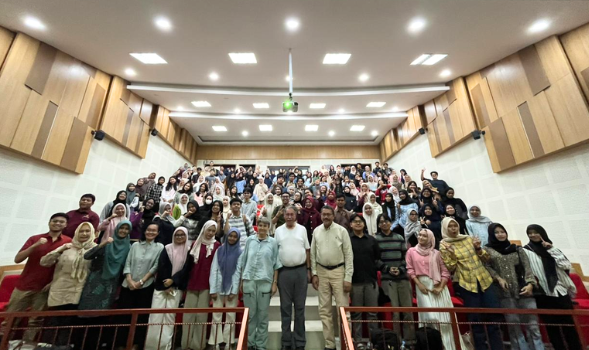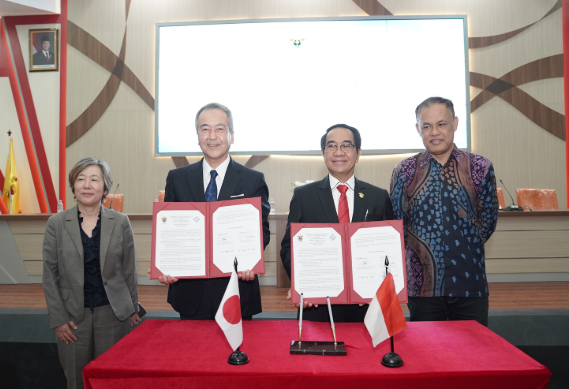
Hasanuddin University (UNHAS) and Hiroshima University, Japan, are exploring deeper research collaboration in blue carbon and climate change, building on a long-standing academic partnership that continues to expand through student mobility and the UNHAS–HU Summer Program 2026. Organized by the Directorate of Internationalization at UNHAS, the program brings together 23 undergraduate and graduate students from Hiroshima University and UNHAS, including international students studying at UNHAS.
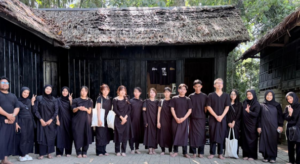
Designed as a platform for academic and cultural exchange, the summer program gives participants opportunities to learn beyond the classroom while engaging with the communities, culture, coastal environments, and ecosystems of South Sulawesi. The program also provides a foundation for the two universities to identify new areas of cooperation, particularly research addressing environmental challenges shared by Indonesia, Japan, and the wider region.
UNHAS Vice Rector for Partnership, Internationalization, and Alumni Affairs, Prof. Ir. Suharman Hamzah, S.T., M.T., Ph.D., Eng., HSE Cert., highlighted the established relationship between the two universities, which has continued to develop through summer programs, student exchanges, and other forms of academic cooperation.
The partnership also enables UNHAS students to gain international academic experience at Hiroshima University, extending the relationship beyond programs hosted in Indonesia and creating two-way opportunities for student mobility. Looking ahead, Associate Professor Masayuki Kondo of The IDEC Institute, Hiroshima University, identified blue carbon and climate change as promising areas for further joint research.

“We hope our collaboration with Hasanuddin University will continue to grow in the future,” Prof. Kondo said. “There are many things we can do together, particularly in academic and research collaboration, including research on blue carbon dynamics and climate change.” His research focuses on climate change, greenhouse gas dynamics, biogeochemistry, and the carbon cycle, areas that have particular relevance to Southeast Asia and its extensive coastal and marine ecosystems.
For UNHAS, with its strong academic and research engagement in marine and coastal environments, these areas offer opportunities to connect international collaboration with research on pressing environmental challenges. Connecting Research, Mobility, and Cultural Exchange. Beyond research, the UNHAS–Hiroshima University partnership continues to emphasize the role of cultural exchange in strengthening relationships between the two university communities.
Through direct interaction with local communities and environments in South Sulawesi, participating students gain perspectives that complement their academic learning while developing greater intercultural understanding between Indonesia and Japan.
The UNHAS–HU Summer Program 2026 therefore represents more than a student mobility initiative. It provides a platform through which academic exchange can generate new connections among students and researchers while opening pathways toward collaborative research on issues with regional and global significance. As the partnership develops, blue carbon, climate change, and related environmental research could become important areas for joint work between UNHAS and Hiroshima University, linking the universities’ internationalization efforts with scientific collaboration on the future of climate resilience and sustainable coastal ecosystems.