
MAKASSAR – Amid global economic uncertainty, Indonesia in fact has a great opportunity to grow thanks to its demographic bonus and the entrepreneurial potential of its young generation. However, that opportunity can only be realized if the quality of human resources continues to improve through mastery of future skills, stronger innovation, and the development of an entrepreneurial spirit that creates jobs rather than merely seeking them.
This calls for closer collaboration among universities, the business sector, government, and society in building an ecosystem that supports the development of talent, research, innovation, and industrial transformation. Through such synergy, young people are expected to become an economic driving force that adapts to technological change, is globally competitive, and contributes to Indonesia’s development toward Golden Indonesia 2045.
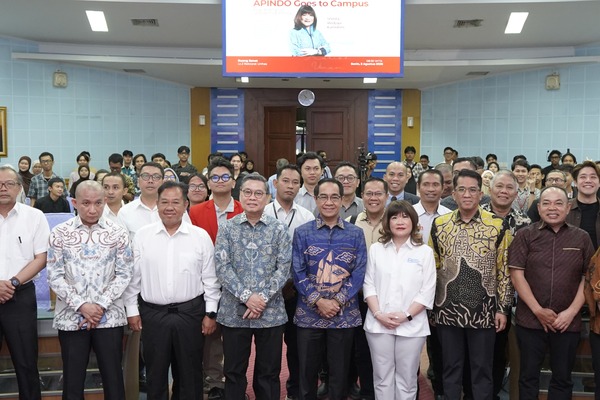
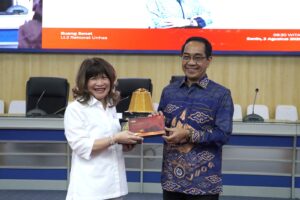
Starting from that need, Unhas and the Indonesian Employers’ Association (APINDO) held the APINDO Goes to Campus public lecture themed “Building a Generation of Entrepreneurs and Job Creators Amid Global Uncertainty.” The event featured APINDO Chair Shinta Widjaja Kamdani as the speaker.
Shinta noted that global economic uncertainty has had a real impact on the business world, from rising production costs and weakening purchasing power to slowing investment and job creation. The young generation must understand these challenges because they will affect the direction of economic development, job opportunities, and Indonesia’s competitiveness in the future.
On the other hand, Indonesia has great capital in the form of a demographic bonus dominated by young people. However, that bonus will not automatically become an economic gain unless it is matched by improvements in the quality of human resources. Challenges such as skills gaps, low labor productivity, and a mismatch between graduates’ competencies and industry needs are shared tasks that must be addressed immediately
“Indonesia’s future is determined not by the wealth of its natural resources, but by the quality of its people. That is why we must build a generation that has future skills, can adapt to change, and has the courage to become entrepreneurs and job creators,” Shinta said.
According to Shinta, technological developments, including artificial intelligence (AI), will change the competencies required in the workplace. Young people therefore need to equip themselves with future skills through upskilling and reskilling, while also developing critical thinking, creativity, adaptability, leadership, and problem-solving so they stay relevant amid industrial transformation.
Shinta went on to say that entrepreneurship is seen as one of the strategic solutions to these challenges. Indonesia has a micro, small, and medium enterprise (UMKM) and startup ecosystem that continues to grow, but it still needs more entrepreneurs who can create innovation and open up jobs.
To make this happen, support is needed in the form of access to financing, capacity building, a conducive regulatory environment, and cross-sector collaboration so that the potential of young people can develop optimally
“Indonesia does not lack talent, but it needs a collaborative ecosystem that can turn talent into entrepreneurs, innovators, and job creators,” Shinta added.
Before the presentation, Unhas Rector Prof. Dr. Ir. Jamaluddin Jompa, M.Sc., said in the opening remarks that global challenges must be met through a transformation of higher education that is more adaptive to developments in science, technology, and the needs of the business world. According to Prof. JJ, future graduates are required to have critical thinking, creativity, analytical ability, and the skills to solve complex problems that cannot be fully replaced by technology.
“The massive development of AI, the transition to a green economy, and the war for talent are three mega-trends that are shaping the future. That is why universities must prepare a generation that not only adapts to change, but can also drive innovation and entrepreneurship,” said Prof. JJ.
The role of universities does not end with producing quality research. Research results must be downstreamed into technologies, products, and business models that add value for industry and bring real benefits to society. On that basis, Unhas continues to strengthen its innovation ecosystem through campus business development, research downstreaming, and collaboration with the business sector so that more job creators emerge from the university environment.
According to Prof. JJ, collaboration with the Indonesian Employers’ Association (APINDO) is a strategic step to narrow the gap between education and industry needs. This synergy makes research more applicable, opens space for experience-based learning, and expands students’ opportunities to build competencies relevant to the dynamics of the global economy.
Through the public lecture, held on Monday, 3 August, in the Senate Room on the 2nd floor of the Rectorate Building at the Unhas Tamalanrea Campus, Unhas and APINDO opened space for collaboration between universities and the business sector in preparing a generation ready to face global disruption.
The ideas that emerged in this forum also reaffirm the commitment to achieving the Sustainable Development Goals (SDGs), particularly SDG 4 (Quality Education) through strengthening future competencies, SDG 8 (Decent Work and Economic Growth) through developing entrepreneurship and creating jobs, and SDG 17 (Partnerships for the Goals) through synergy among universities, the business sector, government, and society. (*/mir)
Editor: Ishaq Rahman

This article is an English translation of the original Indonesian report.