
MAKASSAR – Building a sustainable health insurance system depends on the quality of services as well as the public’s level of literacy about the social security system. Universities hold a strategic position in shaping that understanding through education, research, and community service. This is the basis for the collaboration between Hasanuddin University (Unhas) and the Health Social Security Agency (BPJS Kesehatan) to support the development of the National Health Insurance Program (JKN) through the implementation of the tridarma (three pillars) of higher education.
The collaboration is aimed at strengthening the role of universities in producing graduates with a comprehensive understanding of the national health social security system. The synergy covers the development of education, research, community service, and the strengthening of JKN literacy as part of efforts to build a more inclusive and sustainable health system.
Unhas Vice Rector for Partnerships, Internationalization, and Alumni Affairs Prof. Ir. Suharman Hamzah, S.T., M.T., Ph.D. (Eng.), HSE-Cert., explained that Unhas always opens space for collaboration with a range of strategic partners to widen the impact of the tridarma of higher education.
“We have a long history of collaboration with BPJS Kesehatan. This is nothing new. The orientation of universities today has grown beyond carrying out the tridarma in the conventional sense. Campuses are expected to deliver real impact for society,” said Prof. Suharman.
The partnership is also part of an effort to equip students and soon-to-be alumni with learning experiences relevant to development needs. In this way, Unhas graduates are expected to have not only competence in their fields of study but also an understanding of the public service system that underpins national health development.
Meanwhile, Muttaqien, MPH., AAK. , a member of the National Social Security Council, said that Unhas holds a strategic position as a center for human resource development in the Eastern Indonesia region. Many Unhas alumni now contribute at BPJS Kesehatan and demonstrate excellent professional capacity.
Head of the BPJS Kesehatan Corporate University Octovianus Ramba, S.Si., Apt., AAAK. explained that the partnership is one of BPJS Kesehatan’s steps in following up on various recommendations for strengthening the national social security system. Although the JKN Program is a strategic government program, its implementation still faces challenges, especially in terms of understanding among the public and stakeholders.
“Through this partnership we want to raise public literacy about the health social security system through universities. We hope Unhas can become a pioneer in building JKN literacy so that Unhas graduates can serve as education agents when they return to society,” said Octavianus.
Beyond education, the scope of the collaboration also includes developing scientific studies of JKN implementation, conducting research and community service, and increasing active JKN membership within Unhas, including lecturers, administrative staff, students, and their families. The health care facilities owned by Unhas are also expected to support the implementation of various programs to strengthen JKN.
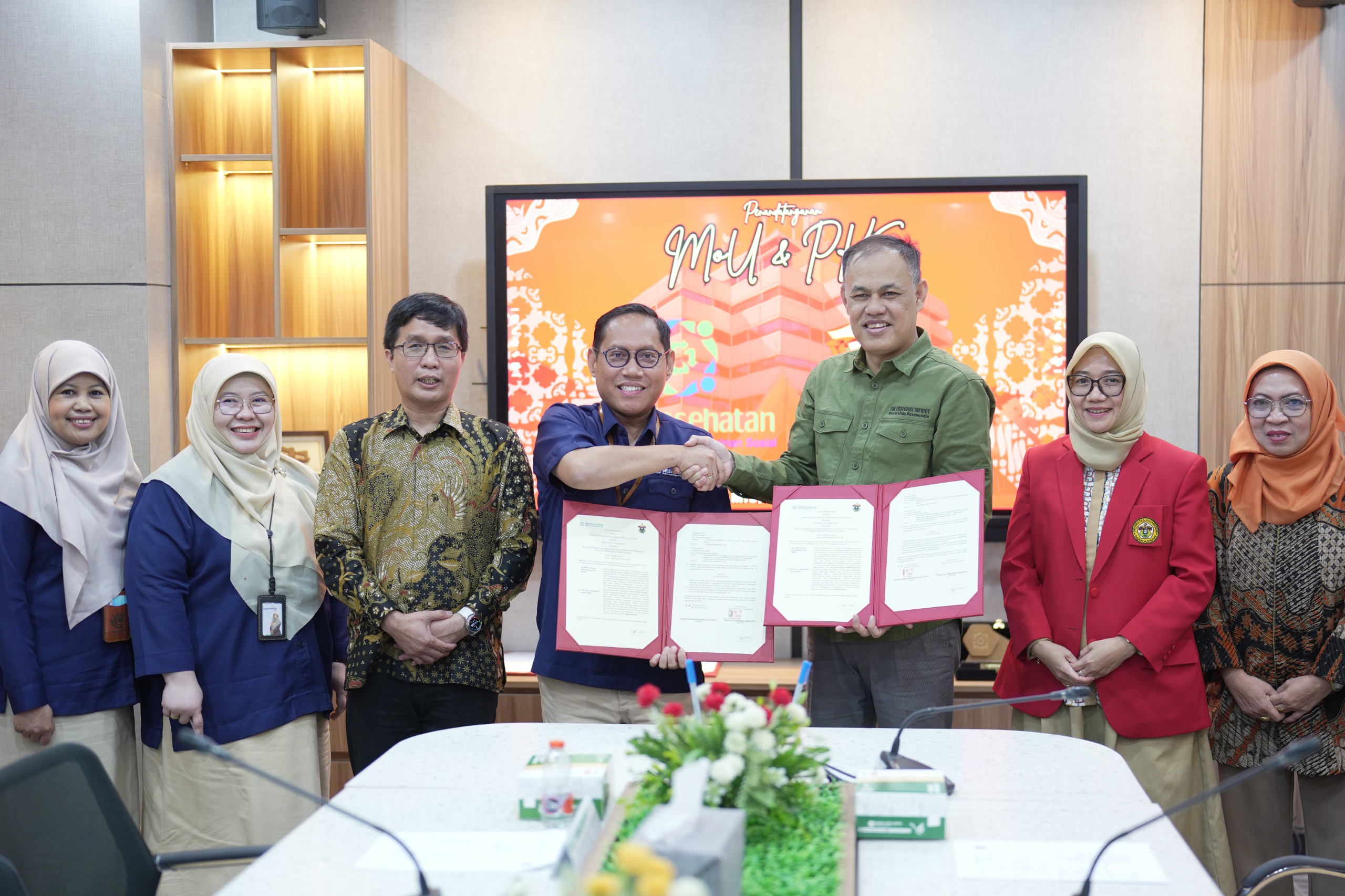
As a sign of commitment to the collaboration, Unhas and BPJS Kesehatan signed a Memorandum of Understanding on the Implementation of the Tridarma of Higher Education and the Optimization of the National Health Insurance Program. The memorandum was signed by BPJS Kesehatan Director of Human Resources and General Affairs Dr. Vetty Yulianty Permanasari, S.Si., M.P.H., and Hasanuddin University Rector Prof. Dr. Ir. Jamaluddin Jompa, M.Sc.
At the event on Thursday (23 July), the two institutions were represented by BPJS Kesehatan Corporate University Head Octovianus Ramba, S.Si., Apt., AAAK., and Unhas Vice Rector for Partnerships, Internationalization, and Alumni Affairs Prof. Ir. Suharman Hamzah, S.T., M.T., Ph.D. (Eng.), HSE-Cert.
On the same occasion, the two institutions also signed a cooperation agreement (PKS) on the Implementation of Learning for the Health Social Security Module. The agreement is an implementing step to integrate National Health Insurance material into the learning process at Hasanuddin University, while strengthening the university’s contribution to building health social security literacy in Indonesia.
The collaboration is aligned with the Sustainable Development Goals (SDGs), particularly SDG 3 on Good Health and Well-being through strengthening literacy and access to understanding of health services. The initiative also supports SDG 4 on Quality Education because it enriches the curriculum with material relevant to social development needs. At the same time, strengthening JKN membership and understanding helps advance SDG 10 on Reduced Inequalities through broader understanding of more inclusive health insurance services.(*/dhs)
Editor: Ishaq Rahman


This article is an English translation of the original Indonesian report.