
MAKASSAR – Amid the climate crisis and growing expectations that universities contribute to sustainable development, campuses are also expected to develop environmentally friendly governance. Sustainability indicators such as energy, water, waste, and transportation management, as well as digitalization, are now an important part of determining a university’s competitiveness globally.
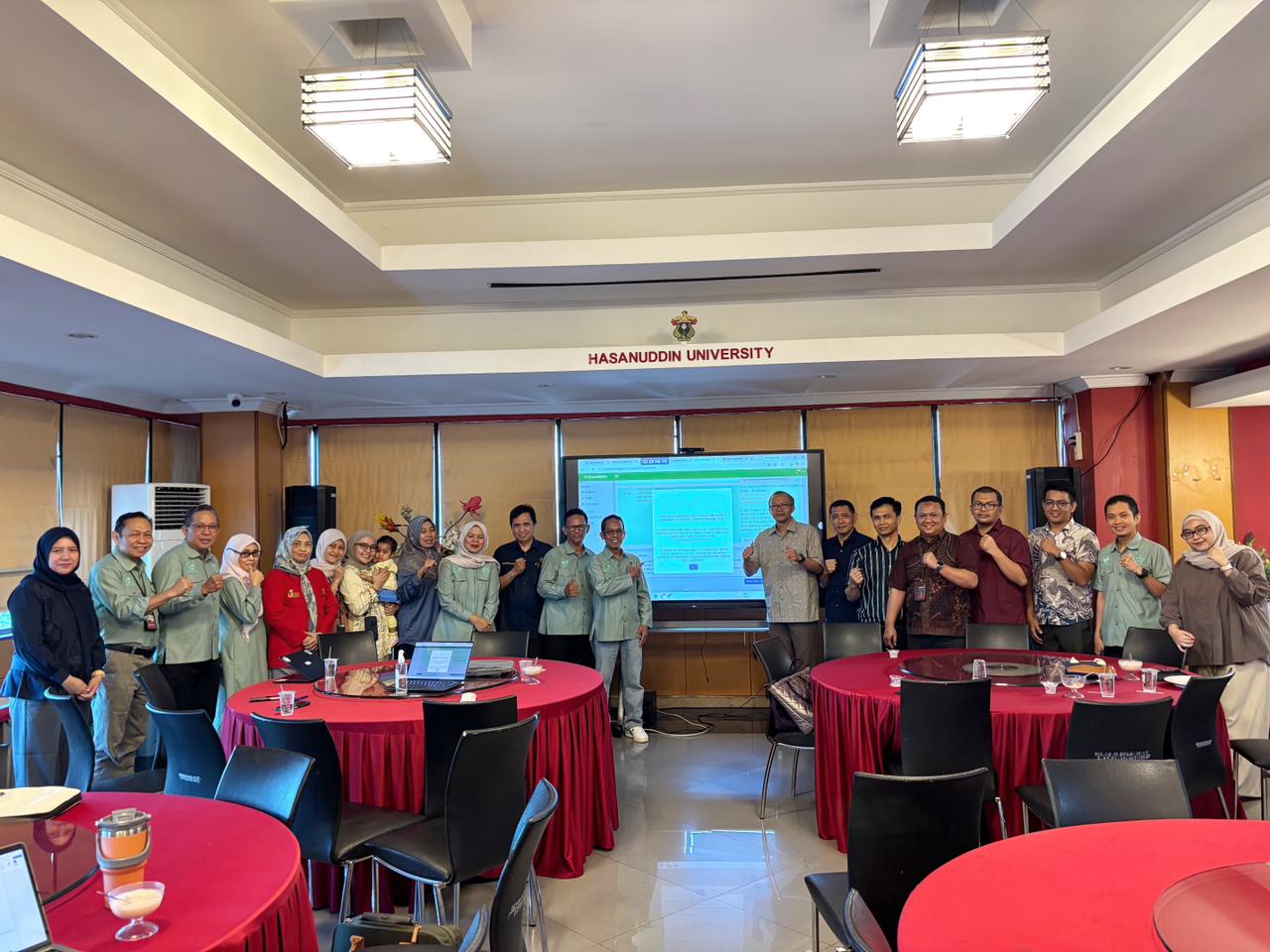
This awareness drove Hasanuddin University (Unhas) to complete its final submission to the UI GreenMetric World University Rankings 2026 on Thursday (9 July). Beyond the administrative task of filling out the questionnaire, the process requires a scientific approach to ensure the data truly reflect the actual conditions of the campus.
Good data must meet three main requirements: it must be accurate, verifiable, and accountable. The Unhas team applied the same principles in preparing its UI GreenMetric documents. Every indicator went through cross-checking, validation, and refinement of supporting evidence before finally being uploaded to the assessment system.
On one hand, UI GreenMetric is a ranking exercise. On the other hand, the instrument also measures the extent to which universities apply sustainability principles in their daily activities. Unlike academic rankings that largely assess research reputation and publications, UI GreenMetric looks at how campuses manage resources responsibly.
I
In 2025, 1,745 universities from 105 countries took part in the ranking. That figure shows that sustainability has become a shared language among the world’s universities. Universities are now competing not only to produce innovations but also to prove that campus operations can reduce environmental impact while creating a healthy ecosystem for the academic community.
For the 2026 cycle, UI GreenMetric adopted the theme Advancing Sustainable Campuses through Governance, Digitalization, and Integrated Performance. The theme reflects a paradigm shift. Beyond a focus on green open spaces or waste management, a sustainable campus must also involve transparent governance, integrated digital systems, and data-driven decision-making.
Head of the Unhas UI GreenMetric Team, Prof. Dr. Ir. Arifuddin, M.T., stressed that the final submission process is a form of Unhas’s commitment.
“Every piece of supporting evidence goes through a verification process so that it truly reflects the actual state of sustainability implementation at Unhas,” said Prof. Arifuddin.
This approach is in line with evidence-based management, that is, decision-making based on measurable evidence. Data are the basis for evaluating the effectiveness of policies, identifying weaknesses, and designing better sustainability strategies in the future.
Preparing the UI GreenMetric documents at Unhas involved various faculties and work units. This cross-sector collaboration shows that sustainability is not the responsibility of a single team but an organizational culture built together. From energy managers, waste management, and campus transportation to the information technology unit, all are part of an interconnected ecosystem.
Secretary of Hasanuddin University, Prof. Dr. Amiruddin, S.Si., M.Si., regards this collaboration as an important asset in strengthening the institution’s transformation toward an increasingly sustainable campus.
“We hope this year’s assessment results will not only improve Unhas’s position in international rankings but also strengthen Unhas’s contribution to achieving the Sustainable Development Goals (SDGs),” said Prof. Amiruddin.(*/dhs)
Editor : Ishaq Rahman
This article is an English translation of the original Indonesian report.